
NASA’s Artemis II Returns: A New Era of Deep Space Exploration
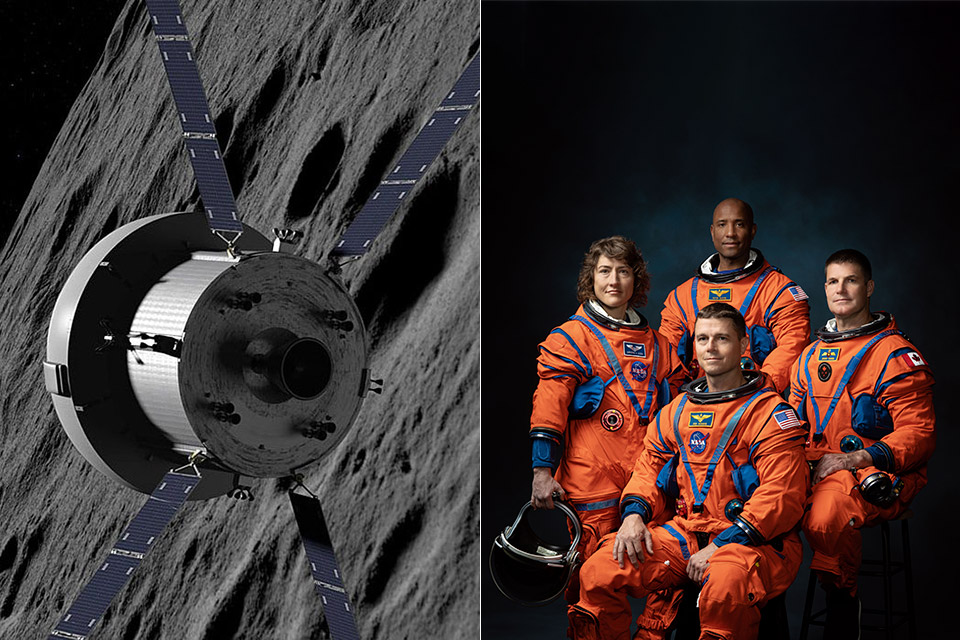
NASA has successfully completed the Artemis II mission, marking the first crewed flight beyond low Earth orbit since the Apollo 17 mission in 1972. The mission, which served as a critical test of deep space systems, saw four astronauts venture around the Moon to pave the way for future lunar surface landings and eventual crewed missions to Mars.
The crew—comprising Reid Wiseman, Victor Glover, Christina Koch, and Jeremy Hansen—launched from Kennedy Space Center’s LC-39B on April 1, 2026. Utilizing the Space Launch System (SLS) heavy-lift rocket and the Orion spacecraft (named Integrity by the crew), the team embarked on a journey that lasted 9 days, 1 hour, 32 minutes, and 15 seconds. This milestone represents a significant leap in human spaceflight capabilities, demonstrating the viability of the Orion vehicle for long-term crew sustainability in deep space.
During the mission, the crew achieved a closest approach to the Moon on April 6, 2026, reaching a distance of 4,067 miles (6,545 km). The flight provided a rare opportunity to capture stunning imagery, including views of the far side of the Moon, Earthsets, and solar eclipses. NASA has since released data and images detailing the “vertiginous” reliefs and crater-filled landscapes of the Moon’s hidden face, offering new scientific perspectives on lunar topography.
The mission concluded on April 10, 2026, with a splashdown in the Pacific Ocean west of Rosarito, Baja California, Mexico. The crew was recovered by the USS John P. Murtha. Upon their return to Houston to reunite with their families, the astronauts reflected on the emotional and symbolic weight of the journey, noting that “childhood dreams have become missions.” Beyond the technical achievements, the crew used their platform to call for greater unity on Earth.
From a technical standpoint, Artemis II validated the Orion spacecraft’s ability to sustain humans during a lunar flyby and return them safely to Earth. By testing the SLS rocket’s payload mass and departure energy, NASA has established the operational foundation necessary for the Artemis III mission, which aims to return humans to the lunar surface. This progression highlights the strategic shift toward establishing a permanent human presence in deep space.
