

NASA’s Artemis II Crew Reports Progress on Lunar Journey as Orion Spacecraft Reaches Midpoint
NASA’s Artemis II mission is officially halfway to its destination, marking a pivotal moment in the first crewed journey to the Moon since the Apollo 17 mission in 1972. As of Saturday, April 4, 2026, the crew of the Orion spacecraft is preparing for lunar observation, with astronauts reporting that the Moon is visibly growing larger in their field of view.
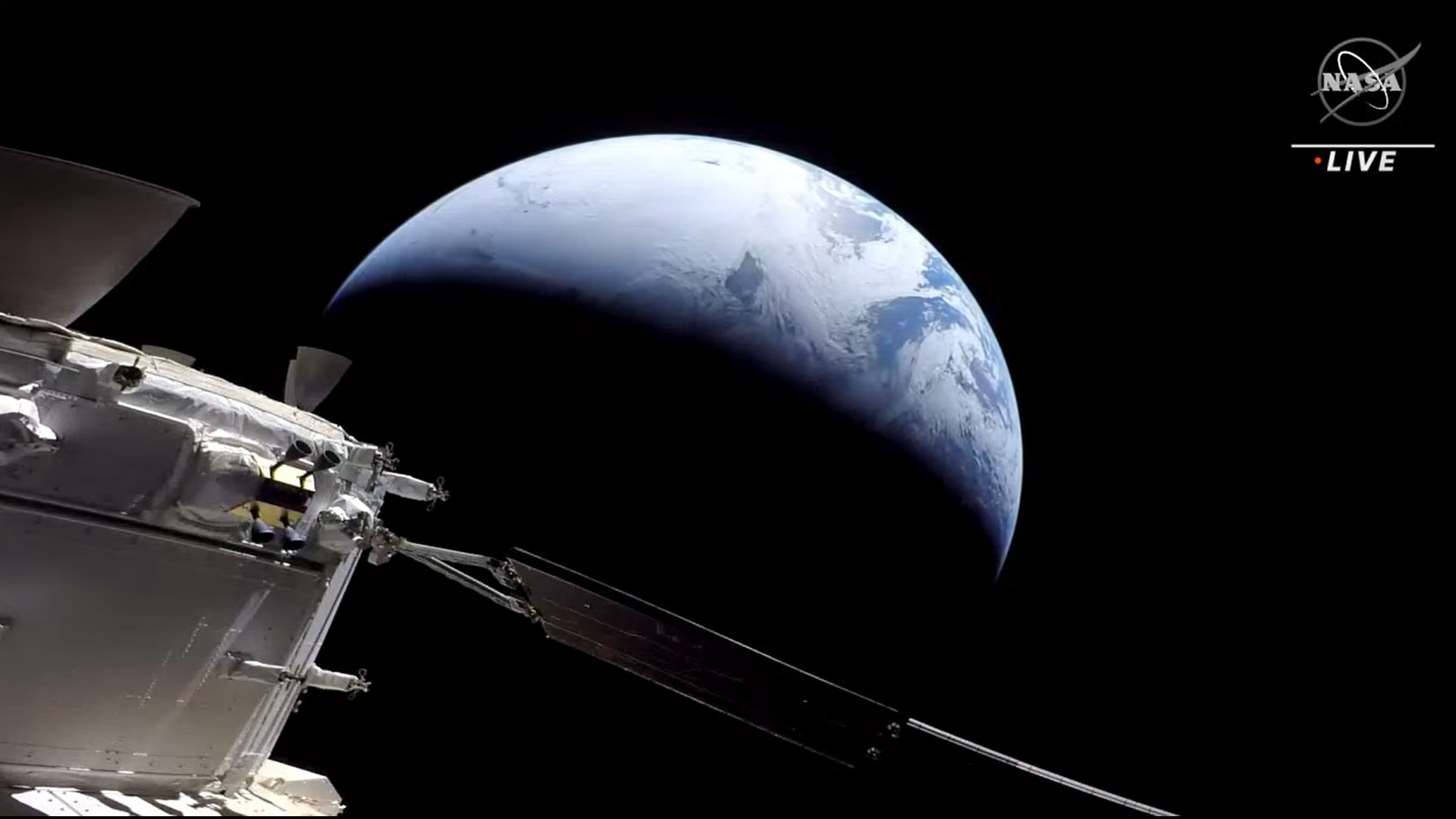
The mission, a 10-day round trip, is carrying astronauts Reid Wiseman, Victor Glover, Jeremy Hansen, and Christina Koch. The crew has already begun sharing the awe-inspiring perspective of deep space, with Commander Reid Wiseman capturing stunning images of Earth from the Orion window. These early visuals include the appearance of two auroras and zodiacal light, captured as the Earth eclipsed the sun.
The journey’s momentum was established on Thursday, April 2, 2026, when the mission management team gave the “Go” for the translunar injection (TLI) burn. At 7:49 p.m. EDT, Orion’s main engine fired for five minutes and 50 seconds, accelerating the spacecraft to 22,670 miles per hour while it was 115 miles above Earth. This maneuver successfully pushed the crew out of Earth’s orbit and onto a trajectory toward the Moon.
The technical specifications of the burn highlight the immense power of the Orion spacecraft, developed by Lockheed Martin. The main engine provides up to 6,700 pounds of thrust—enough force to accelerate a car from 0 to 60 mph in roughly 2.7 seconds. At the time of the TLI burn, the spacecraft had a mass of 58,000 pounds and consumed approximately 1,000 pounds of fuel.
By 10 a.m. EDT on Friday, April 3, 2026, Orion was traveling at approximately 4,260 miles per hour, positioned about 88,000 miles from Earth and 170,000 miles away from the Moon. This trajectory is designed to eventually take the capsule toward the lunar far side.
Life aboard the Orion capsule is a blend of rigorous science and survival logistics. To maintain physical health in deep space, where the extensive hardware of the International Space Station is unavailable, the crew uses a cable-based flywheel exercise device. This system supports both resistive movements, such as deadlifts and squats, and aerobic exercises like rowing, providing resistance of up to 400 pounds. During these sessions, ground teams monitor the spacecraft’s air revitalization system to ensure a stable and breathable cabin environment.
The mission’s daily operations likewise include a carefully curated supply of provisions, which include 58 tortillas and five varieties of spicy sauces, alongside the spacecraft’s essential facilities. This balance of high-tech life support and basic necessities underscores the challenges of sustaining human life during deep-space transit.
The successful execution of these early flight phases signals a major leap in NASA’s capabilities, demonstrating the viability of the Orion spacecraft for extended crewed missions beyond low Earth orbit.
