
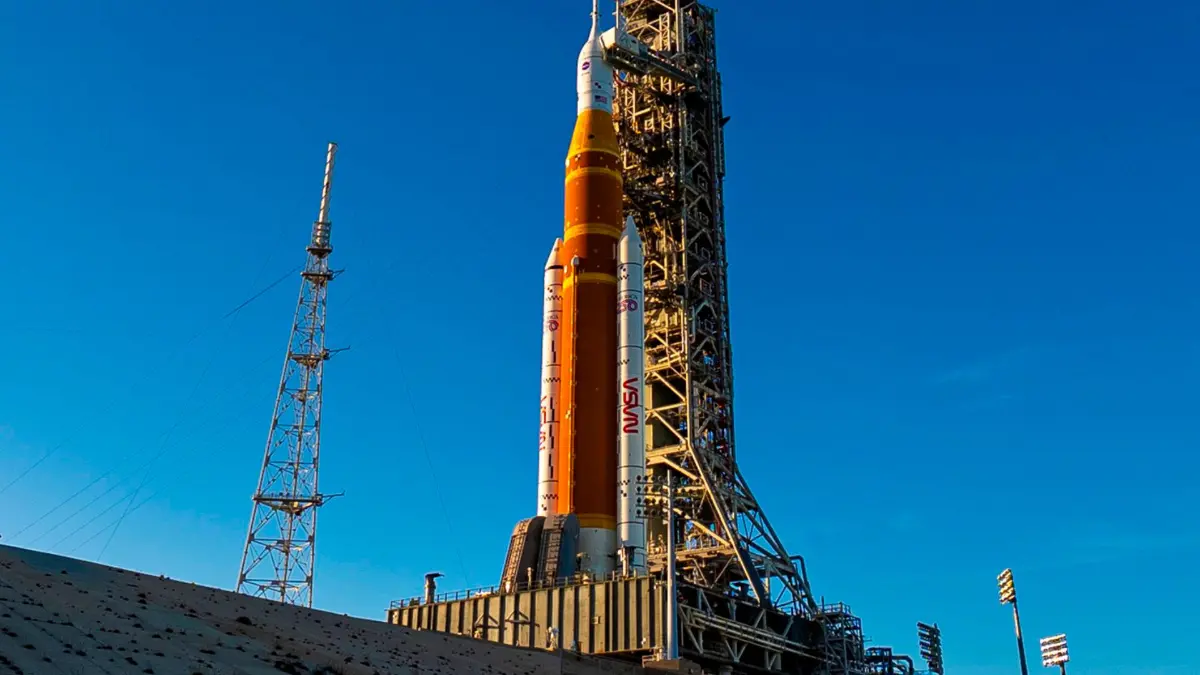
NASA’s plans for the Artemis II mission, aiming to send astronauts on a flight around the Moon for the first time in over 50 years, have hit a snag. Despite confirming a launch date of March 6 on Friday, the agency now indicates that timeline is uncertain.
NASA Administrator Jared Isaacman announced on February 21 that “following a disruption in the flow of helium in the provisional cryogenic propulsion stage of the SLS, teams are troubleshooting and preparing for a likely stand down of Artemis II.”
“This will almost certainly impact the March launch window,” Isaacman added, suggesting a delay of at least until April for the Artemis II mission. The Artemis program represents a significant investment in lunar exploration and a renewed focus on deep space travel.
“We will begin preparations for a stand down, and this will grab the March launch window off the table. I understand people are disappointed with this development. That disappointment is especially felt by the NASA team, who have worked tirelessly to prepare for this great endeavor,” Isaacman stated in a separate post on X.
The potential delay follows a more optimistic outlook on Friday, when Lori Glaze, a senior NASA official, confirmed March 6 as the target launch date – the first time a specific window had been indicated.
“Following yesterday’s successful launch simulation, we are now targeting March 6 as the earliest possible launch date,” Glaze said. However, the newly discovered issue has jeopardized that timeframe.
NASA had initially identified fourteen potential launch windows between February 8 and April 30 for the Artemis mission, and two have now been ruled out.
On February 19, NASA announced the successful completion of a full launch rehearsal for its massive SLS rocket, which will carry four astronauts around the Moon from Cape Canaveral, Florida.
Siga leyendo: Musk cambia el foco de SpaceX: de Marte a ciudad autosostenible en la Luna
The rehearsal, a critical step in preparing for the Artemis II launch, involved filling the rocket’s tanks with propellant. During the initial test earlier this month, engineers encountered technical issues that forced a pause.
According to NASA Administrator Jared Isaacman, during that simulated launch test, “teams had to manage a liquid hydrogen leak in an interface of the core stage during tanking, which required scrubs to warm up the hardware and adjust propellant flow.” He confirmed at the time that the February 8 launch was not possible.
All tanks were filled, and the countdown reached approximately 5 minutes before the leak worsened and operations were halted.
“As always, safety is our top priority… we will only proceed to launch when we are confident we are ready to undertake this historic mission,” Isaacman added.
Le puede interesar: Estos son los cuatro astronautas que volverán a la Luna después de 50 años
The mission will involve three Americans and one Canadian astronaut: Commander Reid Wiseman, Pilot Victor Glover, and Mission Specialists Christina Hammock Koch and Jeremy Hansen (from the Canadian Space Agency).
During the approximately ten-day flight, the crew will orbit the Moon without landing, testing equipment in preparation for the Artemis III mission, which aims to return astronauts to the lunar surface and establish a sustained presence.
In 2022, NASA faced similar technical challenges during preparations for the uncrewed Artemis I mission, which also involved a flight around the Moon, resulting in several months of delays.
