

Artemis II: First Canadian Astronaut Heads to the Moon as NASA Resumes Deep Space Exploration
In a historic milestone for international space exploration, Canadian astronaut Jeremy Hansen has become the first citizen of Canada to journey toward the Moon. As part of the Artemis II crew, Hansen and three other astronauts successfully executed the translunar ignition (TLI), propelling them out of Earth’s orbit and toward the lunar surface.
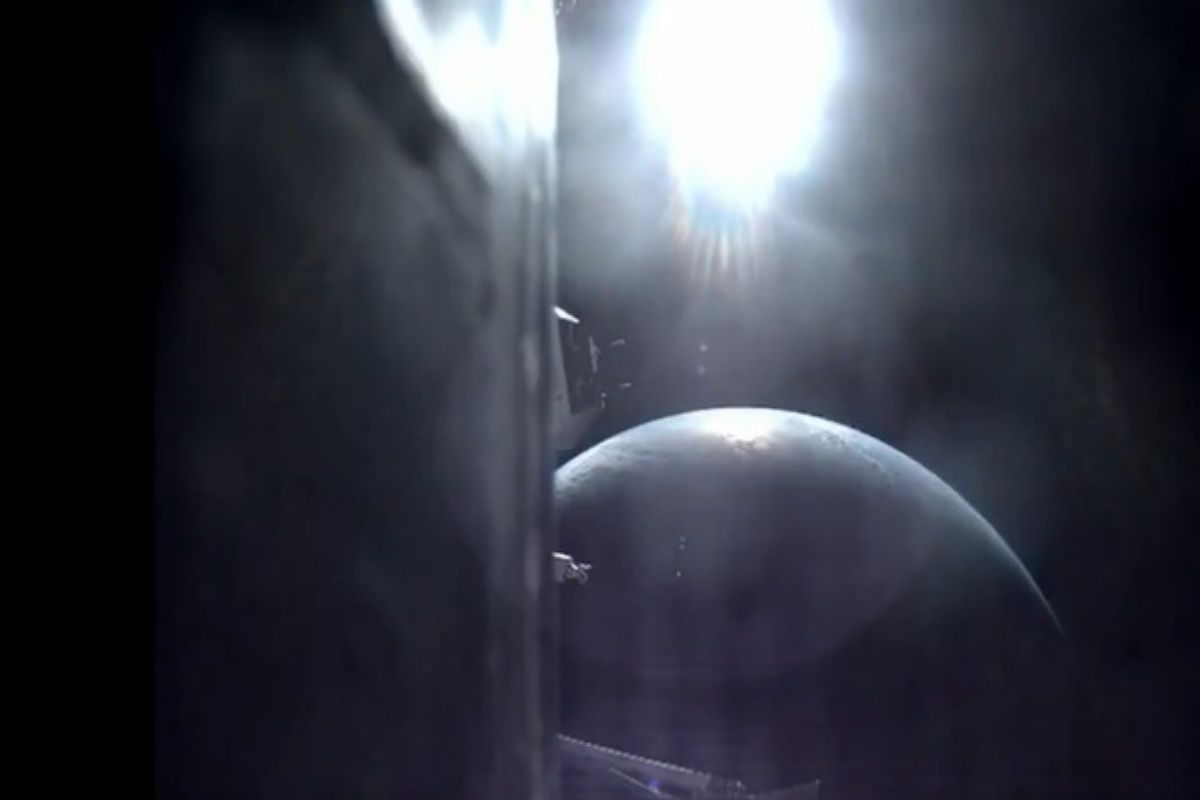
The mission represents a pivotal shift in NASA’s strategy to establish a permanent moon base and sustain human life on the lunar surface. This maneuver marks the first time a crewed spacecraft has fired its engines for a moonshot since the Apollo 17 mission concluded on December 7, 1972.
The journey began on April 1, 2026, following two previous delays. After spending approximately 25 hours in Earth’s orbit, the lunar capsule, named Integrity, performed a critical maneuver on the evening of April 2, 2026. The engine burn lasted nearly six minutes, utilizing a gravitational assist from Earth to gain the velocity required to reach the Moon, which is located nearly 400,000 kilometers away.
The trajectory involved a dramatic sequence of movements. After initially reaching an altitude of 70,000 kilometers, the crew descended back to within 200 kilometers of Earth to slingshot toward their destination. During a press conference broadcast live from the Integrity capsule between Friday and Saturday, Jeremy Hansen described the intensity of the experience.
“I think we’re going to hit the Earth,” Hansen told commander Reid Wiseman as they passed just above the clouds. “It felt like we were falling from the sky.”
The technical precision of the TLI burn was confirmed by NASA Administrator Jared Isaacman, who noted via X that “America is back in the business of sending astronauts to the Moon,” emphasizing that this mission is venturing “farther than ever before.”
As the crew progressed past the halfway point of their journey, Hansen reported seeing the “grand canyon of the Moon” in the eastern basin. This massive crater, measuring 900 kilometers in diameter and flanked by two mountain ranges, is situated on the edge of the Moon’s far side, making it impossible to view in its entirety from Earth.
This mission serves as a critical test flight for the Orion capsule’s systems and the physiological effects of deep space on the human body. The Artemis II crew is scheduled to orbit the Moon before returning to Earth on April 10, 2026.
The success of this mission paves the way for future lunar landings. NASA and its partners are currently targeting 2028 for the Artemis IV mission, which is expected to achieve the first human moon landing in nearly 60 years.
