

Artemis II Crew Prepares for High-Stakes Return to Earth
The crew of the Artemis II mission is now entering the final stages of their historic journey, preparing for a challenging reentry into Earth’s atmosphere. After launching on April 1, 2026, the four-person crew has spent the last several days testing NASA’s deep space capabilities during a ten-day lunar flyby.
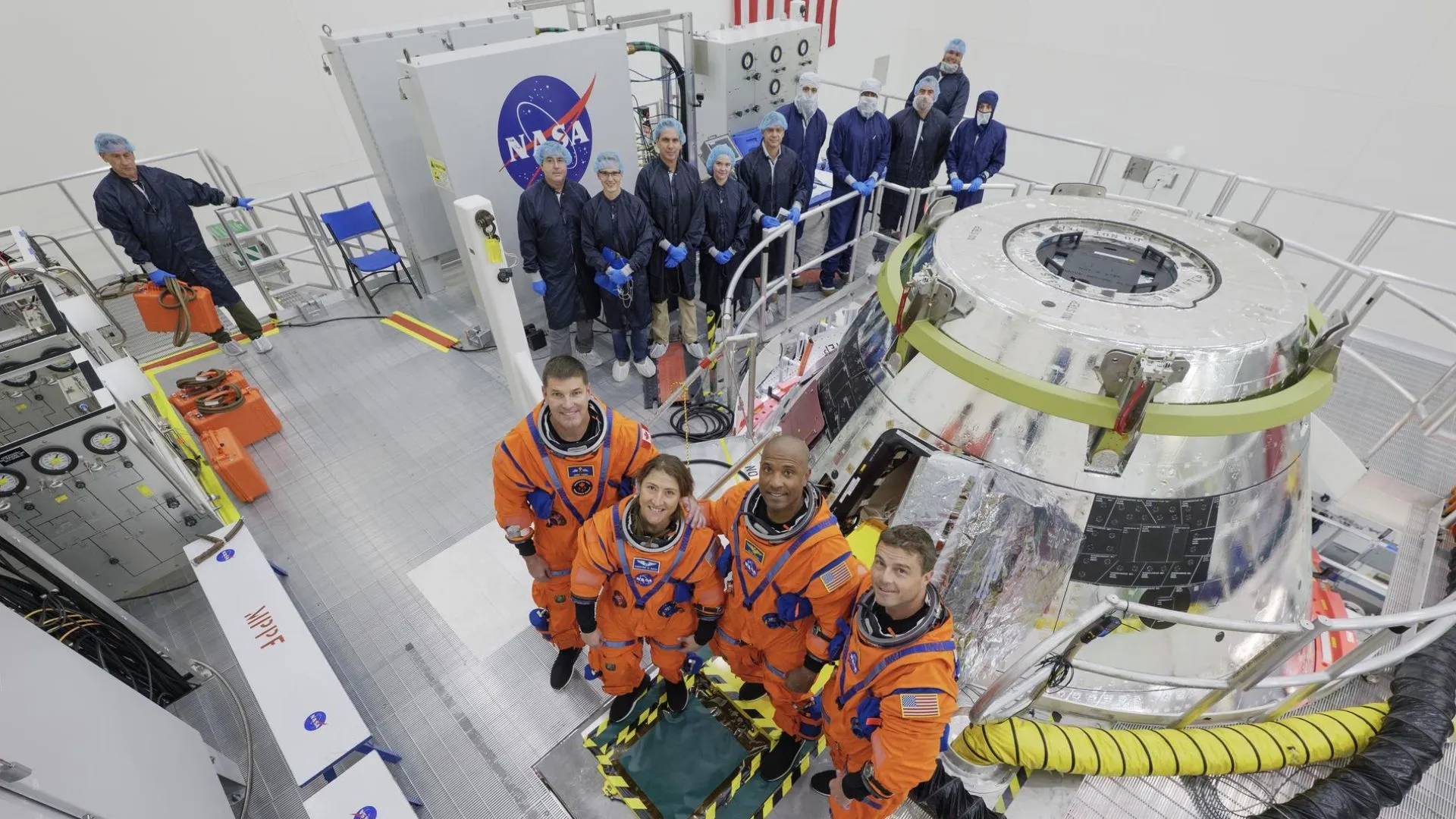
The mission, which represents the first crewed flight beyond low Earth orbit since 1972, is designed to verify the systems of the Space Launch System (SLS) rocket and the Orion spacecraft. This critical flight test paves the way for future long-term lunar exploration and science missions. The successful return of the crew is essential for validating the technology required for upcoming lunar surface landings.
Reentry is widely considered one of the most perilous phases of the mission. As the Orion spacecraft, named “Integrity,” hits the atmosphere, it will transform into a fireball, relying entirely on its heat shield to protect the astronauts from extreme temperatures. This phase is often cited as more dangerous than the initial launch, as the safety of the crew depends on the heat shield’s ability to withstand the intense thermal energy of reentry.
The crew consists of Commander Reid Wiseman, Pilot Victor Glover, and Mission Specialists Christina Koch and Jeremy Hansen. While Wiseman, Glover, and Koch are NASA astronauts, Hansen represents the Canadian Space Agency, marking his first mission in space. The team is scheduled to splash down in the Pacific Ocean on April 11, 2026, where they are expected to be recovered by the USS John P. Murtha.
The Artemis II mission serves as a foundational step for the broader Artemis program. Following this flyby, NASA plans to move toward Artemis III, which is expected to launch later in 2027. That subsequent mission will focus on rendezvous and docking capabilities between Orion and commercial spacecraft, a necessary prerequisite for returning humans to the lunar surface.
