
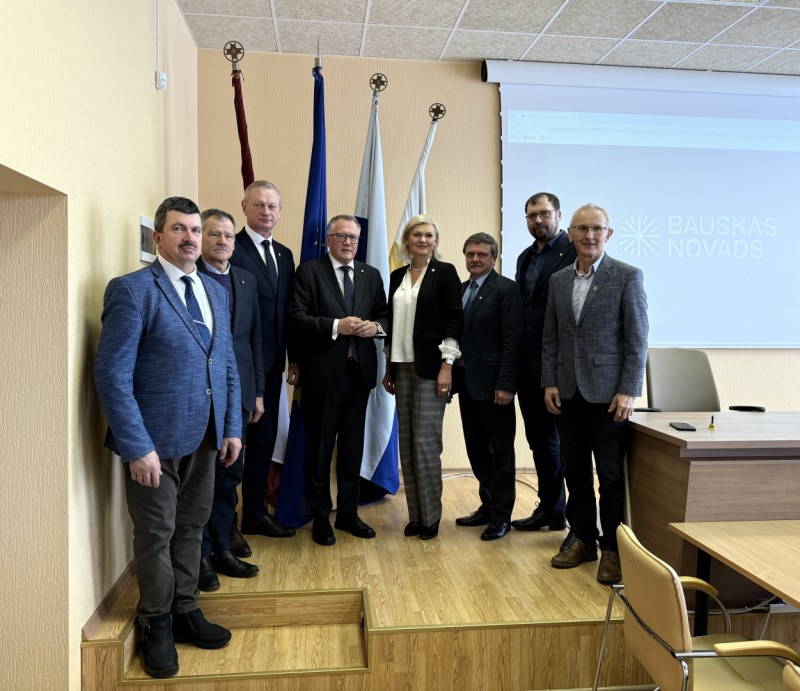
Bauska, Latvia – Latvia’s Finance Minister Arvils Ašeradens visited the Bauska region on Friday, February 13, 2026, to meet with local officials and business leaders and tour a dairy processing plant. The visit comes as Latvian municipalities grapple with potential changes to national funding distribution models.
Local officials voiced concerns to the minister regarding a novel municipal financial equalization model, according to the LETA news agency.
During meetings with Bauska regional authorities, discussions centered on demographic trends and the challenges they pose to service provision and financial planning. Officials highlighted increasing competition for residents and a growing labor shortage. The development of affordable rental housing, including a new apartment building on Ceriņu Street in Bauska, was cited as a potential solution, though the municipality stressed the need for modern infrastructure, public spaces, and recreational opportunities to ensure long-term quality of life.
Infrastructure issues were a major focus of the discussions, including road quality, transportation access, and connectivity across the expansive region. The impact of transit flows on the urban environment was also addressed. Large-scale development projects, such as the Bauska bypass, “Rail Baltica,” and wind farm development, were also examined for their potential impact on regional mobility and economic activity.
A key topic of conversation was the potential impact of changes to the municipal financial equalization mechanism on regional development. The minister explained the principles of the system, while local officials expressed concerns about how the new model could affect municipal finances. The proposed system would distribute personal income tax not only based on declared residence but also on the location of the taxpayer’s employment. Officials noted that many Bauska residents perform in Riga but utilize local infrastructure – roads, schools – and expressed fears that these changes could negatively impact the municipal budget and funding for local services.
The meeting also covered education and social welfare issues. Municipal representatives pointed to rising social costs, demographic shifts, and the need to strengthen preventative services for families and children. Particular attention was given to the role of foster families, as the number of children requiring care outside of their biological families remains high. The region is working to strengthen support for foster families, recognizing their significant contribution to child welfare, and provides financial assistance.
In the realm of education, the complexities of school network planning across the large territory were discussed, emphasizing the importance of transportation access and ensuring quality education. The role of vocational education in preparing skilled workers for the labor market was also highlighted.
The Finance Minister acknowledged that regional development requires balanced decisions between the state’s fiscal capabilities and the needs of municipalities. Both sides emphasized that close cooperation between the state and local governments is essential to ensure sustainable development, a competitive economy, and quality services for residents.
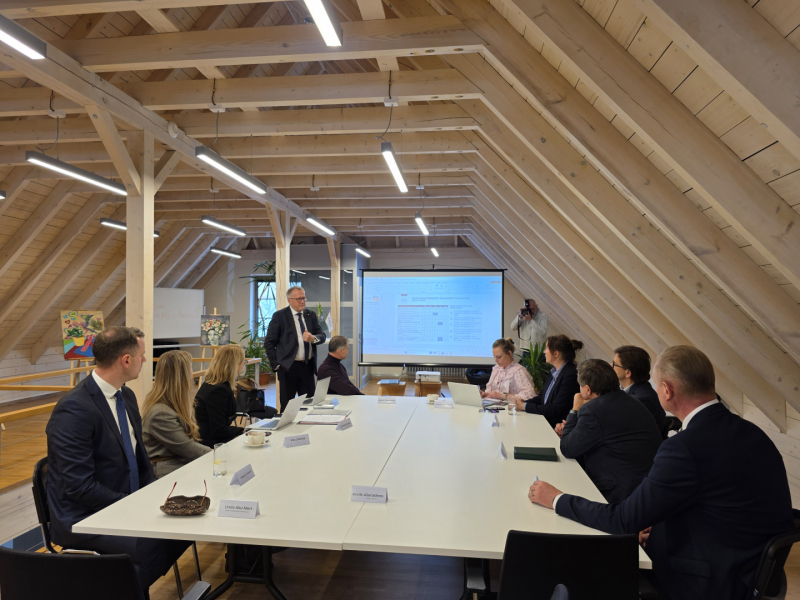
Following meetings with business owners at the Bauska Region Business and Competence Center “Rundāles Avotos” and a visit to “Baltic Dairy Board,” the minister had planned to visit Mežotne Palace to discuss the palace’s future with Rundāle Palace Director Laura Lūse, but the meeting was delayed and did not accept place. Ašeradens stated he would schedule a meeting in the spring or summer to decide on the palace’s future.
The minister had lunch at the “Aveņi” tavern. In the evening, he met with “Bauskas Dzīve” for a brief interview at the Bauska Community Center “Pasta 5.” Statements from Ašeradens will be published in the February 17th issue of “Bauskas Dzīve.”
