
JAKARTA Concerns that a 100-meter asteroid, designated 2024 YR4, could impact Earth’s moon and disrupt satellites have been alleviated by the European Space Agency’s (ESA) Planetary Defence team.
Scientists at the agency have confirmed that the asteroid is not on a collision course, according to a report from The Guardian. The development underscores the increasing sophistication of planetary defense systems and the ability to quickly assess and respond to potential threats from near-Earth objects.
Initial observations raised concerns about a potential impact with the moon, but more recent data indicates those fears were unfounded. Asteroid 2024 YR4 was initially discovered in December 2024 and briefly considered “the most dangerous asteroid” in decades after scientists initially estimated a 3.1% chance of impacting Earth in 2032.
However, more precise observations quickly dismissed the “city-killer” scenario. Astronomers then calculated a 4.3% probability that the moon was in the asteroid’s path. Whereas a direct hit on Earth was ruled out, debris from a lunar impact could potentially interfere with satellites used for navigation and communication.
Fortunately, the latest observations appear to have eliminated that risk, showing the asteroid will pass the moon safely at a distance of more than 20,000 km (12,400 miles).
“It would have been a incredibly interesting scientific experiment, but given the small risk of debris, it’s probably not an experiment we’d want to try,” said Professor Colin Snodgrass, a planetary astronomy professor at the University of Edinburgh. “Some of us in the scientific community might be a little disappointed,” he added.
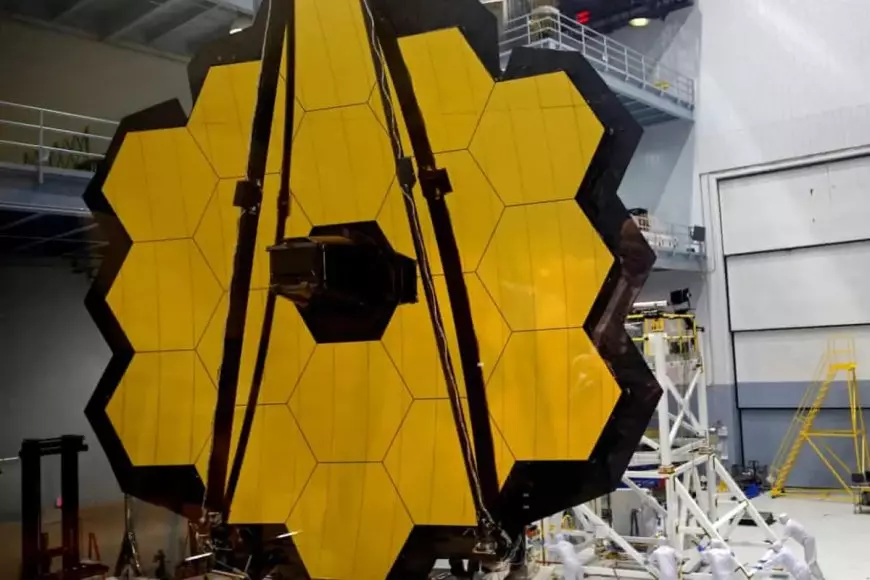
As the asteroid moves away from Earth and out of view, astronomers don’t expect to be able to refine its trajectory until 2028, when it comes back into Earth’s line of sight. However, an international team of scientists identified two five-hour windows in February when they believed the James Webb Space Telescope could detect and track the asteroid, which is four billion times fainter than the dimmest star visible to the naked eye.
“Asteroid 2024 YR4 is currently very faint, reflecting light like a single almond at the moon’s distance,” said Dr. Andy Rivkin, of the Johns Hopkins University, and Prof. Julien de Wit, of the Massachusetts Institute of Technology, who led the observations.
“Webb is the only observatory that can make these measurements, as it’s the only one with the required sensitivity and stability, combined with the precise moving-target tracking needed to follow and study objects like this,” they added.
These observations allowed for further refinement of 2024 YR4’s orbit, confirming it will miss the moon in 2032. The ability to track these objects highlights the growing capabilities of space-based observatories.
According to Snodgrass, increasingly sophisticated telescopes, including the James Webb Space Telescope and the Vera Rubin Observatory, will lead to the detection of more objects of interest. “We may experience slightly more events that cause concern,” he said. “But we also have the technology to track these things much better and will usually be able to rule them out very quickly.”
“The moon is safe, asteroid 2024 YR4 poses no hazard, but work continues,” the ESA stated in response to the findings.
“The Planetary Defence team at ESA’s Space Safety programme continues to detect and track near-Earth objects to ensure that if a real hazard does arise, we are not caught off guard,” ESA added. (*)
