
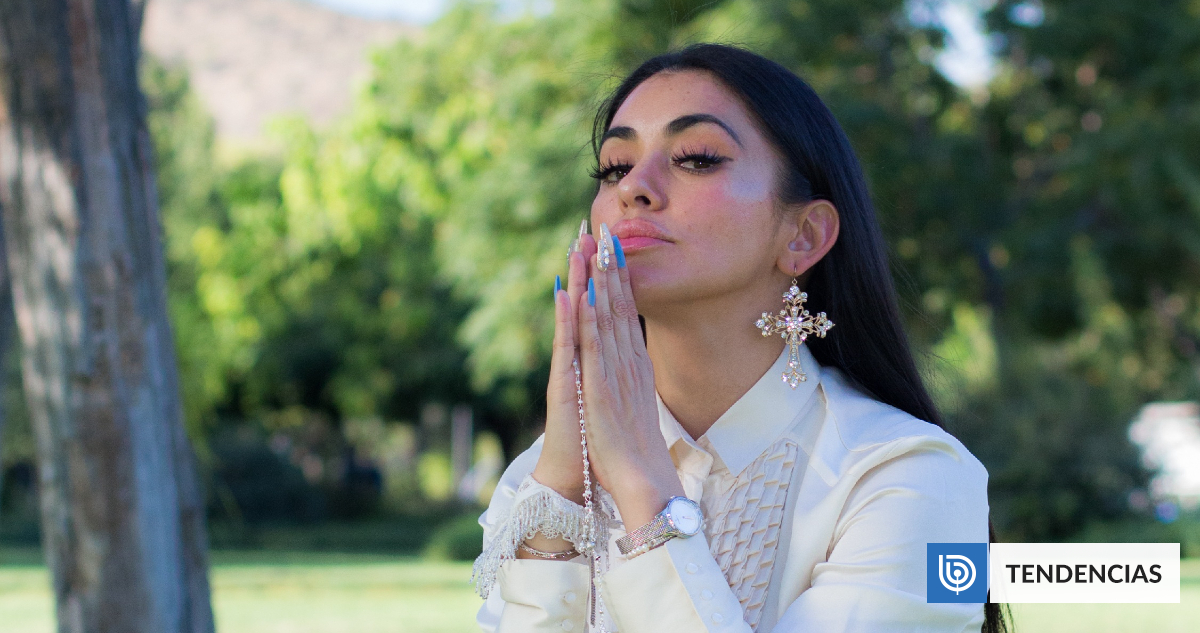
B-Fox’s life once narrowed to a single task: surviving another day. Not singing, not dancing, not creating – just surviving.
Now, after several years away from the spotlight, the Chilean artist is returning to music and, for the first time, sharing what happened during her time away from the public eye. Her story encompasses exploitation, drug use, sex work, and a suicide attempt, but also the birth of her daughter and a long journey of personal reconstruction. This candid account arrives as more artists openly discuss the challenges behind the scenes of the entertainment industry.
Born Paola Meza, she was known as B-Fox within the urban music scene. For years, she orbited the periphery of Chile’s burgeoning trap scene – not center stage, but on the edges where music, parties, drugs, and money converged.
Before releasing modern music, B-Fox wants to explain what really happened during that period.
“B-Fox was born from dance. It started in 2007 when I discovered dancehall,” she recalls. “I went online – I’m always very resourceful – and saw the dancehall queens. I said, ‘This is my thing.’ So I started training until I was able to compete.”
That beginning also came during a difficult personal time. She was in a relationship marked by violence, and the stage became an escape.
“It was very meaningful, because the dancehall queen speaks of female sexual liberation,” B-Fox says. “At that time, I had an abusive boyfriend. I went from literally being locked up to everyone knowing me. B-Fox was like my heroine.”
On stage, she embodied a powerful persona. “On stage, I deliver power, strength, and security. When people tell me that, they say they feel empowered, that I transmit energy to them,” she expressed.
That transformation was also noticeable off stage, and her life changed quickly.
“I traveled all over Chile as a dancer with Shamanes; from not knowing anyone, being locked up, to everyone knowing me, it was great. People really identified with what I expressed, with wanting to be more free.”
Bellavista: the trap house
Between 2015 and 2019, B-Fox ran a trap house in the Loreto-Bellavista area of Santiago. It wasn’t a single apartment, but several spaces within the same circuit. Producers, singers, and photographers who would later become prominent figures in the Chilean urban music scene frequented the location.
The term “trap house” originates from the drug trade in the United States, referring to places used for selling or consuming drugs. When trap became a musical genre, the concept transitioned into urban culture. In that context, a trap house is a space where parties, home recordings, artist gatherings, and nightlife blend together.
In Santiago, the concept began to emerge in the mid-2010s. C.A.S.O., a singer, was one of the first to organize these types of parties, hosting after-parties in various neighborhoods. Rapper Gato Plomo, a pioneer of Chilean trap, detailed how these places operated: “They were houses for after-parties. You needed a connection, a friend of a friend, you paid an entrance fee, and some people got in for free.”
One of the most remembered houses was located on Rodrigo de Araya street, where many future stars of the Chilean trap scene began to gather.
DJ Weyser’s trap house in the Matta neighborhood followed. That space marked a turning point for the scene, as Chilean trap began to be recognized as a distinct movement. Collectives like Nacion Triizy (Marlon Breeze, Paul Vaera), ShiShiGang (Pablo Chill-E, Julianno Sosa, VH El Virus), and Drip World (then Young Cister, Big Angelo, Kid Poison), as well as artists like Polimá Westcoast and Gianluca, all passed through its doors.
After those initial spaces – C.A.S.O.’s and Weyser’s – B-Fox’s trap house in Bellavista emerged.
“We had several apartments facing each other, and the music studio was in mine,” she remembers. “Many producers and artists came through: I saw Young Cister, Gianluca, Tomasa del Real.”
This period coincided with the organization of the Chilean trap scene.
“I remember when I started singing: I recorded a song with Tomasa, ‘Todas en bikini’ (2018). That milestone encompasses a period of my life where everyone was starting out in trap, and I cherish it very much.”
She also opened a small store connected to the Triizy brand, led by Marlon Breeze of the Nación Triizy collective.
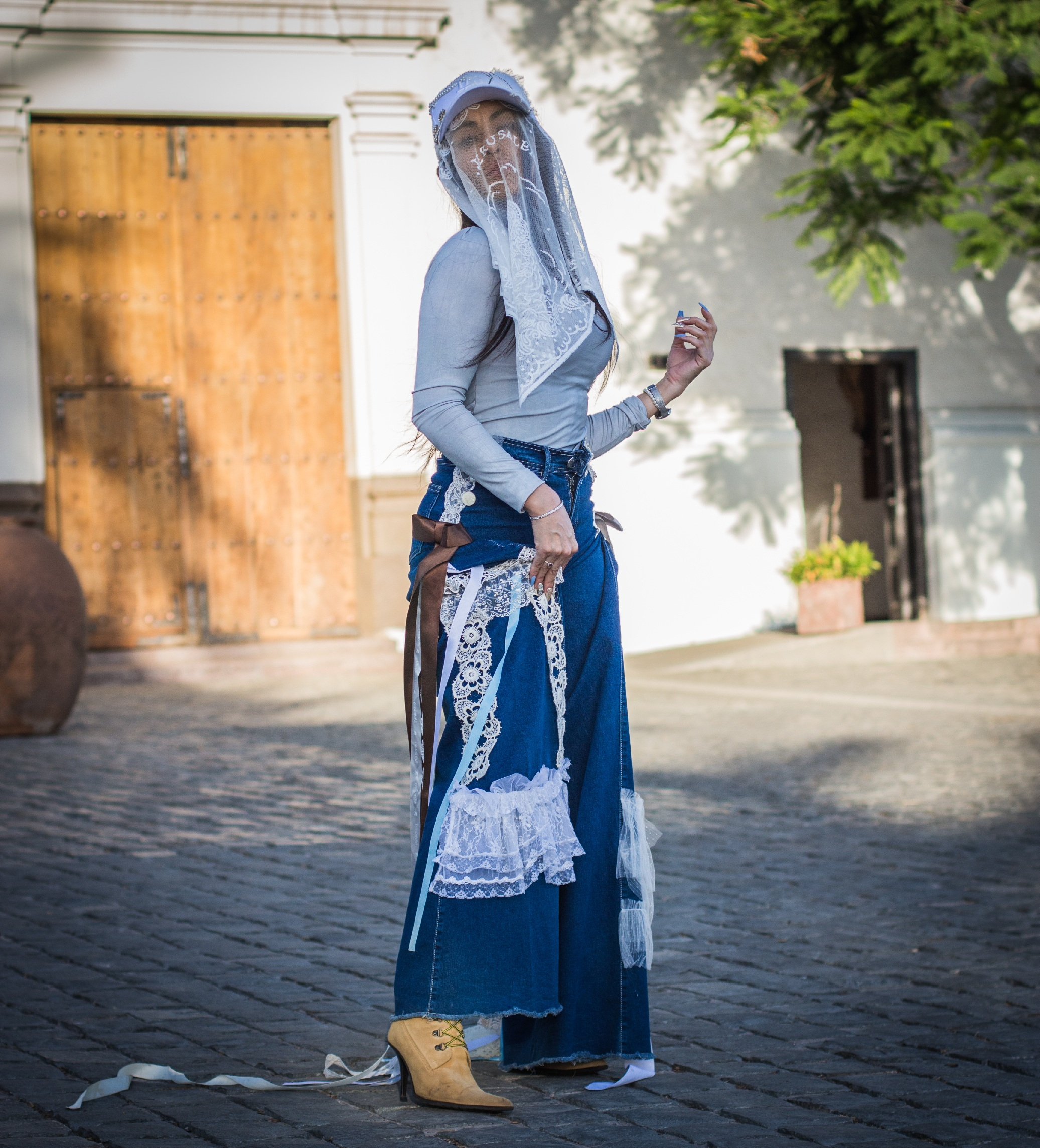
“I sublet spaces, set up an urban art gallery, there was a barbershop, tattoo artists, and the clothing store.”
These spaces also functioned as small music labs. Producer Tonzilla3000 – who later worked at studios like Quad Studios in the United States – recalled that many songs were born in these houses, spontaneously.
For a time, this space provided B-Fox with economic independence.
“For me, the trap house was my home, where I had purchasing power. But that same place also opened the door to another stage. That’s when I fully entered the escort world.”
Another figure entered her story during those years.
“When I got into trap and the escort world, another character named Miel appeared,” she remembers. “Miel supported me all those years, from late 2015 to 2019.”
The descent
The relationship she was in defined that period. The man she lived with managed her work and controlled her online presence.
“He was my partner and my pimp. He moved me around, took my photos, and posted them online.”
Over time, that dynamic became exploitative. “I started working on escort pages with my face covered. Later, I found out he was selling my photos to porn sites in other countries.”
Other women also circulated within that same circuit. “I worked in my apartment and also had some girls working with me.”
The money coming in supported everything: the rent, the spaces, and the movement surrounding it.
“I had to spend money to maintain everything, because I was the one maintaining it all.”
In that environment, drug use became part of the routine. “I think it was because of the pain. I worked a lot during the day and then all I wanted to do was be with my partner.”
The bottom and the return
The breaking point came when she began to realize the level of abuse in that environment.
“During that time in trap, very strong things happened to me,” she says. “I didn’t want to continue living. I said, ‘I don’t want to go on with this.’ At that moment, I thought about suicide.”
Shortly after, something changed her life completely.
“When I decided to become a mother, I understood why I had to choose life. That’s when I understood that my life had a purpose.”
Becoming a mother marked a turning point. It also opened a difficult chapter: she had to support a new life practically on her own. Without a supportive family network and with the responsibility of raising her daughter, B-Fox made a pragmatic decision while trying to rebuild her life.
That process included briefly returning to that world.
“Because of the way things are, I had to go back to work; and Miel came back. In that stage, I only worked with frequent clients, and there were very few. And most of them had known me for a long time. I worked very little and they paid me a lot. And more than paying me for the work, they were supporting me.”
It was a private and difficult stage. Getting out of it wasn’t an instant gesture. It was a unhurried, silent, internal process.
“It was such a private matter, because healing is complicated. You encounter many of your own shadows, which you have to work through, illuminate, embrace – things that many people wouldn’t understand. They are such dense issues, such dense energy. And you embrace yourself and say, ‘Okay, enough, I’m going to endure.’”
During those years, she also had sporadic jobs in nightclubs, which she now describes as the last remnants of that stage.
“Those were the last aftershocks: I worked at Lucas Bar, Triple J, and Platinum.”
From there, a long process of reconstruction began. “What triggers everything is healing,” she says. “Living with faith, with spiritual strength. You no longer seek distraction outside, but go inward.”
That transition also clarified her future direction.
“To stop being distracted by the external and focus on healing and looking inward.”
That path now coincides with her return to music. Before releasing new material this year, B-Fox reappeared on the song “Barakah,” from the album Booty Code Riddim Vol. 1, by producer Selekta Ramces.
“When most singers say ‘I’m going to find my voice,’ I feel like it was the opposite for me. My voice found me.”
What she seeks now, she says, goes beyond numbers. “I have something beyond hitting it big or generating numbers: it’s about delivering the right message, encouraging people to seek their healing. My experience goes in that direction.”
She says she never considered changing her stage name.
“B-Fox has always been like my heroine. When she emerged, I was in a relationship I didn’t want to be in, and I was under threats. Thanks to B-Fox, that person disappeared from my life and I felt free.”
For years, she had to survive in a world where music, money, parties, and violence mixed without clear boundaries.
Today, she’s trying to build a different life. She doesn’t erase what was. She doesn’t deny it. Nor does she embellish it. “I embrace all my past B-Foxes. I respect and love them.”
