
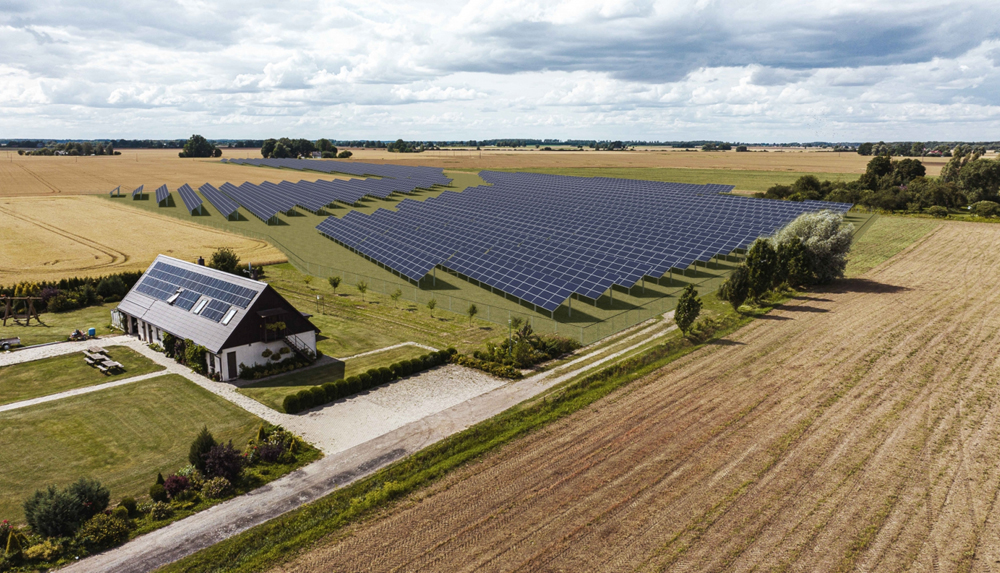
Businesses See Success and Value in Transition to Renewable Energy
Companies in the Bauska region that have installed solar power stations (SES) in recent years for self-consumption or to generate energy for customers view these investments as profitable and contributing to national energy independence. The shift towards renewable energy sources is gaining traction as businesses seek to reduce costs and enhance sustainability.
Residents living near solar panel parks report no inconvenience, though some express concerns about the use of good agricultural land and the environmentally sound disposal or repurposing of equipment at the end of its lifespan – a point not expected to be relevant for several decades.
Not on Cultivated Land
Residents near the Bauska solar power station in the Codes and Mežotnes parishes initially worried that arable land would be left to overgrow, but they’ve found the park doesn’t occupy the best land. Land use for renewable energy projects remains at the discretion of the property owner. Previously, organizations like the Latvian Farmers’ Parliament and the Latvian Farmers’ Federation actively opposed the use of cultivated land for solar panels, but objections have subsided, according to one local landowner who wished to remain anonymous. That landowner also noted that difficult-to-cultivate areas, prone to boggy conditions and shrub growth, can be effectively utilized for solar panel installations.
Decreasing Efficiency
People in Stelpe parish, where solar parks are located further from homes, share a similar view, noting that the installations occupy hard-to-manage and overgrown land. In Rītausmā, Īslīces parish, solar panels are situated near apartment buildings without obstructing views or causing noise or environmental issues, local residents report. Industry research indicates that quality solar panels typically last 25–30 years while maintaining high efficiency. After this period, they continue to generate electricity, albeit at a reduced capacity, often around 70–80% of the original output. Manufacturers generally offer warranties of 10–20 years, with an efficiency loss of about half a percent per year.
Sheep Participation
Dace, whose home is near the “Balticovo” egg production facility’s solar parks, says shrubs were cleared before the panels were installed, but the project gained appeal a couple of summers ago when a flock of sheep began “working” there. As previously reported, the sheep graze on the grass, as mowing under the panel structures is inconvenient and expensive. Toms Auškāps, Development and Communications Director at AS “Balticovo,” revealed that the sheep have become part of a large herd and settled into “solar pastures.”
“As our parks are designed only for self-consumption, we are the most compatible industry with solar panels,” Auškāps stated. “We built in a small reserve for maximum capacity to ensure we can provide cooling for the premises with electric fans in the summer when it’s most needed. That’s when our electricity consumption is highest. The more intense the sun in summer, the more the coops heat up, and they need to be ventilated with powerful fans. We need more electricity, and the panels provide it.”
Rational Choice
“Balticovo’s” 2024 sustainability report includes a dedicated section analyzing the efficiency of the solar park. “This isn’t just a trend; we’ve precisely measured that, on average, 18% of our total electricity consumption is generated by the sun annually. There are more intensive months, but it varies year to year. It’s a valuable benchmark for other producers – they can see the true return on solar energy and calculate investments more accurately,” Auškāps advises. “The next step is to analyze panel types. We have bifacial panels that generate electricity from light reflected off the ground. We also need to evaluate the cost of batteries, which we don’t currently use. These technologies are developing rapidly. At the time, we chose the most rational solution – not the cheapest, nor the most expensive, but the most efficient with a balance between costs and benefits. With each project, we can build more informed decisions.”
Local Benefits
SIA “Kvēle,” a local company, installed its solar power station at its production base in “Lielrumbas,” Rītausmā, Īslīces parish, and position it into operation in the summer of 2023, according to Keita Muceniece, a representative of the energy construction firm. The station has a capacity of 0.5 MW and generates 400–600 MWh of electricity annually, resulting in a reduction of 55 tons of CO₂ emissions per year – equivalent to several thousand trees. Approximately 10% of the generated electricity is consumed by the company itself, with the remainder fed into the general distribution network, providing electricity to surrounding businesses and households.
“Kvēle” specialists conclude that solar parks increase the supply of electricity during the day when consumption is often high, reducing prices on the exchange. This creates more stable and predictable electricity prices and reduces dependence on fossil fuels and imports. Solar energy has almost zero variable costs. In exchange algorithms, the sun literally displaces gas or fossil fuels.”
Not Broader Expansion, But With Batteries
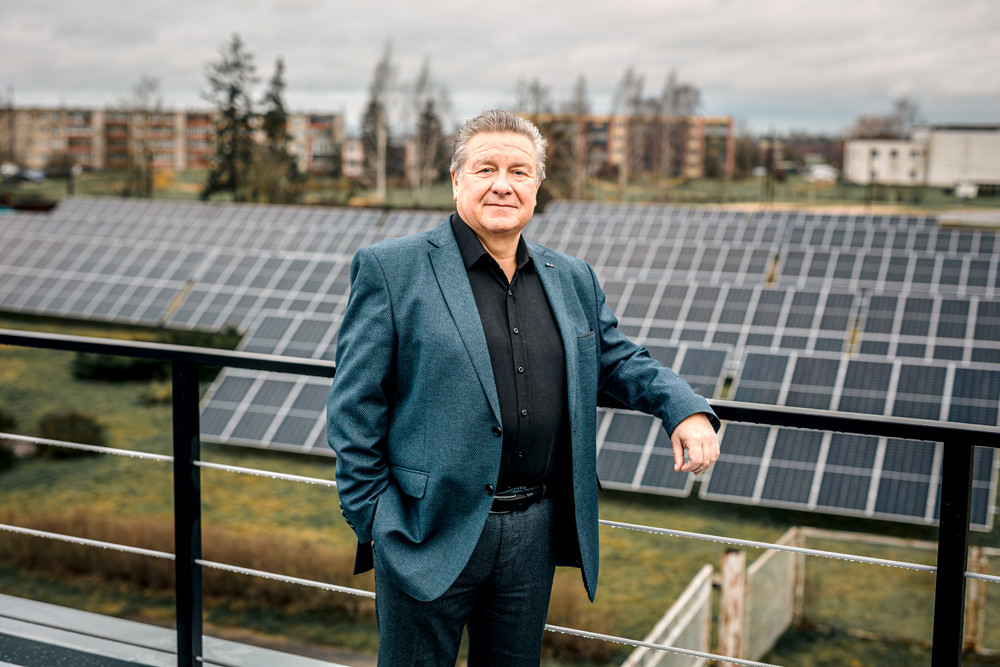
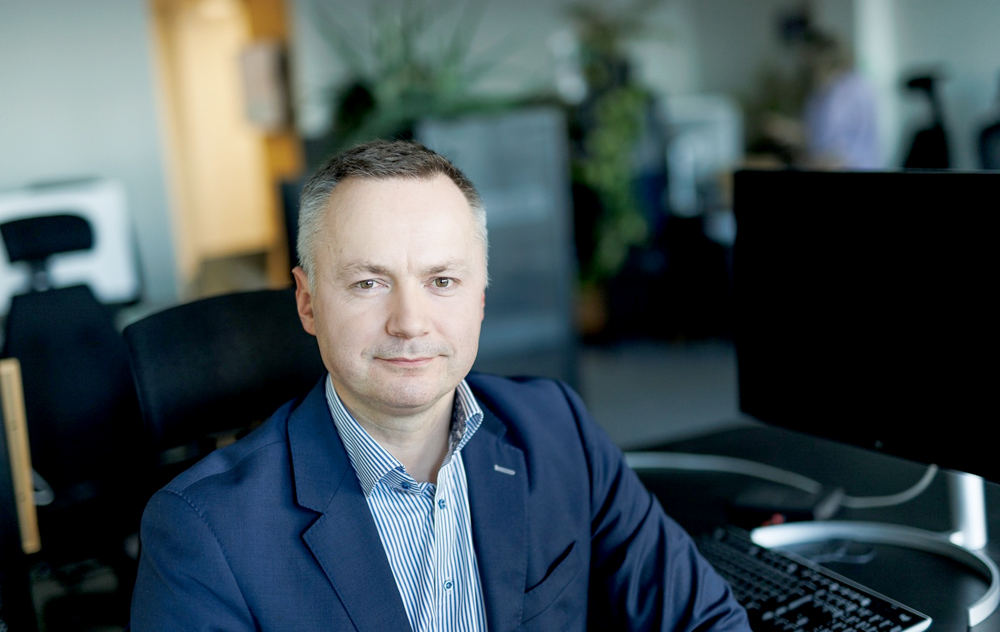
Approximately 80% of the annual output of the solar park is generated from May to September, but the surplus of electricity generated by solar, wind, and hydroelectric power stations determines the trend of low and even negative electricity prices, according to Ģirts Karpovičs, head of “Kvēle,” who has many years of experience in renewable energy projects. There is no economic justification for expanding the station with modern panels, but rather for integrating electricity storage devices, or BESS (battery energy storage systems). Batteries are essential to ensure the system is profitable even at low or negative electricity prices. This allows for charging batteries when there is too much sun and the price is low or even negative, and selling energy during evening hours when the price on the exchange rises.
“With the help of BESS, We see very easy to plan the discharge of the object’s self-consumption even during the dark hours of the day. It serves as a guaranteed source of power for a certain period during planned and unplanned power outages,” explains the company’s head. “A few years ago, the cost of BESS was very high compared to the payback period. Now we are experiencing a very rapid reduction in costs, which means that anyone, whether a private consumer or a businessman, can find a technically economic justification for installing BESS.”
Sustainability and Savings
Ģ. Karpovičs assesses that, with current experience, more attention would be paid to prospective electricity market price trends and the investment payback period before installing a solar park. A portion of the investment might be immediately allocated to BESS, as well as utilizing solar panel construction solutions that follow the sun’s trajectory from morning to evening. “When planning to install a solar power station, special attention should be paid to the conditions of grid connection, price risks, and data monitoring. A SCADA data monitoring or other monitoring system is recommended from day one to accurately monitor real-time energy flow. Space for battery containers should be planned in the design stage,” explains the energy builder. For companies whose production cycle coincides with daylight hours, a solar park would not only be a symbol of sustainability but also an opportunity to save money, as finances are predictable. It’s possible to fix the energy self-cost for the next 25 years. A solar park is the fastest way to improve a company’s “carbon footprint” or environmental impact.
Collaboration with Locals
“Sunly” has built two solar parks in the Bauska region. One is located in Iecava parish with a capacity of 4.2 MW, and the other in Bārbeles parish with a capacity of almost 5 MW. As stated by Toms Nāburgs, CEO of “Sunly” in Latvia, both projects were implemented in collaboration with SIA “Kvēle.” “It was a mutually successful partnership, and we are continuing it in other projects. Currently, we are jointly implementing a project more than ten times larger in the Valmiera region, near Matīšu village, where the solar park will start generating electricity this spring,” says the “Sunly” leader. Both Bauska region solar parks began generating electricity in early 2024, with their sustainably produced electricity reaching consumers throughout Latvia. “The Bauska region, with its flat terrain and sunny weather, is a very suitable place for the development of solar parks, and the previous operation confirms this,” concludes T. Nāburgs. “Sunly” is not currently planning new solar parks in the Bauska region.
One of the Largest
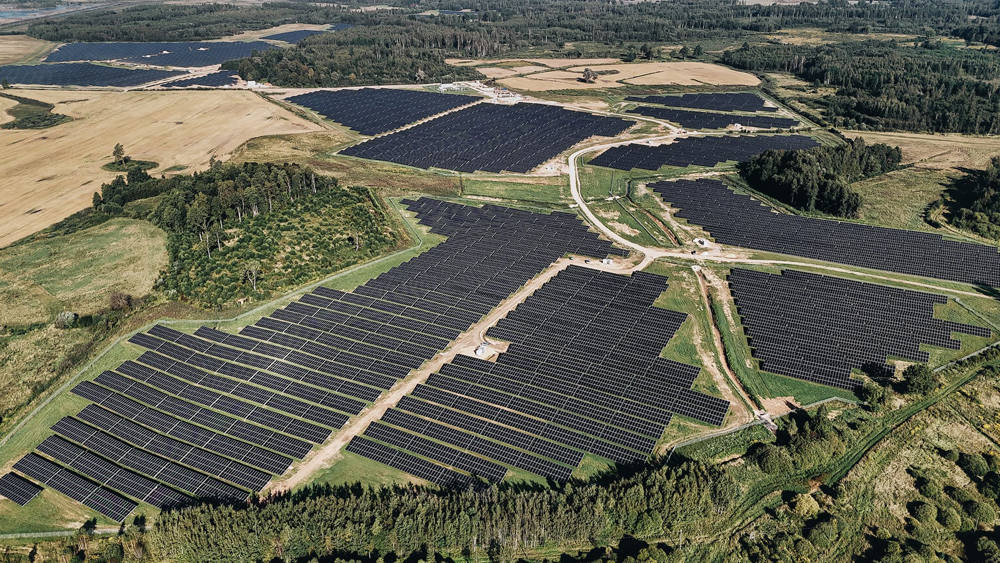
International renewable energy company “Ignitis Renewables” is developing the “Stelpe” solar park in the Bauska region with a total capacity of 145 MW, and it is one of the most significant solar projects in Latvia, informs Zane Poča, Communications Partner of “Ignitis Group Latvia.” It consists of two separate solar energy parks, “Stelpe-1” and “Stelpe-2” in Stelpe and Bārbeles parishes. Each park covers 85 hectares, with a total project area of 170 ha. Each park has more than 121,000 solar panels with a capacity of 72.5 MW. Both parks started operating in 2025.
Investments in the development of one park reach 54 million euros, while “Ignitis Renewables” total investments in solar energy projects in Latvia are around 284 million euros. This is a springboard not only for achieving Latvia’s climate goals but also for strengthening the energy independence of the entire Baltic region, emphasizes Z. Poča. “Ignitis Renewables” has not announced any new solar energy projects in the Bauska region at this time.
Business with Community Support
At the same time, the company cooperates with local communities and supports interest groups in the region, reports Z. Poča. “A practical example of support is the “Ignitis Renewables” grant program for local community initiatives, which allows associations to apply and implement ideas for improving the surroundings of the solar parks on a competitive basis. For the second year, we have provided financial support to the community in the areas where the company builds renewable energy projects.” Local initiatives received 270,000 euros from “Ignitis Renewables” in 2024, while community support was smaller in 2023 – 225,000 euros. In 2024, three community projects in the Bauska region received a total of 70,000 euros in funding, and four projects received 130,000 euros in funding this year.
Effective Even in a Rainy Summer
A separate renewable energy generation program is the state-owned company “Latvenergo.” As informed by Ivita Bidere, Press Secretary of the company, “Latvenergo” is expanding its renewable energy resource (AER) generation portfolio, supplementing the capacity of existing hydroelectric power stations (HES) with solar and wind parks. In 2024, the “SES100MW” project was implemented with new solar stations throughout Latvia, and an electricity station was also opened in Bauska.
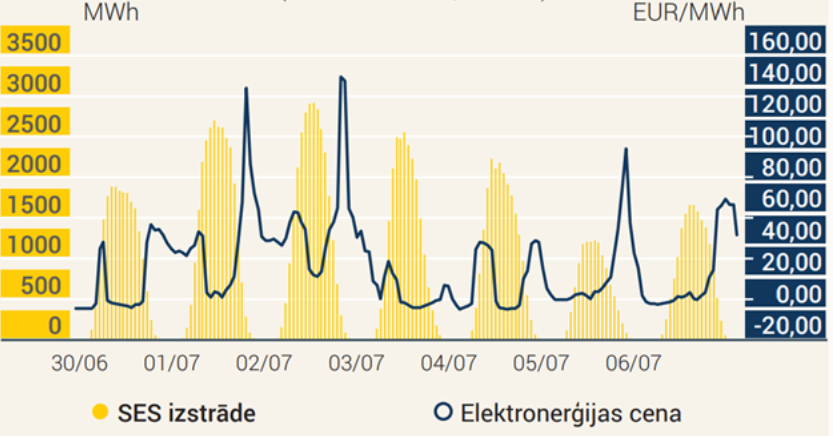
The capacity of the solar power station built in the Bauska region is 7.1 MW and occupies 8 hectares of land. The park operates very efficiently, and the July 2024 storm did not damage it, informs I. Bidere. Even during the rainy summer of 2024, the Bauska SES generated almost 7 GWh of electricity, according to “Latvenergo” data. In Latvia and Europe in 2025, the share of solar energy increased as new SES were built and technologies became more accessible. Last summer in Latvia, there were periods when the sun generated one-third of the total consumption, reveals the “Latvenergo” representative, emphasizing that for the first time solar energy became the largest source of electricity in the European Union. This helped reduce electricity prices, especially during the day, as more cheap electricity entered the market. “As an example, we can mention the 27th week of 2025 in early July, when the highest solar generation in the Baltics of about 149 GWh was recorded, and it covered 34% of the electricity consumed during the week. At the same time, the average electricity price was 26 EUR/MWh, one of the lowest in the year. It is visible that when SES generation is higher, the price is lower,” explains I. Bidere. ◆
Electricity price depending on the generated by solar parks
Solar Parks in the Bauska Region
Two substations “Nīzere” and “Rūtiņi” have been built in Stelpe parish for connecting solar parks to the high-voltage grid, both financed by SIA “SP Venta”;
52 solar power stations (SES) with a capacity above the micro-generator capacity of 11.1 kW are connected to the distribution network;
Of the operating SES, 12 have a capacity of more than 1 MW, two objects
have a biogas cogeneration station with a total capacity of approximately 2 MW;
The largest SES capacity is 5.85 MW, three SES have energy storage batteries;
14 SES with a planned capacity of 485kW have been applied for connection this year, with energy storage batteries planned in five of the objects.
Data: “Augstsprieguma tīkls,” “Sadales tīkls”
