
Indonesian EV Market Heats Up: Polytron and Alva Lead Strategic Pricing War in April 2026
Fluctuations in fuel prices are accelerating the adoption of electric two-wheelers across Indonesia, prompting manufacturers to aggressively refine their pricing and ownership models. As of April 12, 2026, the market has split into distinct tiers, with brands competing through a mix of government subsidies, innovative battery leasing, and high-performance specifications to capture a wider consumer base.
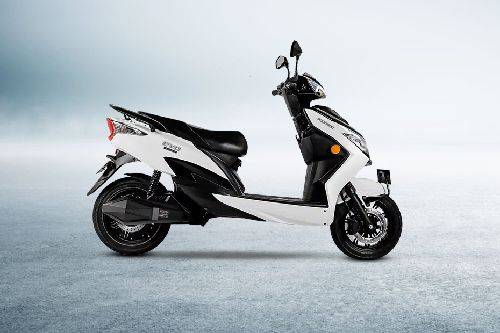
Polytron has emerged as a dominant force in the affordable segment by leveraging a strategic battery rental system to lower the initial barrier to entry. This approach is most evident with the Polytron Fox 500 and Fox-R lines. The Fox-R, specifically, is priced at Rp14,400,000 (OTR Jakarta) after government subsidies when utilizing the rental scheme. This model balances performance and cost, featuring a 3.75 kWh battery that delivers a range of up to 130 km and a top speed of 90 km/h.
Polytron’s aggressive pricing extends across its portfolio, with the Fox-200 standing as one of the most accessible options at Rp11,500,000. The company also offers the Fox 350, which is priced at Rp16,000,000 under the battery rental plan, compared to Rp28,300,000 for those choosing to purchase the battery outright. The premium Fox 500 is positioned higher at Rp38,100,000.
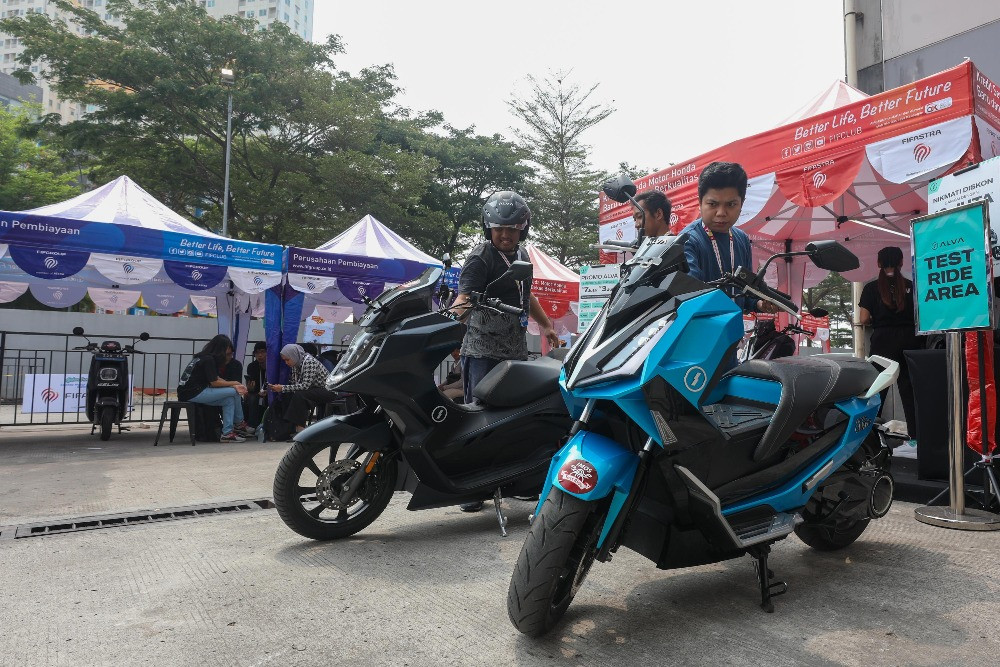
In contrast, Alva is targeting the mid-to-high-end urban market, emphasizing cutting-edge technology and raw performance. The Alva Cervo is designed for the modern urbanite, featuring a “Boost Mode” that provides 53.5 Nm of instant torque. Built for durability, the Cervo is IP67-certified for flood resistance and integrates smart app connectivity. Pricing for the Cervo ranges from Rp37,750,000 to Rp42,750,000, while the top-tier Cervo Q reaches Rp49,500,000. For those seeking a more moderate entry point into the Alva ecosystem, the N3 is available at Rp30,500,000, including the battery.
Meanwhile, Gesits continues to leverage its position as a local brand with an extensive after-sales service network. Its current lineup caters to various budget levels, including the GV1 Standard Range at Rp23,956,000 and the GV1 Long Range at Rp29,900,000. Other notable models include the Raya E at Rp26,500,000 and the G1 at Rp28,330,000.
Beyond the urban commute, specialized mobility is being addressed by the United E-Motor TX3000. Engineered for heavy-duty use and hilly terrains, the TX3000 utilizes dual battery slots to achieve a range of 120 km, filling a critical gap for users requiring higher reliability on challenging routes.
The diversification of these offerings—from Polytron’s budget-friendly rentals to Alva’s premium performance and United’s utility-focused designs—underscores a maturing market. As consumers weigh initial acquisition costs against long-term operational efficiency, the competition between these brands is expected to drive further innovation in battery technology and infrastructure across Indonesia.
