

Eva González Suárez y Alejandro Collado Solé. Christian Esposito/Madmoviex/CNIO
The study was published in the journal ‘Science’ and led by researcher Eva González-Suárez at the Spanish National Cancer Research Centre (CNIO).
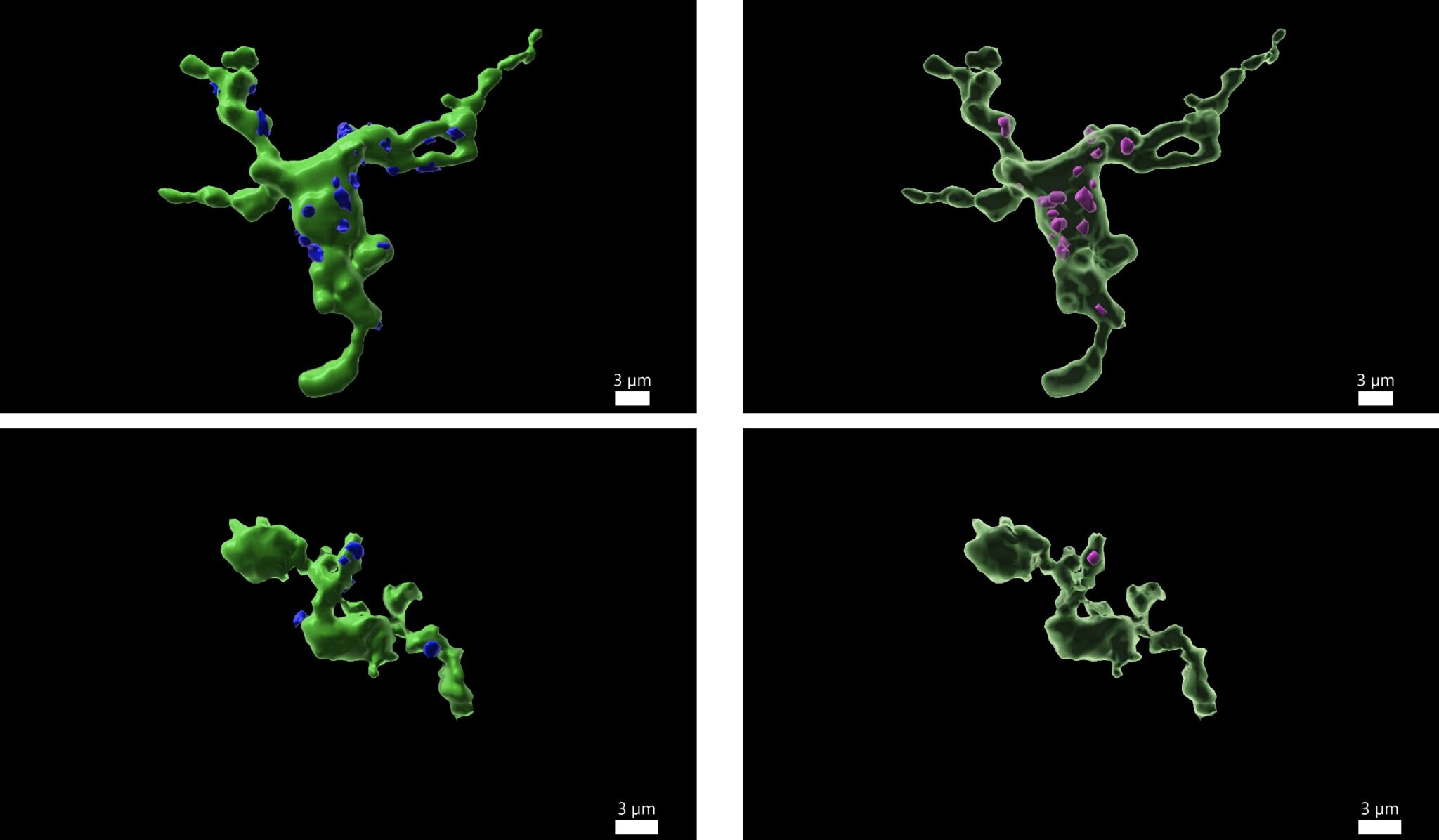
Researchers unexpectedly discovered that immune cells in the brain play a role in sexual development. The connection involves a protein called RANK, which is also important for breast development.
The research was conducted using animal models, but also identified genetic mutations linked to a rare infertility syndrome in humans.
The process of puberty begins in the brain, specifically in the hypothalamus, where specialized neurons release a hormone that activates the pituitary gland. The pituitary gland then releases other hormones that initiate the maturation of the ovaries or testicles – a process known as the hypothalamic-pituitary-gonadal (HPG) axis. Understanding the intricacies of this axis is crucial for addressing reproductive health challenges.
A fresh study from Spain’s National Cancer Research Centre (CNIO) has revealed that two previously unrecognized elements also contribute to this hormonal regulatory system: microglia, the brain’s resident immune cells, and the protein RANK, which is involved in bone remodeling and essential for mammary gland function. The findings were published online in Science on March 12, 2026.
The research was led by Eva González-Suárez, head of the Transformation and Metastasis Group at CNIO, who previously discovered RANK’s key role in breast cancer development in 2010. Alejandro Collado, a researcher in the same group, was the first author and co-corresponding author of the study.
Immune Cells and Fertility
The HPG axis regulates many processes related to reproduction. Within the hypothalamus, gonadotropin-releasing neurons (GnRH) are key players, controlling the onset of puberty, gonadal development, and fertility. Although it was known that GnRH neurons are modulated by other neurons, this study demonstrates that immune cells can also influence their function.
The newly discovered role of microglia – cells that remove threats and waste products in the central nervous system – is particularly noteworthy. “The fact that we found cells that aren’t neurons, but immune cells, regulating fertility is significant,” González-Suárez said.
The study shows that microglia regulate the function of GnRH neurons through the expression of the RANK protein.
When the research team suppressed RANK protein expression in animal models, reproductive function was disrupted in both males and females. Animals lacking RANK from birth, or in whom the protein was eliminated before puberty, experienced reduced sex hormone levels and gonadal dysfunction, known as hypogonadism, and did not undergo puberty. Eliminating RANK in sexually mature animals led to infertility within one month.

New Mutations Linked to Human Syndrome
To investigate the function of RANK in human fertility, the team analyzed samples from patients with congenital hypogonadotropic hypogonadism, a rare syndrome associated with delayed or absent puberty and infertility. This syndrome is known to be caused by problems in GnRH neurons or the molecules they produce. The research identified mutations in the gene encoding the RANK protein in some patients.
“These results suggest that RANK could be a therapeutic target for endocrine disorders and syndromes affecting fertility, and also a candidate gene for the molecular diagnosis of congenital hypogonadotropic hypogonadism,” the authors wrote. The identification of genetic links could improve diagnostic approaches for individuals experiencing infertility.
González-Suárez emphasized that “the role of microglia as a regulator of ‘reproductive’ neuron function is new, and that regulation associated with RANK may occur in other axes, for other functions, such as the appetite-satiety axis, the stress axis, etc.”
The Importance of Collaboration
The researchers highlighted the importance of interdisciplinary collaboration. “My doctoral thesis began with the question of whether the RANK protein had any function in the development of mammary tissue, in the breast itself, during puberty,” explained Collado. “When we saw that we needed to delve into issues of fertility, neurons and brain cells, we consulted with colleagues from other fields.”
This led to collaborations with Manuel Tena-Sempere, of the University of Córdoba and the Maimónides Biomedical Research Institute of Córdoba (IMIBIC); Vincent Prevot, of the Inserm (French National Institute of Health and Medical Research); Rafael Fernández Chacón, of the Institute of Biomedicine of Seville (IBiS-CSIC), Virgen del Rocío University Hospital/CSIC/University of Seville; and Nelly Pitteleoud, of the Centre Hospitalier Universitaire Vaudois (CHUV), in Lausanne, Switzerland.
“We have reached conclusions that we could not have foreseen and learned techniques and tools that People can now apply to future studies,” Collado said.
Funding Entities:
European Research Council (ERC); Fundación «la Caixa», Community of Madrid; Ministry of Science and Innovation through the State Research Agency, co-financed by the European Regional Development Fund (ERDF).
About the Spanish National Cancer Research Centre (CNIO)
The Spanish National Cancer Research Centre (CNIO) is a public research center dependent on the Ministry of Science, Innovation and Universities. It is the largest cancer research center in Spain and one of the most important in Europe. It brings together around 500 scientists and support staff working to improve the prevention, diagnosis and treatment of cancer.
Reference Article
Alejandro Collado-Sole, Nozha Borjini, Jing Zhai, Francisco Ruiz-Pino, Gonzalo Soria-Alcaide, Cintia Folgueira, Celia García-Vilela, Beatriz Romero-de la Rosa, Victor Lopez, Yassine Zouaghi5, An Jacob, Bella Mora-Romero, Alexandra Barranco, Guillermo Yoldi, Karine Rizzoti, Guadalupe Sabio, Gema Perez-Chacon, Patricia G. Santamaria, Jose Antonio Esteban, Nathalie Journiac, Vincent Prevot, Alberto Pascual, Rafael Fernández-Chacón, Manuel Tena-Sempere, Nelly Pitteloud and Eva Gonzalez-Suarez, Microglia Rank signaling regulates GnRH neuronal function and the hypothalamic-pituitary-gonadal axis, Science, 2026
DOI: 10.1126/science.aeb6999
