
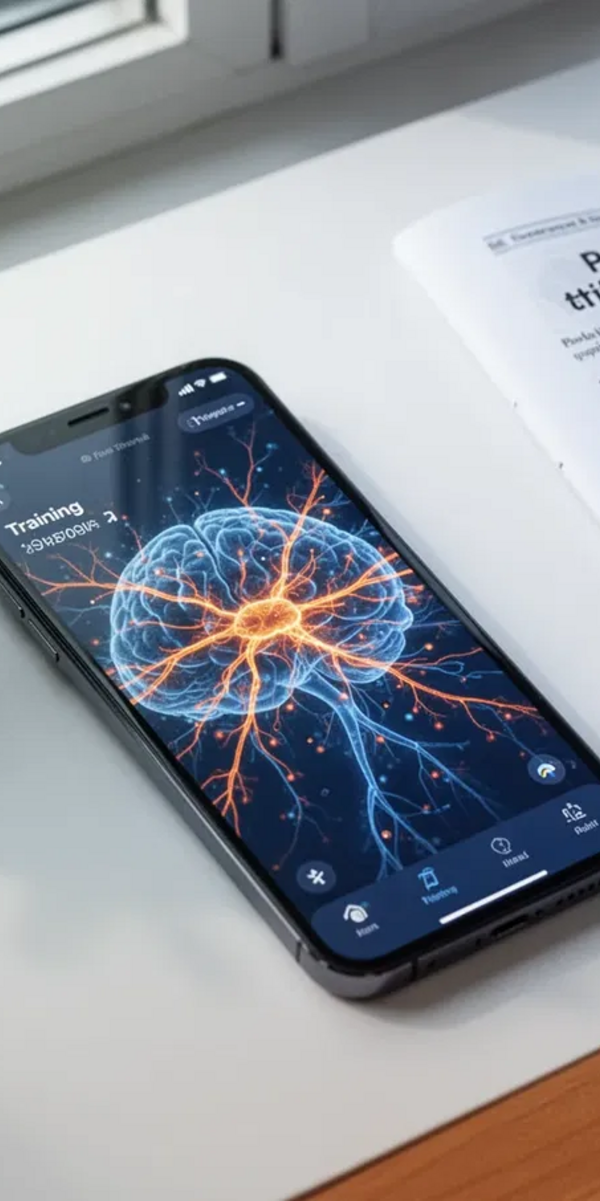
A groundbreaking study confirms that targeted training of processing speed can significantly reduce the risk of dementia, even decades after the training is completed. In Germany, apps featuring clinically validated exercises are already available via prescription.
A specialized computer-based training program can substantially lower dementia risk for up to 20 years, according to newly published long-term study results. This finding comes as the market for these types of cognitive training tools rapidly expands, with some apps now being prescribed by doctors in Germany.
A Historic Breakthrough with Long-Lasting Effects
The research is based on data from the U.S.-based ACTIVE study. The latest analysis, published in the journal Alzheimer’s Research, marks a milestone: it’s the first randomized clinical study to demonstrate the preventative effect of cognitive training over two decades. This research offers hope for proactive strategies to mitigate the growing public health challenge of dementia.
Originally, over 2,800 healthy adults participated in the study beginning in the late 1990s. Researchers at Johns Hopkins University recently compared the original training data with later insurance records from 2,021 participants. The results are clear: targeted exercises can significantly delay the onset of neurodegenerative diseases. Experts in the field consider this evidence unprecedented.
Processing Speed is Key
However, not all training is equally effective. The study revealed a surprising specificity. Participants were divided into groups focusing on memory training, reasoning training, or exercises to improve visual processing speed.
Only the visual processing speed training showed a long-term protective effect. This involved participants quickly identifying visual information and completing complex tasks under time pressure. The effort required to achieve this effect was relatively small: ten sessions of 60-75 minutes over five to six weeks.
Participants who completed refresher sessions later showed a dementia rate of 40 percent after 20 years, compared to 49 percent in the untrained control group. This translates to a relative risk reduction of 25 percent – achieved solely through targeted screen-based training.
From the Research Lab to Your Pocket
What once required bulky, specialized computers can now be done on a smartphone. App developers are integrating these effective processing speed exercises into modern applications.
The market is rapidly becoming more professional. In Germany, apps like NeuroNation MED have already achieved the status of a Digital Health Application (DiGA). Doctors can prescribe them for mild cognitive impairment – and health insurance covers the costs.
These medical apps dynamically adapt to the user’s level and simulate the clinically proven conditions. They also adhere to strict data privacy regulations, building trust in the technology.
A Catalyst for the Healthcare System
Health economists see the new data as a potential game-changer. Because there is currently no medical cure for many forms of dementia, the focus has been on managing symptoms. Confirmation of an effective preventative measure holds enormous potential.
Delaying the onset of the disease by even a few years could improve the quality of life for millions and save billions in healthcare costs. The findings also push the app market toward greater transparency, with clinically validated concepts becoming a key competitive advantage.
Neben präventivem Training ist die frühzeitige Erkennung von Symptomen entscheidend für den Erhalt der Lebensqualität. Mit diesem kurzen, anonymen Selbsttest erhalten Sie in nur 2 Minuten eine erste Einschätzung, ob hinter Ihrer Vergesslichkeit harmlose Ursachen oder ernste Warnsignale stecken. Anonymen 7-Fragen-Demenztest kostenlos machen
Where is Cognitive Health Heading?
The future points toward deeper technological integration. Developers are working on AI-powered programs that adapt in real-time to subtle changes in behavior. Initial studies are already testing the combination with virtual reality headsets for a more immersive training experience.
Experts predict that cognitive training will soon occupy a similar place to physical fitness. Given the aging population, more and more healthcare systems are likely to rely on app prescriptions. The smartphone could thus evolve from a communication tool into an instrument for neurological prevention.
Hol dir jetzt den Wissensvorsprung der Aktien-Profis.
Seit 2005 liefert der Börsenbrief trading-notes verlässliche Aktien-Empfehlungen – dreimal pro Woche, direkt ins Postfach. 100% kostenlos. 100% Expertenwissen. Trage einfach deine E-Mail Adresse ein und verpasse ab heute keine Top-Chance mehr.
Jetzt abonnieren.
