
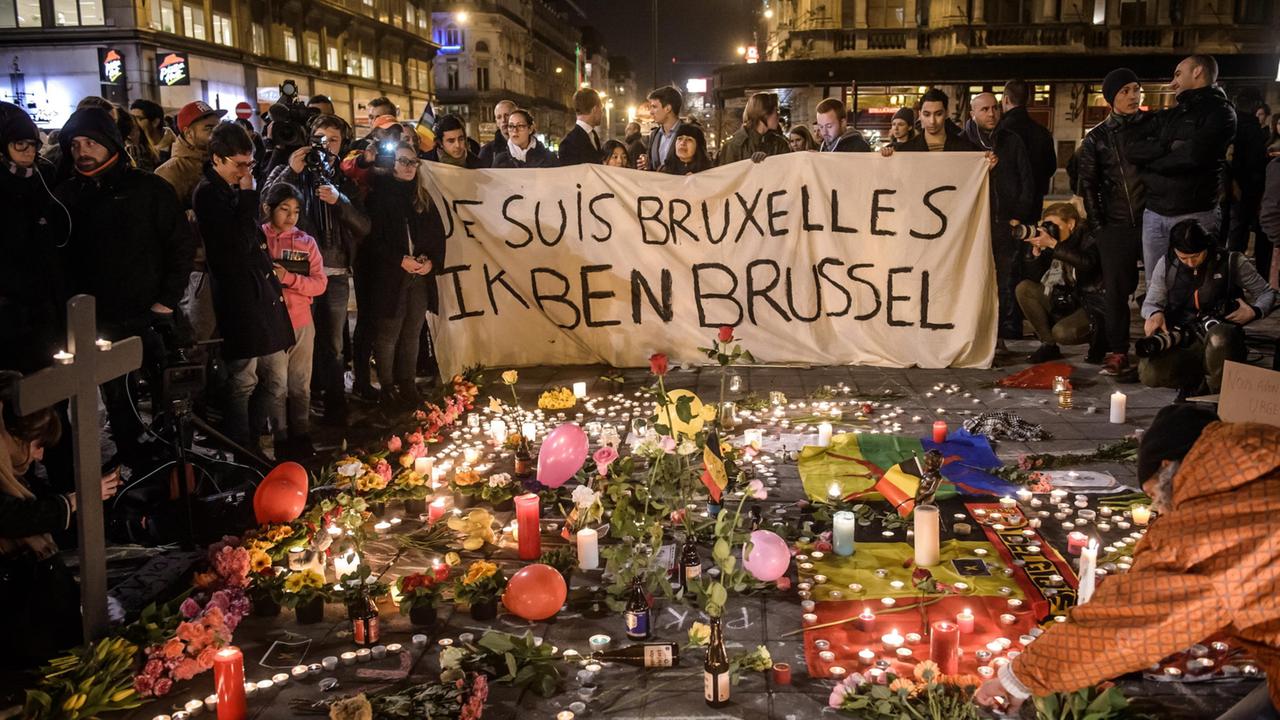
Ten years ago today, three attackers detonated bombs at Brussels Airport and in a metro station. Thirty-two people died, and hundreds were injured. The investigation led to a terror cell in the Molenbeek district.

Isabelle Panou is a leading authority on counterterrorism in Brussels. For 15 years, she headed Belgium’s anti-terrorism efforts. The attacks of March 22, 2016, continue to weigh heavily on her, even a decade later. The events were simply too dramatic to put behind her.
“The entire country was shaken. It was the first time Belgium experienced so many fatalities in a terrorist attack, and the impact is still felt today,” she said.
Thirty-two people were killed and 340 others, some critically injured, when bombs detonated at Brussels Airport and in the city’s metro system. Investigators quickly traced the attacks to a terror cell based in Molenbeek, a neighborhood in northern Brussels. It soon became clear that the same terror cell was responsible for attacks in Paris four months earlier, which left 120 people dead.
“Everyone Knew Each Other”
Isabelle Panou, who led Belgium’s anti-terror efforts, personally interrogated almost all of the surviving attackers. The term “terror network” suddenly took on a particularly concrete meaning for her.
“Everyone knew each other – they were cousins or friends. Some of the twelve had gone to school together in Molenbeek, and some had a shared criminal past. They were all connected,” she explained.
“Radical Understanding of Religion”
Panou meticulously researched the life stories of the attackers, seeking to understand what motivated them. Why would anyone run through the streets of Paris with explosive vests, or detonate bombs during the morning rush hour in the Brussels metro?
“I spoke at length with people who had a radical understanding of religion – who were extremely radicalized in Islam – what is known as indoctrination,” she said.
