
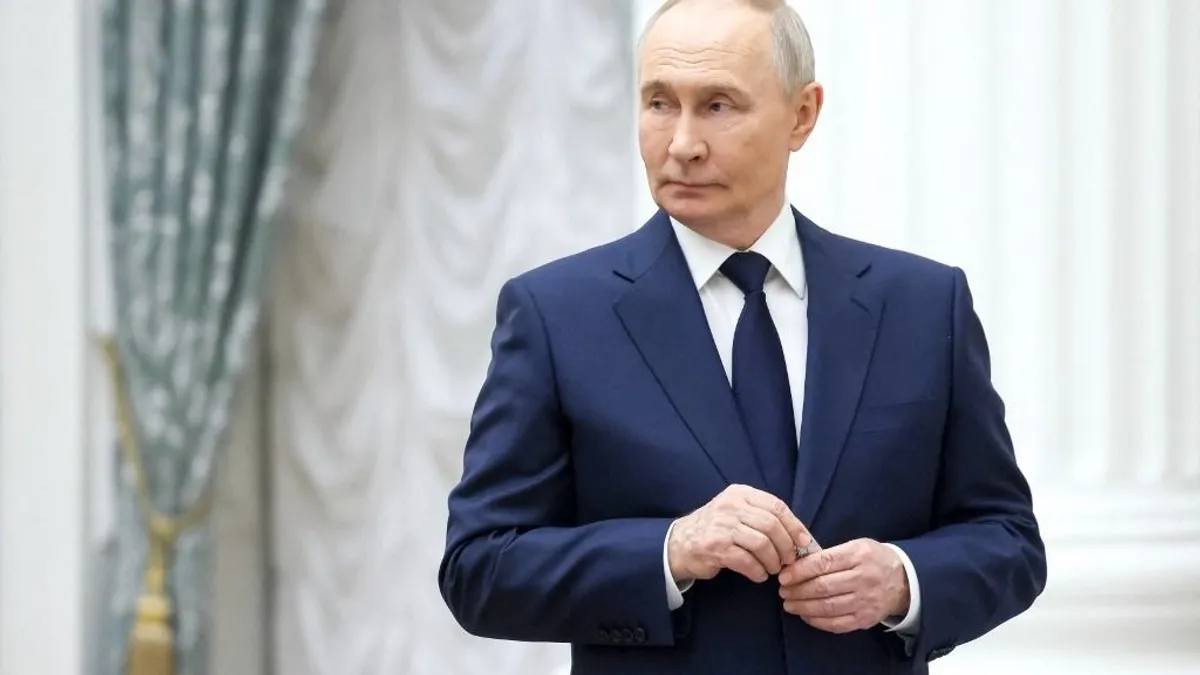
Newly declassified transcripts reveal a surprising level of early cooperation between Presidents George W. Bush and Vladimir Putin following the September 11th attacks, despite underlying disagreements on broader geopolitical issues. The documents, released by the National Security archive at George Washington University, detail candid conversations between the two leaders in 2001 and subsequent years, showcasing a willingness to find common ground on counterterrorism and nuclear security. These exchanges offer a nuanced viewpoint on the formative period of the “war on terror” and the often-strained U.S.-Russia relationship-a dynamic especially relevant as international tensions remain high today.
Newly declassified transcripts of conversations between Presidents George W. Bush and Vladimir Putin reveal a surprising degree of cooperation between the two leaders in the wake of the 9/11 terrorist attacks, despite growing disagreements over issues like NATO expansion and missile defense. The documents, released by the National Security Archive at George Washington University, show both leaders actively sought common ground, particularly in counterterrorism efforts and nuclear arms control. This discovery offers a new perspective on the early years of the “war on terror” and the evolving U.S.-Russia relationship.
Fotó: AFP
The first documented conversation took place on July 6, 2001, shortly after a summit in Slovenia. Putin extended birthday greetings to Bush – making him the first foreign leader to do so – and Bush requested he address him as “George.” Bush expressed condolences following a plane crash in Irkutsk, and the two presidents discussed Iraq, seeking a joint approach to the question of sanctions.
Bush also complimented Putin on his English skills during the call.
The tone of a phone call following the September 11, 2001, attacks was particularly striking. Bush thanked Putin for being the first world leader to call after the attacks, and Putin announced Russia would observe a national moment of silence in memory of the American victims. “I am fully with you,” Putin stated, to which Bush responded by calling him a friend.
During a meeting at the APEC summit in Shanghai in October 2001, the global war on terror took center stage. Putin offered to share all information Russia’s intelligence services had on the Taliban, while also expressing frustration that Washington appeared less willing to reciprocate. The situation in Chechnya also came up, with Putin describing it as a long-standing conflict involving radical Islam, and Bush asking specific questions to better understand the Russian perspective.
A November 2001 meeting in Washington marked a high point in the early dialogue. Bush stated that Russia should have a special role within NATO, and spoke of a “new alliance.” Regarding Afghanistan, both leaders used strong language in condemning terrorists. Bush reportedly told Putin:
“You’re the kind of guy I’d want to be with me in a trench.”
In subsequent years, discussions included the creation of the NATO-Russia Council, reducing the number of nuclear warheads, and the security situation in the Caucasus. Putin repeatedly emphasized that NATO expansion created domestic political pressure for him, but at this time, he did not issue overt threats. The release of these transcripts provides valuable insight into a period of complex and often contradictory dynamics between the United States and Russia, and could inform current diplomatic efforts.
The conversations also touched on the Jackson-Vanik amendment, a U.S. trade restriction linked to Soviet emigration policies, despite the ongoing disagreements. According to the released documents, both leaders consistently explored avenues for collaboration even as tensions simmered beneath the surface.
