
Doctors are increasingly recognizing cancer as one of the most significant health challenges facing communities worldwide, with rising incidence rates across numerous countries. While a multitude of factors contribute to cancer development, many are modifiable lifestyle choices that individuals can control or mitigate.
Six key factors are particularly important: smoking, obesity, physical inactivity, poor diet, certain infections, and genetic predispositions, alongside a lack of regular health screenings. Addressing these factors is crucial, as modifying them can reduce cancer risk and improve early detection rates, ultimately leading to higher chances of successful treatment.
The UAE healthcare system is actively developing comprehensive strategies to combat cancer through expanded screening programs, updated treatment protocols, and increased access to specialized care. Experts encourage individuals to take advantage of these preventative measures, emphasizing that early intervention is transforming cancer from a potentially fatal diagnosis into a more manageable condition.
“Studies both locally and internationally consistently demonstrate that a significant portion of cancer risk is linked to modifiable factors,” explained Dr. Hassan Jaafar, a medical oncologist. “These six primary factors include all forms of smoking, obesity, lack of physical activity, unhealthy dietary patterns, certain virus-related infections like human papillomavirus (HPV) and hepatitis B (HBV), genetic factors, and neglecting routine check-ups.”
Dr. Jaafar added that a major shift in cancer treatment in recent years has been a move away from a “one-size-fits-all” approach toward personalized medicine. This involves analyzing the unique characteristics of each patient’s tumor to tailor treatment plans, utilizing targeted therapies, immunotherapy, and more customized strategies, resulting in improved outcomes and fewer side effects for a wider range of patients.
Survival rates vary depending on the type and stage of cancer, but early diagnosis significantly improves the chances of recovery. For example, when diagnosed early, the survival rate for breast cancer can reach 99%, and the survival rate for colon and rectal cancer is approximately 91% with early detection.
Dr. Mohamed Adeela, a consultant in general surgery and surgical oncology, highlighted advancements in surgical techniques. “Modern cancer surgeries are no longer limited to traditional removal methods,” he said. “They now include highly precise solutions that target the tumor while minimizing impact on the body.” He cited techniques like hepatic arterial infusion pump (HAIP) therapy for liver tumors, which delivers concentrated chemotherapy directly to the liver via a pump implanted under the skin, enhancing treatment effectiveness and reducing systemic side effects.
The UAE healthcare sector is equipped with the latest technologies to enhance surgical options, reduce recovery times, and lower healthcare costs. These include techniques for treating peritoneal cancer, such as hyperthermic intraperitoneal chemotherapy (HIPEC) following surgical removal of the tumor, a combined approach involving surgery and localized high-heat chemotherapy for carefully selected patients.
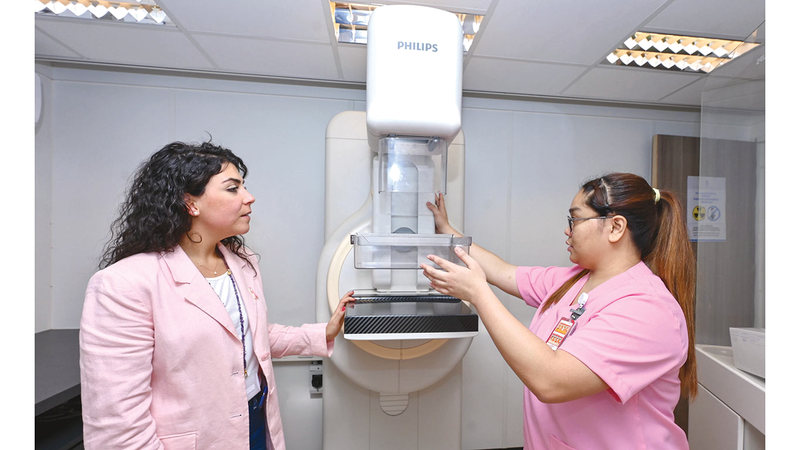
Dr. Mai Mohammed, a specialist in obstetrics and gynecology, noted that many women are diagnosed with breast cancer at later stages and at younger ages due to a lack of awareness regarding screening guidelines and family history. She emphasized the importance of regular self-exams to detect any lumps, thickening, or changes in the skin or nipple discharge. She similarly recommended mammograms starting at age 40 for women without known risk factors.
Women diagnosed with breast cancer at an early stage, before the cancer has spread, have a relative five-year survival rate of 99%. “it is crucial for women to undergo regular and periodic breast exams, as early detection allows for prompt and appropriate treatment, leading to the best possible outcomes,” Dr. Mohammed stated.
Doctors also emphasized that the UAE healthcare system offers innovative solutions to minimize the side effects of chemotherapy, a major challenge for patients. These include cooling caps worn during chemotherapy to reduce hair loss, a common and psychologically distressing side effect, and a medical device for hand cooling used with certain chemotherapy regimens to reduce nerve damage and neuropathy. The implementation of personalized medicine and tailored treatment and prevention plans represent a significant advancement in care and improved quality of life for patients during and after treatment.
Official statistics indicate that cancer accounted for 13% of all deaths in Abu Dhabi in 2024, making it the second leading cause of death. The data showed that 55% of these deaths occurred in males and 45% in females.
A national health and nutrition survey conducted by the Ministry of Health and Prevention in collaboration with the World Health Organization revealed that 8.7% of adults in the UAE currently smoke tobacco, 22.4% are obese, 27.3% exceed recommended sugar intake levels, and 56% exceed recommended fat intake levels.
• 99% survival rate when breast cancer is detected early.
تابعوا آخر أخبارنا المحلية والرياضية وآخر المستجدات السياسية والإقتصادية عبر Google news
