
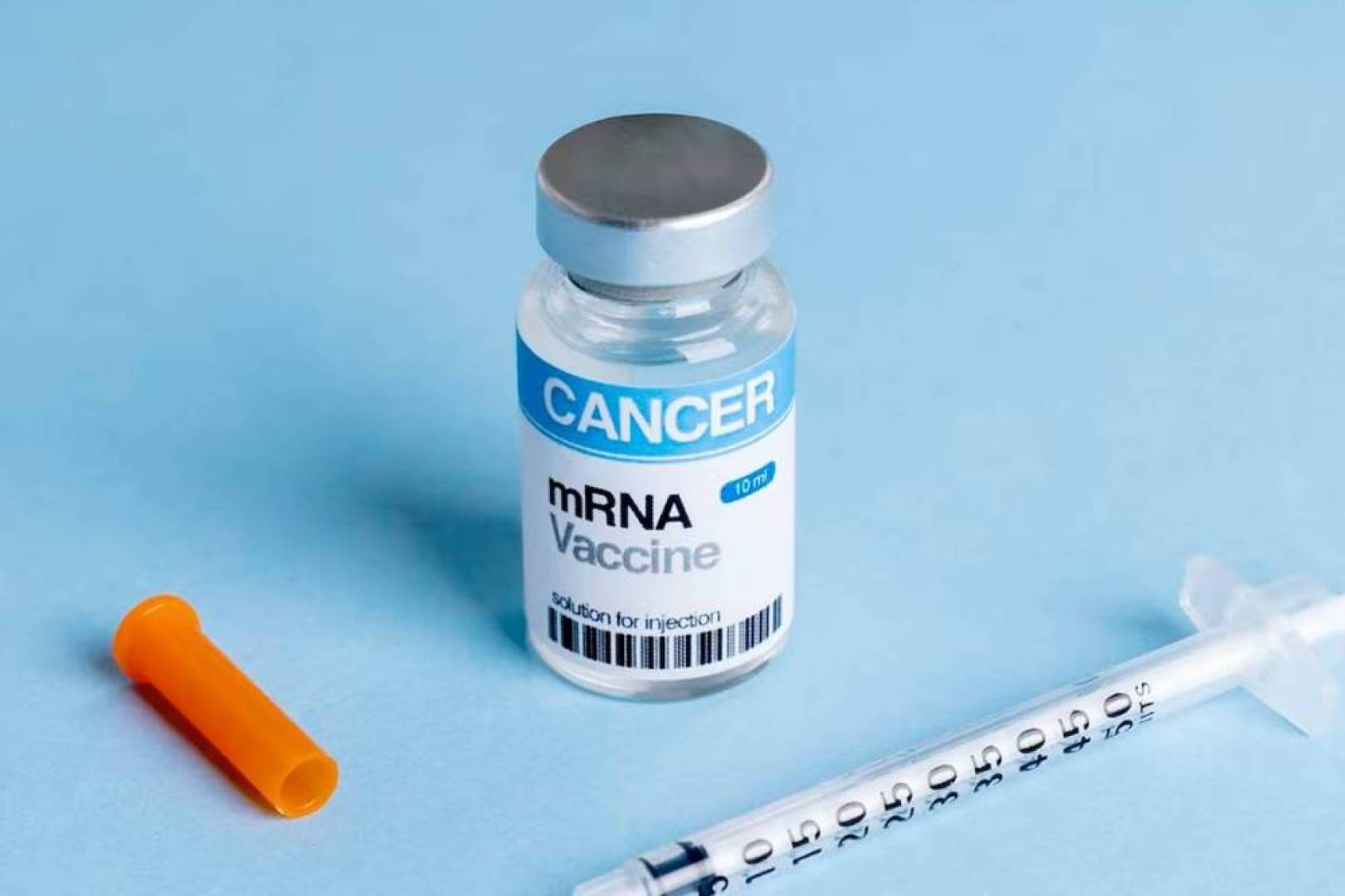
Research into cancer vaccines is rapidly advancing, with scientists worldwide conducting hundreds of clinical trials to develop treatments that stimulate the immune system to attack tumors.
According to data from the United States Centers for Disease Control and Prevention, cancer is the second leading cause of death in the United States, accounting for more than 613,000 deaths in 2023. This underscores the urgent demand for new and effective cancer prevention and treatment strategies.
The United States National Library of Medicine reports that more than 400 clinical trials have been launched in the past three years to test therapeutic cancer vaccines.
Promising Results from Experimental Vaccine
Moderna and Merck & Co. Have announced encouraging results from an experimental vaccine utilizing mRNA technology to treat Melanoma, a particularly dangerous form of skin cancer.
The trials demonstrated that the vaccine contributed to a roughly 50% reduction in the risk of death or disease recurrence over five years in patients with advanced stages of the disease.
Following these findings, the companies are currently testing similar vaccines for other types of cancer, including Renal Cell Carcinoma, or kidney cancer.
How Cancer Vaccines Function
Cancer vaccines work by activating the immune system to attack existing tumors within the body.
Researcher Mansoor Amiji from Northeastern University explains that scientists design these vaccines to recognize antigens – proteins produced by cancer cells that act as distinct markers.
When the immune system recognizes these markers, it begins to attack the cancer cells, identifying them as foreign bodies that must be eliminated.
Many of these vaccines rely on messenger RNA (mRNA) technology, the same technology used in the development of COVID-19 vaccines.
The Role of Artificial Intelligence in Vaccine Development
A significant development in this field is the use of artificial intelligence to help identify antigens present within tumors.
Researcher Zhongkun Zhang notes that AI models can analyze tumor data quickly to pinpoint the molecules that vaccines should target, potentially increasing their effectiveness.
These technologies can similarly be used to design more precise delivery systems, ensuring that vaccines reach cancer cells without affecting healthy tissues.
Cancer Types Under Investigation
Current trials include the development of vaccines to treat several of the most common types of cancer, including:
Breast Cancer
Pancreatic Cancer
Colorectal Cancer
Lung Cancer
Researchers hope that this research will lead to new treatments that can be used alongside traditional therapies such as chemotherapy or radiation.
Challenges in Developing Cancer Vaccines
Despite significant progress, several scientific challenges remain in the development of these vaccines.
One of the key challenges is that cancer is not a single disease, but a collection of diseases with varying molecular characteristics.
Patients with the same type of cancer may have tumors with different molecular compositions, making it difficult to develop a single vaccine suitable for everyone.
In some cases, the immune system may attack healthy cells instead of cancer cells, potentially causing undesirable side effects.
The Future of Cancer Vaccine Therapy
A scientific review published in the journal Biomaterials suggests that combining multiple technologies may improve the effectiveness of cancer vaccines, including:
Artificial intelligence for tumor analysis
mRNA vaccine delivery platforms
Combination immunotherapy treatments
Using Vaccines with Chemotherapy or Radiation
Researchers believe these developments could lead to a new generation of personalized treatments that target tumors more precisely, potentially improving treatment outcomes and reducing the risk of recurrence.
