

A blood analysis of Swiss centenarians revealed the presence of 37 proteins linked to slower aging, suggesting that key biological mechanisms remain active even at extreme ages, according to research published in the journal Aging Cell. Understanding the biological factors contributing to exceptional longevity is a growing area of public health interest as global populations age.
This finding emerged from the SWISS100 study, the first large-scale Swiss research project dedicated to centenarians, conducted by the University of Geneva (UNIGE) and the University of Lausanne (UNIL). Researchers suggest the secret to exceptional longevity may lie in both molecular factors and healthy lifestyle habits, given that only 0.02% of the Swiss population lives past 100 years old.

The research team, led by Karl-Heinz Krause, honorary professor at the Faculty of Medicine of the University of Geneva, compared three population groups: 39 centenarians (aged 100 to 105, 85% women), 59 octogenarians, and 40 people between 30 and 60 years old.
Analysis identified that, for these 37 proteins, centenarians have a protein profile similar to that of younger individuals, particularly in markers associated with oxidative stress, which was significantly lower compared to octogenarians and the general geriatric population. Oxidative stress is known to contribute to age-related decline and disease.
“Octogenarians allow for a more detailed analysis of the evolution of certain blood markers throughout life and help to distinguish normal aging from the exceptional aging experienced by centenarians,” explained Karl-Heinz Krause.
According to the authors, the global number of people aged 85 and over and centenarians has increased substantially in the last half-century and will continue to increase due to improvements in lifestyle and medical advances. This demographic shift presents challenges for healthcare systems worldwide.
“By 2050, the European population aged 85 or over will double, and the number of centenarians worldwide will reach almost four million,” the researchers stated, warning that “this growing number of very old individuals represents a global demographic challenge, as aging is the greatest risk factor for chronic disorders and increased vulnerability.” They emphasized the importance of advancing research on aging.
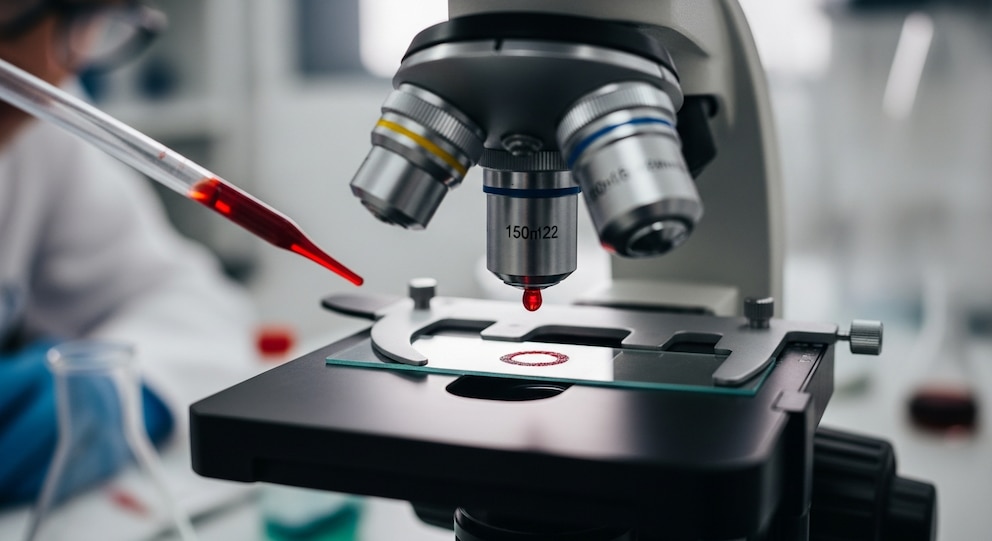
Researchers measured 724 proteins in blood serum, including 358 markers of inflammation and 366 cardiovascular markers, two key areas for longevity.
“Of these 724 proteins, 37 showed a truly surprising result,” said Flavien Delhaes, researcher in the Department of Cellular Physiology and Metabolism at the Faculty of Medicine of UNIGE and first author of the study.
“In our centenarians, the profiles of these 37 proteins are more similar to those of younger people than to those of octogenarians. This represents approximately 5% of the proteins measured, suggesting that centenarians do not completely escape aging, but certain key mechanisms are significantly slowed down.”
The most marked result was observed in five proteins related to oxidative stress caused by free radicals, which comes primarily from two sources: chronic inflammation, where white blood cells produce them to defend the body, and dysfunctional mitochondria that release these molecules, whose overproduction becomes harmful.

“Do centenarians produce fewer free radicals or have a more potent antioxidant defense?” asked Karl-Heinz Krause. “The answer is very clear: centenarians have significantly reduced levels of key antioxidant proteins. At first glance, this seems contradictory, but in reality, it indicates that, since the level of oxidative stress is much lower in centenarians, they have less need to produce antioxidant proteins to defend themselves.”
Other proteins identified in centenarians show similar levels to those of younger individuals in functions such as the regulation of the extracellular matrix, the fundamental “cement” of the body’s tissues. Some may also have a protective role against cancer, while several involved in fat and glucose metabolism increase with age in octogenarians and older, but remain relatively stable in centenarians.

The SWISS100 project—led by Daniela Jopp, professor at the University of Lausanne—is the first large-scale study on people who have reached one hundred years in Switzerland and addresses longevity from four perspectives: sociology, psychology, medicine, and biology.
The comparison with the group of octogenarians is key: it allows researchers to distinguish between patterns specific to normal aging and those exceptional associated with a longevity outside the norm. In the long term, these results could open the door to new therapeutic approaches to combat frailty in the elderly population.
“For now, our study highlights the importance of a healthy lifestyle, which we can all influence. Given that the genetic component of longevity is only 25%, lifestyle during adulthood is a key factor: nutrition, physical activity, and social relationships. For example, eating a fruit in the morning can reduce oxidative stress in the blood throughout the day. Physical activity helps maintain the extracellular matrix in a more youthful state. Avoiding overweight also helps maintain a healthy metabolism, similar to that observed in centenarians,” the authors concluded.
