
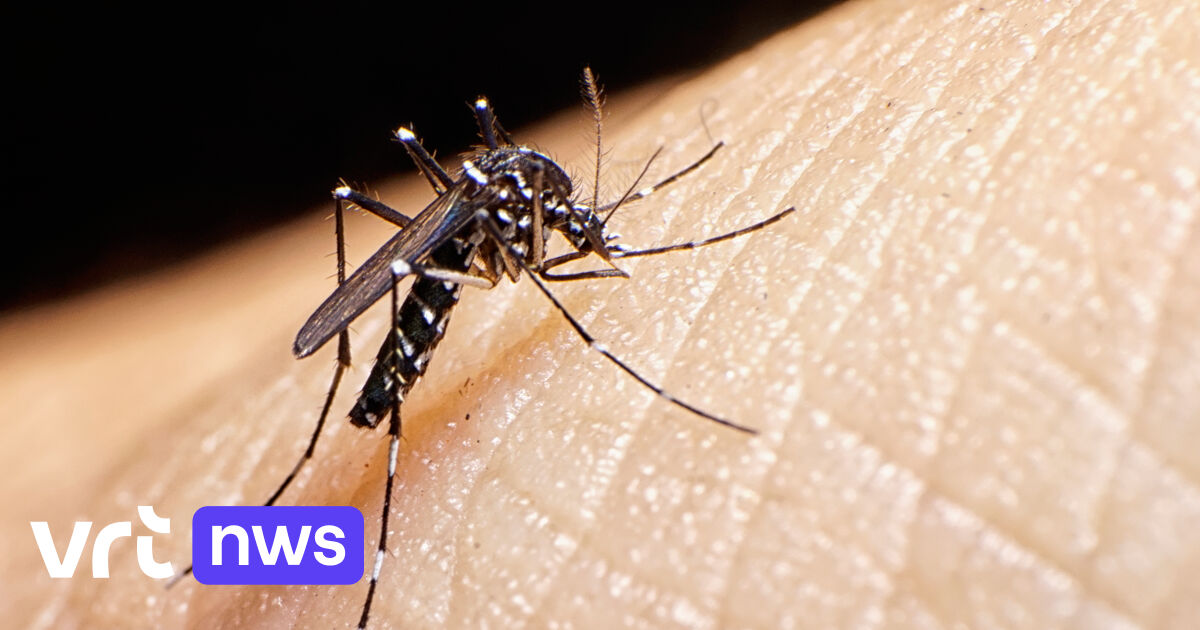
The chikungunya virus can now be transmitted to humans by the tiger mosquito in Belgium, according to a new scientific study. The research indicates that the temperature required for transmission is lower than previously believed, increasing the risk of contracting the tropical disease during the summer months.
The tiger mosquito, originally from Asia, is increasingly common in Europe and is known to carry tropical diseases like chikungunya, dengue, and Zika. Its distinctive appearance includes a black body with white stripes. Climate change is contributing to its spread northward, and the mosquito has already been observed overwintering in at least eight Belgian municipalities, suggesting it can now survive in the region year-round.
A study published in the Journal of the Royal Society Interface found that the tiger mosquito can transmit chikungunya at temperatures as low as 13.8 degrees Celsius (56.8 degrees Fahrenheit). This is 2.5 degrees Celsius lower than previously thought, significantly expanding the period during which transmission is possible. Researchers say this broader “window of opportunity” means that Belgium could see risk periods in July and August, and even June in some areas like the Kempen region.
While the risk increases with warmer temperatures, with 25.6 degrees Celsius (78.1 degrees Fahrenheit) considered ideal for the mosquito, transmission is now possible at lower temperatures more typical of European summers. This finding is particularly relevant for public health officials as it suggests a wider geographic area and longer timeframe for potential outbreaks.
Chikungunya symptoms typically include high fever, headache, muscle and joint pain, rash, and eye problems, often resembling the flu. While most symptoms subside within weeks, joint pain can persist for months or even years. More severe symptoms can occur in infants, the elderly, or individuals with chronic conditions like hypertension or diabetes. There is currently no vaccine or specific treatment for chikungunya, only supportive care.
The Federal Agency for Medicines and Health Products (FAGG) notes that chikungunya is transmitted to humans through the bite of infected tiger mosquitoes and the mosquito that also transmits yellow fever. Currently, cases in Belgium are limited to imported infections in travelers returning from regions where the virus circulates. However, the new research suggests locally transmitted cases are increasingly possible.
Individuals who spot a tiger mosquito are encouraged to report it on www.muggensurveillance.be to help Sciensano monitor the mosquito’s spread. The increasing presence of the tiger mosquito and the lower temperature threshold for transmission highlight the growing need for vigilance and preventative measures to protect public health.
The findings, reported on February 19, 2026, underscore the impact of climate change on the spread of vector-borne diseases and the importance of ongoing surveillance and public health preparedness.
