
For the first time on record, Chinese automakers exported more vehicles and key automotive components to the European Union than the other way around in 2025, marking a significant shift in the automotive trade balance.
Last year, shipments from China to Europe totaled approximately 538 billion Czech koruna (roughly $23.6 billion USD), while European automotive exports to China reached around 392 billion koruna ($17.2 billion USD). This represents a substantial increase in China’s automotive exports to the EU.
According to a report by the consultancy EY’s German branch, European automotive exports to China fell by roughly 34 percent in a single year. German automakers, historically reliant on the Chinese market, are feeling the impact of this change. China previously accounted for more than a third of Volkswagen Group’s total sales just a decade ago, but is now declining in importance as a key market.
For German automakers – many of which have production facilities in the Czech Republic – China has fallen to sixth place in the ranking of most important export destinations, according to EY. The United States, Great Britain, and France now lead the list, followed by Poland and Italy.
“We will witness a further intensification of mutual competition in 2026, and the pressure on Germany, as the home of the automotive industry, will continue to grow,” Constantin Gall of EY told the DPA news agency. The shift underscores the increasing globalization of the automotive supply chain and the growing competitiveness of Chinese manufacturers.
The analysis from EY deliberately focused not only on complete vehicles, but as well on key components. A significant portion of the value of electric vehicles comes from batteries – and these are largely imported from China. Major European automakers are heavily reliant on Chinese battery manufacturers like CATL.
However, the growing exports from China aren’t solely benefiting Chinese brands. European companies are also profiting from the trade, thanks to lower production costs in Chinese factories.
Many vehicles sold in Europe under established brands are now manufactured in China. These include the Dacia Spring and Cupra Tavascan electric vehicles, certain Tesla Model 3s, and the Smart brand, in which Mercedes-Benz holds a stake. This shift in the export/import balance is further fueled by the increasing trend of outsourcing production.
Chinese Brands Gain Ground in Europe
Chinese brands are also strengthening their position in the European market. Their market share within the EU rose to approximately 5.8 percent last year, and is projected to continue increasing, according to S&P Global Mobility.
The agency anticipates that Europe will have the highest concentration of Chinese-made vehicles globally – excluding China itself. Around 486 million cars are expected to be on European roads by 2035, with approximately 28 million of those being Chinese brands.
“Despite additional tariffs from the EU, competitive pricing, safety guarantees from Euro NCAP tests, expanding dealer networks, and growing brand awareness have led to faster acceptance of Chinese manufacturers among European consumers,” said Sidong Fan, a leading research analyst at S&P Global Mobility. He added that the diversification of offerings has also contributed to the success of Chinese brands.
Initially, Chinese automakers targeted primarily consumers interested in pure electric vehicles, due to China’s advanced know-how and large production capacity in this segment. However, due to sluggish demand for electric cars, many brands have also focused on other types of powertrains. By emphasizing hybrids, they have begun to achieve success in countries like Poland.
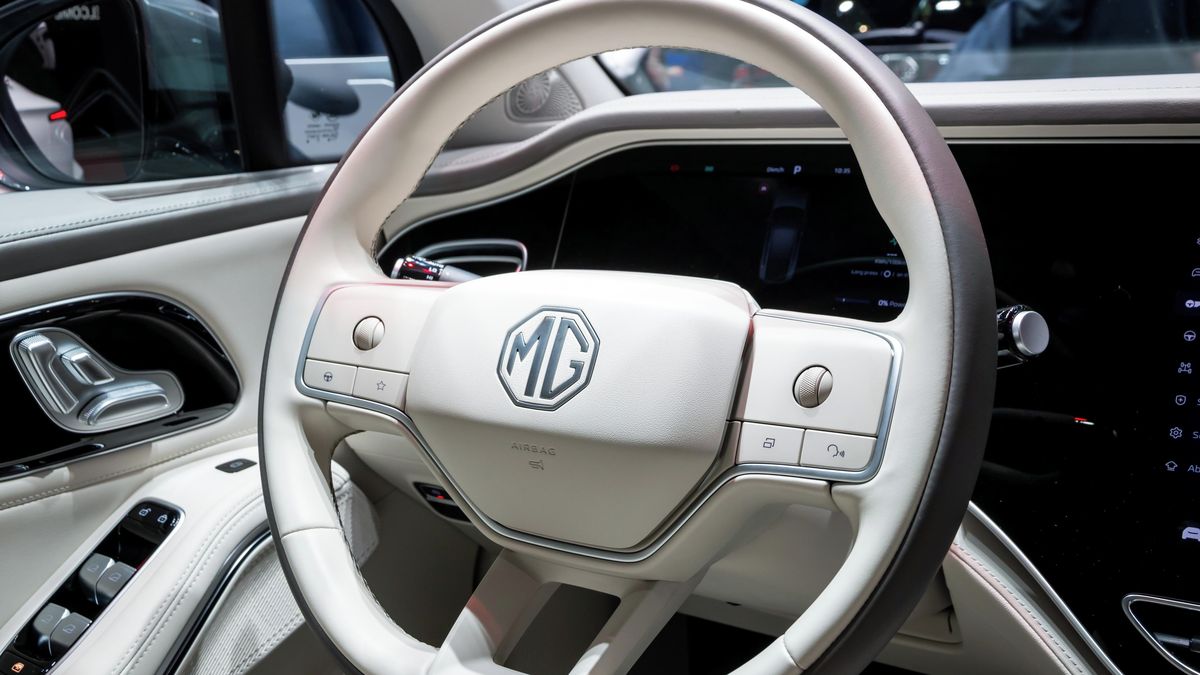
In some larger countries, brands like MG and BYD together hold around 10 percent of the market share, including the United Kingdom, Spain, and Italy. However, their entry is slower in Germany and the Czech Republic.
Chinese automakers are also investing in local production. In the near future, vehicles for the European market will be manufactured in countries within the European Union or in Turkey. S&P Global Mobility estimates that the number of vehicles imported directly from China will stabilize from next year onward. Further growth of Chinese brands in Europe will then be driven by the increasing number of plants being built directly in the region.
For example, Chery Auto is working on building plants in Catalonia, BYD has chosen Hungary, and SAIC, the parent company of MG, is expected to finalize a suitable location for its European factory soon.
While posing a competitive challenge to established European automakers, Chinese brands are also seen as potential partners. Stellantis, which includes brands like Opel, Peugeot, and Fiat, is reportedly considering deepening its collaboration with Chinese company Leapmotor, according to Automotive News.
Stellantis wrote off billions of dollars in investments due to a failed bet on electric vehicles. The company could take over some technological solutions from the Chinese manufacturer to significantly save on development costs.
