
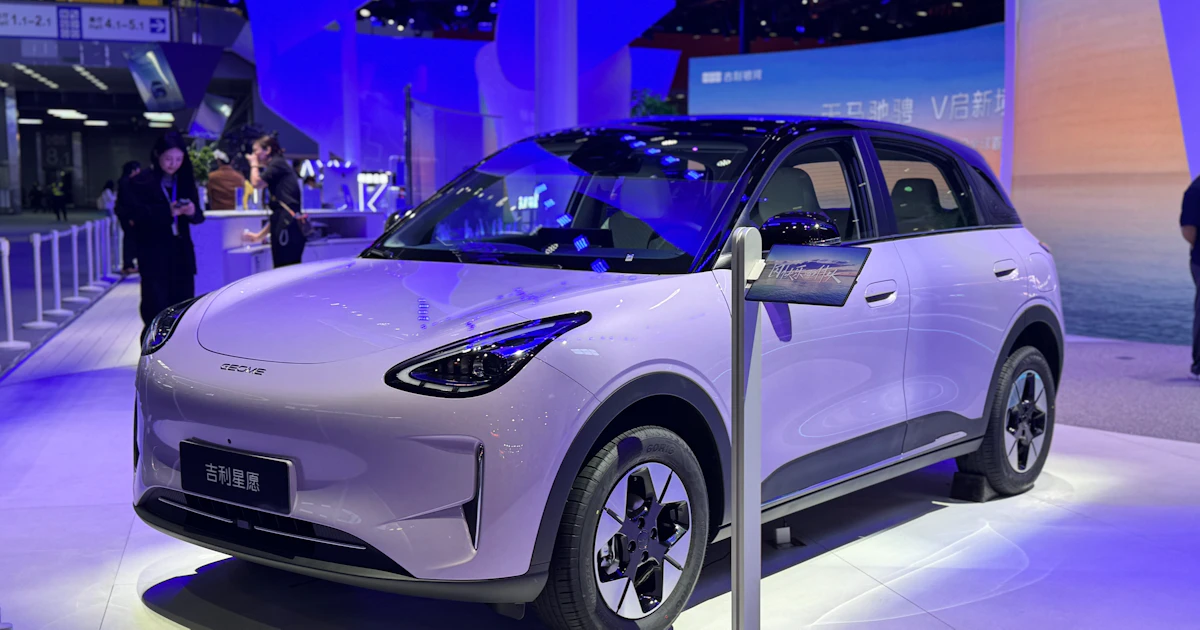
Chinese Automakers Challenge Global Leaders, Sales Surge in 2025
The global automotive landscape is undergoing a significant shift, with Chinese manufacturers poised to become the world’s leading new vehicle sellers as early as 2025. BYD and Geely are rapidly gaining market share, surpassing established Japanese automakers Nissan and Honda, according to recent reports. This rise reflects a broader trend of increasing consumer preference for Chinese electric vehicles (EVs), particularly among younger demographics.
Volkswagen briefly reclaimed the top sales spot in the first two months of 2026, edging out BYD, which fell to fourth place. This shift is attributed to a reduction in government subsidies in China, impacting BYD’s sales figures, according to Reuters.
The growing appeal of Chinese EVs is particularly evident in the United States, where a recent survey indicates that 70% of Generation Z consumers favor Chinese-made EVs. This preference is a departure from traditional brand loyalty and suggests a fundamental change in consumer attitudes towards automotive manufacturers. Some consumers are reportedly finding Chinese EVs more appealing than their American counterparts, with one report stating, “I don’t want to buy an American car anymore.”
The shift in consumer preference is not limited to younger generations. The increasing sophistication and competitive pricing of Chinese EVs are attracting a wider range of buyers. This trend is challenging the dominance of Tesla, which has long been the leading EV manufacturer. Reports suggest a potential breakdown of Tesla’s market dominance as Chinese automakers continue to innovate and expand their global reach.
The evolving dynamics of the automotive industry highlight the increasing importance of the Chinese market and the growing competitiveness of Chinese manufacturers. This development is likely to have significant implications for established automakers and the future of the global automotive industry. The data underscores the need for traditional automotive companies to adapt to changing consumer preferences and invest in EV technology to remain competitive.
