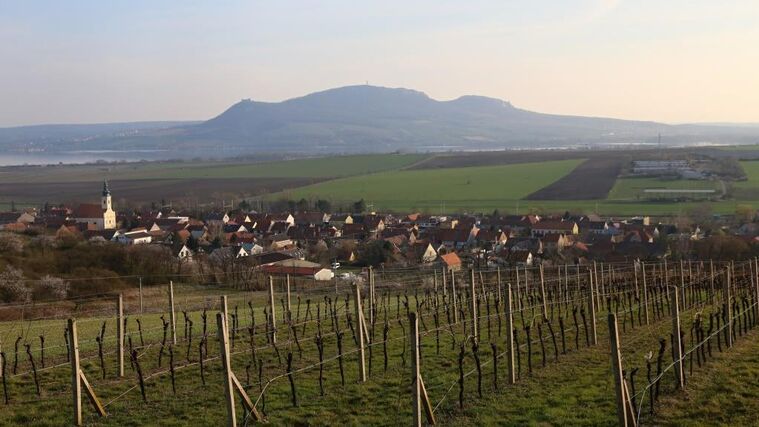
Climate change is enabling farmers in the Moravian region of the Czech Republic to potentially harvest two crops per year, a feat previously unimaginable a century ago. The warming trend, with average temperatures rising by approximately 1.5 to 1.8 degrees Celsius (2.7 to 3.2 degrees Fahrenheit) since the 1960s, is effectively lowering the elevation of the Vysocina region by an estimated 200 meters.
“We can now produce much more. The yield from one field can be significantly higher. For example, it’s now possible to grow winter barley at the beginning of the year and then feed corn afterward. Repeated ripening is too possible with other crops, but a suitable combination needs to be found,”
said bioclimate researcher Miroslav Trnka. A critical challenge to this increased agricultural potential is a growing water scarcity issue.
In the Dyje River basin, encompassing the area from Znojmo to Breclav, available water resources in normal years are sufficient for irrigating only half of the designated agricultural land. During years experiencing a decade-long drought, that figure dwindles to just 10% of the area. Experts anticipate that temperatures will continue to rise in the coming years, exacerbating the water scarcity problem. Moravia is unlikely to alleviate the issue through conservation efforts alone, and current water retention methods are proving insufficient.
Neighboring Austria is addressing its own water shortages in Lower Austria, which borders Moravia, by planning the construction of a canal that could potentially extend into the Czech Republic, connecting to the Vranov Reservoir. While the canal would deliver only 4 cubic meters of water per second, and require pumping to overcome a 180-meter elevation difference between the Danube and Dyje rivers, the project is considered feasible.
“We are working on this project with our Austrian colleagues. Austria is receptive to the idea. We have created a digital twin of the entire Podyjí region, testing models and seeking solutions for how to get water from the Danube to us, retain it in our landscape, and maximize its use,”
explained Professor Trnka.
The project, called SaveWater, will provide Czech representatives with data to support further negotiations with Austria regarding water access for Moravia. The initiative underscores the growing regional concerns over water security in the face of climate change.
However, simply securing a water supply won’t be enough. A fundamental shift in agricultural practices throughout the region is also necessary to ensure the efficient use of the resource.
Recommended practices include no-till farming, regenerative agriculture, strip cropping, planting windbreaks, agroforestry, organic fertilization, and sowing summer cover crops. According to the Czech News Agency (ČTK), scientists are using aerial imagery to compare the effectiveness of these methods against conventional farming practices that lack adaptive measures, and are also surveying fields in Austria near the border.
“Our goal is to create a comprehensive mechanism of measures related to water management as an extraordinarily valuable commodity,”