
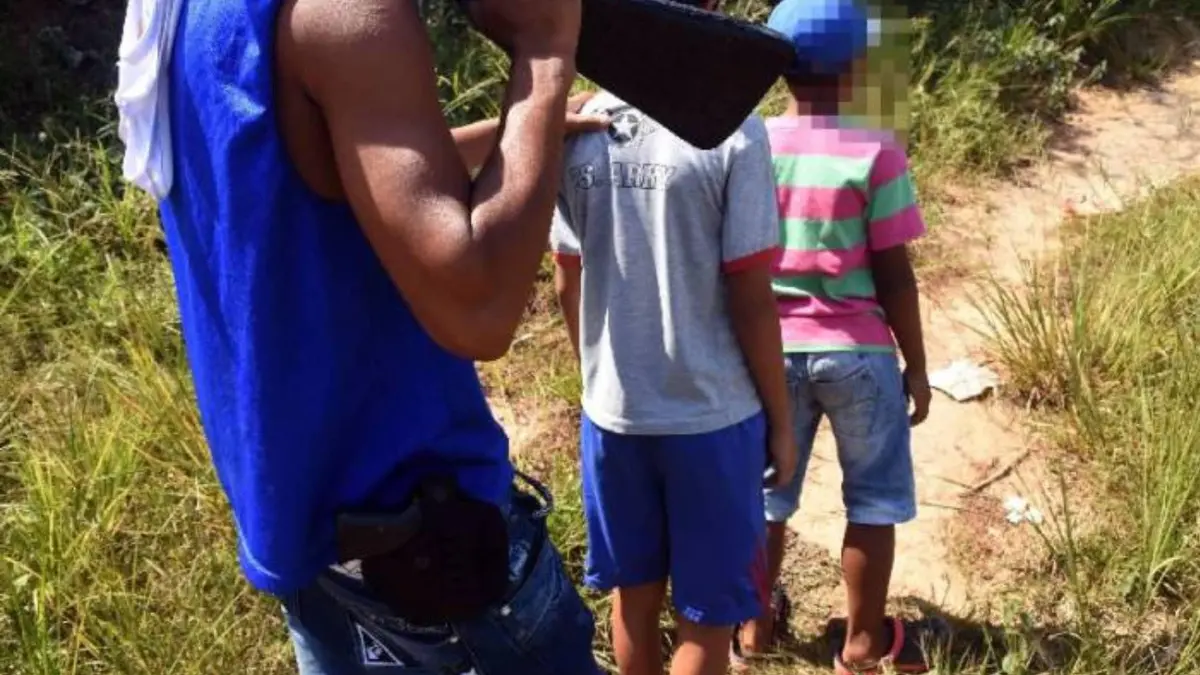
Despite a 2016 peace agreement with the FARC, Colombia continues to grapple with armed groups who increasingly rely on the forced recruitment of children. Recent aerial bombardments authorized by the Petro administration, intended to target key rebel commanders, have drawn scrutiny following reports that seven children where among those killed in a recent strike [[2]]. This escalating cycle of violence and recruitment raises serious concerns about international humanitarian law and the protection of vulnerable populations in conflict zones.
Forcibly recruiting children into armed groups is a crime, not an act of patriotism, despite recent claims by a rebel leader following a military strike that killed several minors. The assertion came from a commander known as Iván Mordisco, who dismissed the deaths as collateral damage.
The practice condemns young people to a brutal existence, with no opportunity for escape. Those who remain in the ranks face the constant threat of death, either in combat or from bombings, as tragically demonstrated in a recent incident. Attempts to desert are met with swift and deadly retribution – capture and execution – a death sentence they neither sought nor deserve.
The issue of child recruitment in Colombia has resurfaced following the government of Gustavo Petro’s decision to resume aerial bombardments targeting high-value military objectives, such as key criminal commanders.
The move has drawn widespread criticism. Camilo González Posso, a former peace negotiator for the government, explained that in a country where armed groups increasingly rely on child soldiers, such bombings constitute a violation of International Humanitarian Law.
“This discussion about bombings, where children are present, is not new. Unfortunately, we are repeating arguments. For years, it has been considered completely contrary to international humanitarian law and human rights to bomb camps where recruited children are located. These are forced recruitments, deceptive practices. The children are there as victims, subordinates. This is completely prohibited – both the recruitment and the use of disproportionate force. In these operations, the right to life of children must take precedence over other considerations, such as eliminating what they call a high-value target,” the expert stated.
Several of those killed in the bombing of a camp associated with Iván Mordisco had previously been reported to authorities as victims of forced recruitment.
Among the fatalities were a 16-year-old girl, a 13-year-old girl, and a 15-year-old Indigenous boy, according to records from the national legal medicine institute. The incident underscores the devastating consequences of ongoing conflict for vulnerable populations.
According to the Office of the Ombudsman, 162 cases of child recruitment have been recorded in Colombia between January and October 2025. The agency warns that the actual number is likely much higher, due to underreporting and families’ fear of reprisal preventing them from coming forward.
Approximately 45% of the 162 documented cases involve children and adolescents from Indigenous communities, highlighting the persistence of this problem in territories with a presence of illegal armed groups.
The departments with the highest incidence of recruitment remain Cauca, Antioquia, Chocó, Huila, and Nariño – areas where the presence of FARC dissidents and other criminal structures has facilitated the capture of minors. These figures reflect not only the vulnerability of young people in these regions but also the ongoing challenges in preventing recruitment and ensuring the comprehensive protection of children and adolescents.
This year in Cauca, 37 minors have been forcibly recruited; 20 in Antioquia; 16 in Chocó; 13 in Nariño; 11 in Huila; and 8 in Norte de Santander, among others.
The Office of the Ombudsman warns that at least three children, girls, or adolescents are incorporated into the ranks of illegal armed groups every two days.
In 2024, 625 minors were documented as being recruited or forced to join these structures.
“Forced recruitment violates the present and future of children, girls, and adolescents. In every territory of the country, minors should grow up in peace, in environments where their safety and comprehensive well-being are prioritized with opportunities,” the agency stated.
The patterns of how children are used have also evolved. According to human rights advocate Iris Marín, girls are no longer primarily employed in domestic labor and subjected to sexual violence, but are increasingly participating in combat operations, while boys continue to be used in both logistical tasks and armed confrontations.
The Central General Staff, the FARC dissident group led by Iván Mordisco, is the largest recruiter of minors, accounting for 40% of all reported cases. Other dissident groups and the ELN account for 14% of the reports.
“There are very painful stories. Children are deceived, used, recruited through social media, and also recruited by people trained to take them, who offer them money or status, and then they are kidnapped. We have many cases of children who have disappeared and been executed. There are orders from the leaders of these groups to kill children who desert. There are so many cases,” González Posso added, describing the recruitment tactics.
