
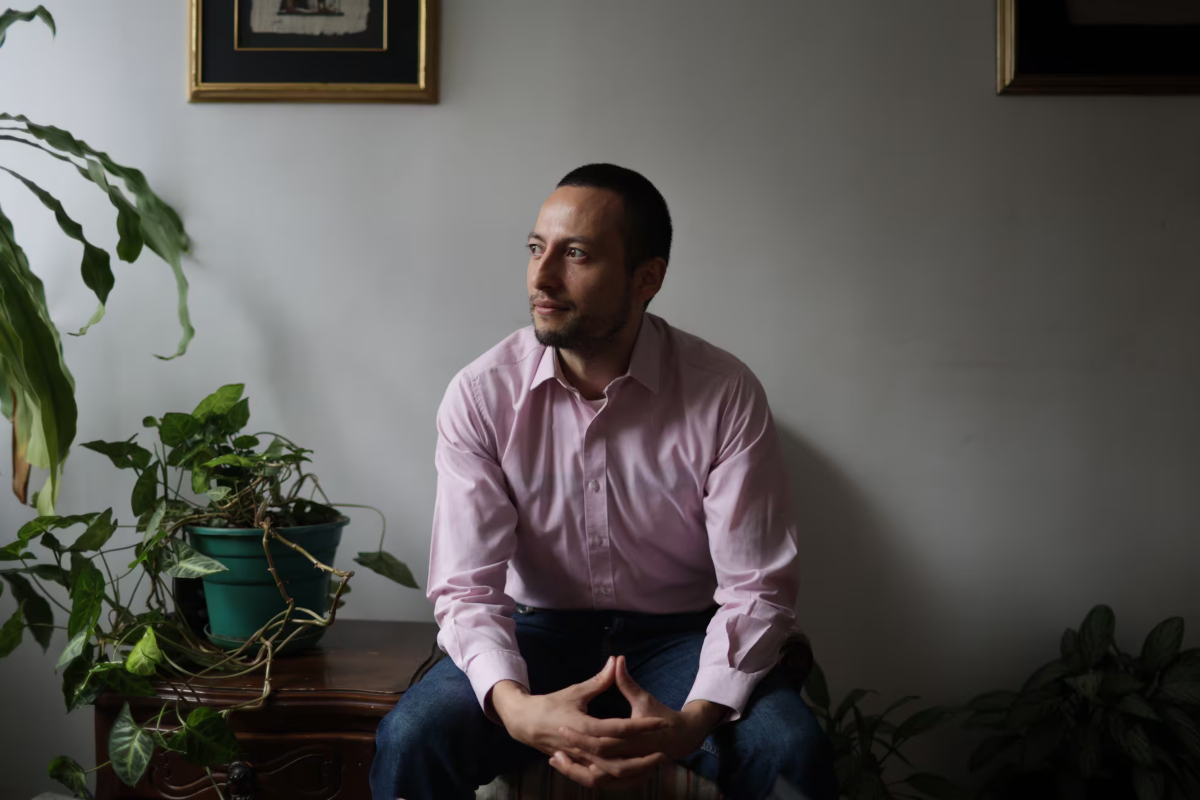
The sole Colombian released from Venezuela’s El Rodeo I prison in recent weeks, Manuel Tique, has spoken publicly about his 16-month detention, a case highlighting the political tensions and arbitrary arrests that have plagued the country. His release comes amid a broader wave of prisoner releases following political shifts in Venezuela.
Manuel Tique, 33, recounted his ordeal in an interview with El País of Spain, describing being held without evidence on accusations of terrorism and acting as a mercenary for the Venezuelan government. He learned of Nicolás Maduro’s fall from power a week after the rest of the world, receiving the news through a hole in the floor that served as a toilet in his cell.
Tique’s arrest occurred in September 2024 while he was in the Venezuelan state of Apure, bordering Colombia, conducting training related to his work with the Danish Refugee Council (DRC). “It was a kidnapping,” he told the Spanish newspaper. “They never stamped my passport. I didn’t know why I was imprisoned and thought it might be a migration issue.”
Conditions inside El Rodeo I were reportedly dire. Tique described being crammed into a 4×2 meter room with constant infestations of cockroaches and the pervasive stench of human waste. For the first 22 days, he received food through a small opening in the door. Months later, he was formally accused by Interior Minister Diosdado Cabello of financing and collaborating with terrorist groups, though Tique says he never saw the televised accusation.
Liberations with Cuantagotas
According to civil organizations cited by El País, Venezuelan authorities have released over 300 political prisoners since January 8, spurred by military and economic pressure following Maduro’s departure. The releases have included citizens of Spain, Italy, the Netherlands, and the United States, but until recently, no Colombians. “We were seeing people of all nationalities being released, except for us Colombians,” Tique said.
His release was unexpected. “I thought they were going to reprimand me,” he recalled. “I didn’t leave with shoes on, but with flip-flops.” After leaving El Rodeo, he was taken to a Dgcim station, where he alleges he was forced to record a video stating his rights had not been violated.
El País notes that several NGOs—including Amnesty International and the World Organization Against Torture—have reported “cruel, inhuman, and degrading” conditions at El Rodeo I, which in some cases “could constitute torture.”
Tique corroborates these reports, recounting that during a peaceful protest, riot police launched pepper spray directly into his cell. “It was difficult to breathe. Even so, I believe maintaining a low profile saved me from solitary confinement,” he said. To cope with the confinement, he and other prisoners crafted games like chess and checkers, carving pieces from soap.
Tique arrived in Cúcuta last week and reunited with his family in Bogotá. However, he admits his emotions remain mixed. “I don’t sleep thinking about those who are still imprisoned. I know what they are going through. My family says it’s a miracle I’m out.”
Venezuela’s National Assembly recently approved an amnesty law that could benefit some Colombian political prisoners, though each case will be evaluated by the courts.
Tique expressed gratitude to the DRC for their psychological and social support following his release, but stated he has not received official communication from the Colombian government.
“I ask President Gustavo Petro to personally intervene and establish direct dialogue with Delcy Rodríguez. Not a single Colombian should remain kidnapped. It’s an injustice,” he affirmed.
