
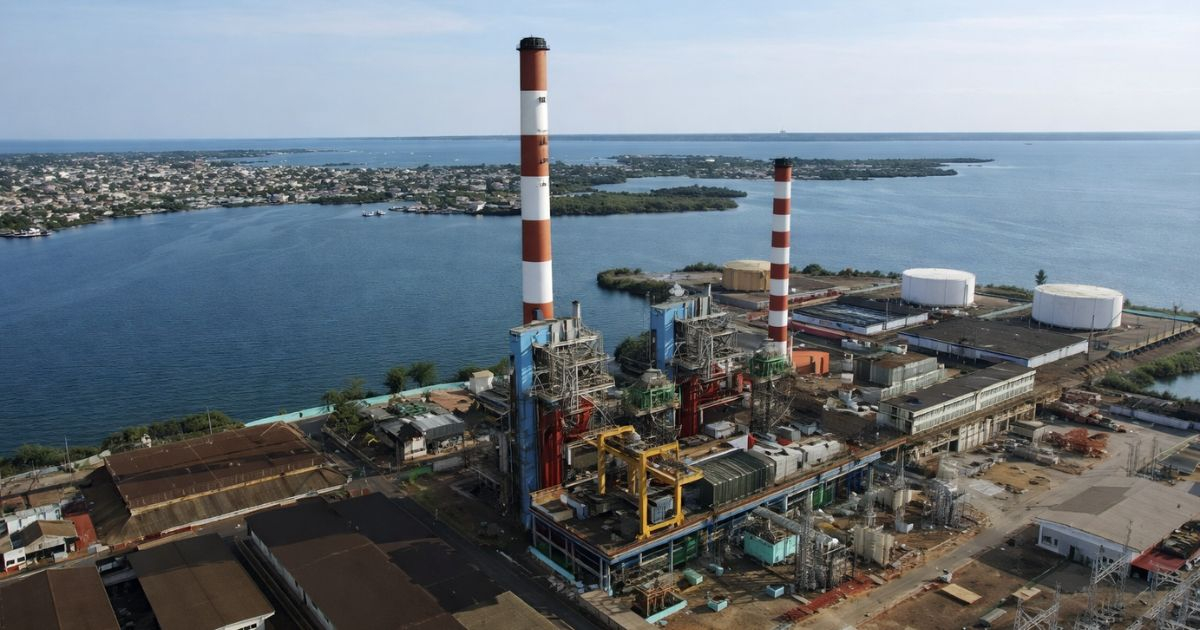
Cuba is grappling with a severe energy crisis, experiencing its second nationwide blackout in a week after a key power plant went offline on Saturday. The latest disruption highlights the fragility of the island’s aging electrical infrastructure and its dependence on limited fuel supplies.
The Unión Eléctrica (UNE) reported that the total system collapse occurred at 6:38 p.m. On Saturday, March 21, 2026, following the failure of Unit No. 6 at the 10 de Octubre thermoelectric plant in Nuevitas, Camagüey. According to the UNE, this triggered a cascading effect, causing other power generators to fail.
Efforts to restore power began immediately, with initial steps focusing on bringing online Energas Varadero and Energas Boca de Jaruco, two gas-fired plants operated by the Energas S.A. Joint venture. Together, these plants can contribute up to 506 megawatts to the national grid. The UNE announced on social media that power had been restored to the Ernesto Guevara CTE in Santa Cruz del Norte as a result.
Unit 3 of the Carlos Manuel de Céspedes CTE in Cienfuegos was likewise brought back online, connecting to the central region’s microsystem. This unit has a capacity of 158 megawatts and represents a significant step toward the progressive reconnection of the national system.
The Ernesto Guevara CTE, operating with domestically produced crude oil, is also crucial to the recovery effort. With a capacity of up to 107 megawatts, its operation avoids approximately $400,000 in daily fuel import costs, officials said.
Saturday’s collapse marks the seventh total system failure in the last 18 months, and the second this week, following a similar blackout on Monday, March 16, 2026, which left the country without electricity for nearly 30 hours.
Lázaro Guerra, director general of Electricity at the Ministry, described the recovery process as “extremely complex,” potentially taking days. The process prioritizes restoring power to critical facilities like hospitals without generators and water sources, beginning with simpler startup sources and forming regional microsystems before reconnecting to the full system.
Underlying the immediate crisis is a broader, unprecedented energy shortfall. Argelio Jesús Abad Vigoa, the viceminister of Energy and Mines, recently acknowledged that Cuba has gone three months without receiving fuel shipments. Venezuelan crude oil deliveries ceased in early January 2026 following political changes in Venezuela, and on January 29, the Trump administration issued an executive order prohibiting the sale of petroleum to Cuba.
On Thursday, March 20, 2026, the generation deficit exceeded 1,847 megawatts, while peak demand ranged between 2,000 and 3,000 megawatts, resulting in widespread outages, including up to 20 hours per day in Havana. Residents of El Vedado reportedly staged pot-banging protests during Saturday’s blackout, expressing their frustration with the ongoing power shortages.
¿Tienes algo que reportar?
Escribe a CiberCuba:
Este artículo ha sido generado o editado con la ayuda de inteligencia artificial. Ha sido revisado por un editor antes de su publicación.
