
Czech homeowners seeking to make energy-efficient upgrades to their properties will soon have access to a fresh financing model, shifting away from direct government subsidies. The change, announced Monday, March 9, 2026, aims to create a more sustainable and long-term approach to home renovation.
Instead of grants, the government will primarily offer zero-interest loans to cover the costs of energy-saving improvements, according to Minister of the Environment Igor Červený. This move comes as the country seeks to address budget constraints whereas still encouraging homeowners to reduce their energy consumption.
“We want to ensure a stable and predictable program,” Červený said. “We no longer want to jeopardize the stability of this area in the Czech Republic.”
The new system is designed to incentivize homeowners to invest in the most effective energy-saving solutions. Červený explained that the government will cover the interest on the loans, ensuring borrowers only repay the principal amount plus minimal administrative fees.
Loans Available for Up to 25 Years
As an example, Červený outlined a scenario where a homeowner takes out a loan of one million Czech crowns (approximately $34,000 USD) with a 15-year repayment plan. At current interest rates, the total repayment would be 1,519,000 crowns. Under the new program, the government would cover 519,000 crowns in interest, meaning the homeowner would only repay the original loan amount to the bank.
Banks and building societies are expected to participate in the program, making financing accessible even for those with limited personal funds. The Czech Banking Association has expressed support for the initiative, noting that a combination of public support and bank financing is an effective way to accelerate home modernization and reduce energy costs for households.
The maximum loan term will be 25 years and the zero-interest loans will be available to both homeowners and housing associations.
The program will be funded through the Modernization Fund, with approximately 30 to 40 billion crowns ($1 billion to $1.36 billion USD) allocated for this year and a projected 230 billion crowns ($7.85 billion USD) by 2029.
Applications for project approval will open in June, with banks beginning to offer the zero-interest loans in September.
Shift Away From Direct Subsidies
Officials say the previous reliance on grants often led to rapid depletion of funds and delays in project completion. Still, direct subsidies will still be available for low-income households. The government will also provide free energy consulting services to support homeowners plan their renovations.
The Ministry of the Environment is currently processing applications for subsidies from 2023, with approximately 550 requests still pending payment.
The shift in policy also reflects a change in ideological direction within the Ministry of the Environment, now led by the Motoristé (Motorists) party. “I consider this program to be a left-wing one,” said Filip Turek, a representative for Green Deal initiatives. “Giving money away for renovations is not something we, as the only right-wing entity, would agree with, but we were pushed to continue it.”
A separate program, NZÚ Light, will continue to offer grants specifically for low-income households starting in June 2026. Eligible households, those already receiving “superdávka” benefits, could receive up to 250,000 crowns ($8,540 USD) for insulation and 150,000 crowns ($5,124 USD) for replacing heating systems.
The Modernization Fund is expected to allocate over four billion crowns ($136 million USD) to NZÚ Light this year, supporting projects such as insulation, window replacements, heat pumps, biomass boilers, and solar water heating systems.
The government will also offer support for project documentation, providing up to 50,000 crowns ($1,708 USD) for single-family homes and 100,000 crowns ($3,416 USD) for apartment buildings. This compensation is available to those who prepared projects last year but were unable to submit applications before the program closed. This opportunity opens on March 25, 2026, and applies to documentation costs incurred between September 2025 and February 2026.
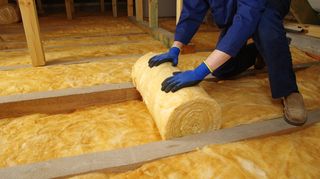
The Ministry is also establishing a network of certified advisors to assist homeowners in planning renovations and obtaining a “renovation passport,” which will serve as a roadmap for energy-efficient upgrades.
A Shift in Thinking About Savings
The program, which has relied on grants since 2009, represents a significant shift in approach. This change will be felt by both homeowners and companies involved in home insulation, solar panel installation, and heat pump technology.
“Zero-interest loans within the new form of NZÚ can significantly change the way households think about energy savings,” said Pavel Rek, director of the energy solutions division at Tedom energie. “Instead of a single technology, they will more often address the entire energy system of the house and its long-term economics. The new support model can naturally limit installations motivated only by the amount of the subsidy and, conversely, strengthen projects that make real economic sense.”
According to Marcela Kubů, director of the Association of Mineral Insulation Manufacturers, the preferential loans are a step in the right direction. “The question is whether owners will be willing to go into debt for a long time, even under favorable conditions, and whether the state will have the will and resources to maintain the program in the event of greater interest. The costs of interest subsidies could amount to hundreds of millions of crowns over a 20-year horizon,” Kubů warned.
The home renovation market had been stalled for roughly three months due to uncertainty surrounding subsidy support. Companies are now hoping for a rebound.
“Direct subsidy support was a much bigger challenge and proof that the state supports the transition of households to energy-efficient sources and the creation of energy savings. It is certain that the end of direct subsidies will be a missing stimulus for households. However, it is very good that the state supports those who are interested in creating savings,” said Radek Červín of the Association for the Apply of Heat Pumps.
Most homeowners typically choose spring and summer as the ideal time for renovations. They will not be able to take advantage of the new loan program this year if they want to benefit from the preferential terms, as banks will not begin offering the loans until September, before the start of the heating season.
“We appreciate the effort to establish a truly long-term functional and sustainable system that will help stop the decline in the installation of solar panels on the roofs of family and apartment buildings. The energy crisis in recent years has shown that the production of one’s own energy on-site is the best way for citizens and the state to increase their resilience to rising energy prices. We are also pleased with the clear program schedule,” said Jan Krčmář, executive director of the Solar Association.
According to Martin Sedlák, program director of the Modern Energy Association, the main thing is that the government has created a clear framework for the program until 2030. “It is also important to maintain subsidy support for low-income households and a bonus for vulnerable households in apartment buildings. Every installed heat pump, solar panel, or insulated house is a response that protects family budgets and, the state treasury – the state will reduce the amounts it must spend on housing benefits,” Sedlák said.
Last year alone, 32 billion crowns ($1.36 billion USD) was allocated to subsidies from NZÚ. Thanks to the support from the Green Savings and New Green Savings programs, over 16 years of operation, more than 42,000 TJ of energy, or approximately 11.7 TWh, has been saved – equivalent to about 36 percent of the annual production of energy in Czech nuclear power plants.
As of the end of 2025, NZÚ had helped finance a total of 555,000 projects, with applications for subsidies totaling nearly 137 billion crowns ($5.87 billion USD). The application system for subsidies has been closed since November of last year, when households exhausted all available funds.
