
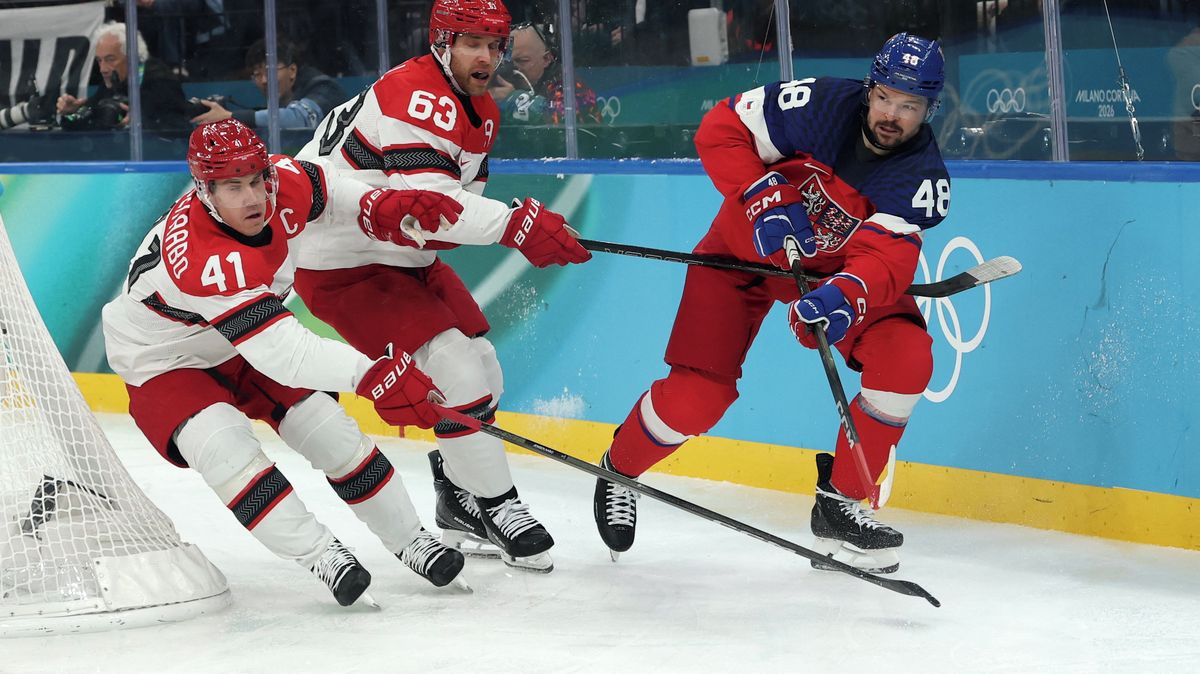
Milan (from our correspondent) – Ratings are presented on a school scale (1 – best, 5 – worst).
Lukáš Dostál
Despite ranking only within the top ten in save percentage (88.64%) among tournament goaltenders, Dostál proved to be a reliable presence. He kept his team in the game against Canada and demonstrated the potential to be the national team’s starting goalie for years to arrive.
2
Despite ranking only within the top ten in save percentage (88.64%) among tournament goaltenders, Dostál proved to be a reliable presence. He kept his team in the game against Canada and demonstrated the potential to be the national team’s starting goalie for years to come.
Daniel Vladař
Vladař only played in a difficult match against France, conceding three goals in a five-minute span during the second period. However, those goals were largely the result of defensive breakdowns, leaving him exposed.
3
Vladař only played in a difficult match against France, conceding three goals in a five-minute span during the second period. However, those goals were largely the result of defensive breakdowns, leaving him exposed.
Radko Gudas
His imposing physique and demeanor immediately commanded respect from opponents. While he started the tournament slowly, Gudas was a force to be reckoned with against Canada, relishing physical battles and making life difficult for opposing players. He even played a role in the build-up to a near-goal in the third period.
2
His imposing physique and demeanor immediately commanded respect from opponents. While he started the tournament slowly, Gudas was a force to be reckoned with against Canada, relishing physical battles and making life difficult for opposing players. He even played a role in the build-up to a near-goal in the third period.
Filip Hronek
Hronek solidified his position as the Czech Republic’s top defenseman. His excellent reading of the game, combined with his ability to quickly transition play with accurate passes, made him a key contributor. He led all Czech players in ice time with over 25 minutes per game, and only Nečas recorded more points.
1
Hronek solidified his position as the Czech Republic’s top defenseman. His excellent reading of the game, combined with his ability to quickly transition play with accurate passes, made him a key contributor. He led all Czech players in ice time with over 25 minutes per game, and only Nečas recorded more points.
Michal Kempný
Alongside Gudas, Kempný formed a balanced defensive pairing, boasting the best plus/minus rating (+3) among Czech defensemen. He wasn’t afraid to join the offensive rush while remaining defensively responsible. However, a costly penalty in the quarterfinal against Canada led to a tying goal.
2
Alongside Gudas, Kempný formed a balanced defensive pairing, boasting the best plus/minus rating (+3) among Czech defensemen. He wasn’t afraid to join the offensive rush while remaining defensively responsible. However, a costly penalty in the quarterfinal against Canada led to a tying goal.
Tomáš Kundrátek
The most debated player on the Czech roster didn’t disappoint. The Trinec defenseman appeared in all three group stage games but didn’t feature in the playoff rounds.
4
The most debated player on the Czech roster didn’t disappoint. The Trinec defenseman appeared in all three group stage games but didn’t feature in the playoff rounds.
Jan Rutta
Rutta’s tournament was hampered by an injury sustained in the opening game against Canada. After missing two games, he returned against Denmark, beautifully setting up Kämpf for a goal. His performance was a mix of good and bad moments, occasionally resorting to penalties.
3
Rutta’s tournament was hampered by an injury sustained in the opening game against Canada. After missing two games, he returned against Denmark, beautifully setting up Kämpf for a goal. His performance was a mix of good and bad moments, occasionally resorting to penalties.
Radim Šimek
Šimek proved to be a pleasant surprise on the Czech blue line. His creativity, combined with his physicality and reliability, quickly earned the coach’s trust. Coach Rulík relied on the 33-year-classic defenseman in crucial moments, and he consistently delivered. He nearly sent the national team to the semifinals with a chance in overtime against Canada.
1
Šimek proved to be a pleasant surprise on the Czech blue line. His creativity, combined with his physicality and reliability, quickly earned the coach’s trust. Coach Rulík relied on the 33-year-old defenseman in crucial moments, and he consistently delivered. He nearly sent the national team to the semifinals with a chance in overtime against Canada.
David Špaček
Coach Rulík has often questioned why the Minnesota Wild don’t deliver Špaček more regular playing time. The Olympics may have provided some insight. He didn’t quite mesh with Rutta as a pairing, evidenced by his limited ice time in the quarterfinal – less than 10 minutes.
4
Coach Rulík has often questioned why the Minnesota Wild don’t give Špaček more regular playing time. The Olympics may have provided some insight. He didn’t quite mesh with Rutta as a pairing, evidenced by his limited ice time in the quarterfinal – less than 10 minutes.
Jiří Ticháček
Ticháček saw limited ice time, appearing in only three games – against France, Switzerland, and Denmark – totaling just 28 shifts throughout the tournament.
3
Ticháček saw limited ice time, appearing in only three games – against France, Switzerland, and Denmark – totaling just 28 shifts throughout the tournament.
Roman Červenka
Even at 40 years old, Červenka proved his worth. Concerns about his ability to compete against the world’s best players were unfounded. His hockey IQ and skating ability were impressive, and he formed a strong connection with Pastrňák, recording two goals and three assists.
1
Even at 40 years old, Červenka proved his worth. Concerns about his ability to compete against the world’s best players were unfounded. His hockey IQ and skating ability were impressive, and he formed a strong connection with Pastrňák, recording two goals and three assists.
Radek Faksa
A significant blow to the team came with Faksa’s injury, which forced him to miss the game against Denmark and, crucially, the quarterfinal against Canada. He led all Czech centers in faceoff percentage, winning over 61% of his draws.
3
A significant blow to the team came with Faksa’s injury, which forced him to miss the game against Denmark and, crucially, the quarterfinal against Canada. He led all Czech centers in faceoff percentage, winning over 61% of his draws.
Jakub Flek
Flek didn’t have a significant impact in his fourth-line role. Despite hopes that his speed would be a factor, he failed to register a point throughout the tournament and saw limited ice time in the quarterfinal, playing just six minutes.
4
Flek didn’t have a significant impact in his fourth-line role. Despite hopes that his speed would be a factor, he failed to register a point throughout the tournament and saw limited ice time in the quarterfinal, playing just six minutes.
Tomáš Hertl
Hertl was one of the Czech Republic’s biggest disappointments. Expected to thrive on the smaller ice surface, particularly around the net, he failed to replicate his form from Vegas. He didn’t have the same role in the lineup as he does in the NHL, where he has the same number of goals as Nečas and Pastrňák, but didn’t score a single goal in Milan.
4
Hertl was one of the Czech Republic’s biggest disappointments. Expected to thrive on the smaller ice surface, particularly around the net, he failed to replicate his form from Vegas. He didn’t have the same role in the lineup as he does in the NHL, where he has the same number of goals as Nečas and Pastrňák, but didn’t score a single goal in Milan.
Filip Chlapík
Chlapík exceeded expectations, especially considering he wasn’t originally slated to play and was added to the roster due to Zach’s injury. He made an immediate impact, scoring in his first two games and forming a strong chemistry with Nečas and Kämpf. He led all Czech forwards with a plus/minus rating of +3.
1
Chlapík exceeded expectations, especially considering he wasn’t originally slated to play and was added to the roster due to Zach’s injury. He made an immediate impact, scoring in his first two games and forming a strong chemistry with Nečas and Kämpf. He led all Czech forwards with a plus/minus rating of +3.
David Kämpf
Long considered a reliable defensive center, Kämpf showcased his offensive capabilities in Milan. He excelled on faceoffs, provided strong support to the productive Nečas, and was consistently effective on the penalty kill.
1
Long considered a reliable defensive center, Kämpf showcased his offensive capabilities in Milan. He excelled on faceoffs, provided strong support to the productive Nečas, and was consistently effective on the penalty kill.
Ondřej Kaše
Kaše struggled to uncover a consistent role in the lineup throughout the tournament. After a strong performance in the previous World Championship, he was largely ineffective in Milan, finishing with a 0-0-0 stat line and a -3 plus/minus.
4
Kaše struggled to find a consistent role in the lineup throughout the tournament. After a strong performance in the previous World Championship, he was largely ineffective in Milan, finishing with a 0-0-0 stat line and a -3 plus/minus.
Dominik Kubalík
Kubalík played only the first two games against Canada and France (he didn’t finish the latter) and didn’t receive any further opportunities. His previous struggles in the Euro Hockey Tour raised questions about his inclusion in the Olympic team.
4
Kubalík played only the first two games against Canada and France (he didn’t finish the latter) and didn’t receive any further opportunities. His previous struggles in the Euro Hockey Tour raised questions about his inclusion in the Olympic team.
Martin Nečas
Nečas was the Czech Republic’s best player at the tournament, without question. He wasn’t afraid to take responsibility, skated exceptionally well, and created scoring chances. Despite a few mistakes, his overall performance was outstanding. He finished with eight points in five games, mirroring his dominant performance in Prague.
1
Nečas was the Czech Republic’s best player at the tournament, without question. He wasn’t afraid to take responsibility, skated exceptionally well, and created scoring chances. Despite a few mistakes, his overall performance was outstanding. He finished with eight points in five games, mirroring his dominant performance in Prague.
Ondřej Palát
Palát started the tournament slowly but saved his best for last, scoring a crucial goal in the quarterfinal against Canada with eight minutes remaining, briefly giving the Czechs hope of a comeback.
3
Palát started the tournament slowly but saved his best for last, scoring a crucial goal in the quarterfinal against Canada with eight minutes remaining, briefly giving the Czechs hope of a comeback.
David Pastrňák
Fans had high expectations for Pastrňák, and he felt the pressure. While he wasn’t as dominant as Nečas, it would be unfair to place the blame for the quarterfinal loss solely on him. He scored two goals and added three assists, and was the most heavily utilized forward by the coaching staff.
2
Fans had high expectations for Pastrňák, and he felt the pressure. While he wasn’t as dominant as Nečas, it would be unfair to place the blame for the quarterfinal loss solely on him. He scored two goals and added three assists, and was the most heavily utilized forward by the coaching staff.
Lukáš Sedlák
Many doubted Sedlák’s ability to contribute at the Olympic level, but he proved them wrong. He developed strong chemistry with Červenka and Pastrňák, displaying both skill and physicality. He was involved in two of the Czech Republic’s goals against Canada in the quarterfinal.
2
Many doubted Sedlák’s ability to contribute at the Olympic level, but he proved them wrong. He developed strong chemistry with Červenka and Pastrňák, displaying both skill and physicality. He was involved in two of the Czech Republic’s goals against Canada in the quarterfinal.
Matěj Stránský
Stránský didn’t make a significant impact, despite leading the Swiss National League in scoring. While he played in all three group stage games, he didn’t feature in the playoff rounds, registering only two points against France.
3
Stránský didn’t make a significant impact, despite leading the Swiss National League in scoring. While he played in all three group stage games, he didn’t feature in the playoff rounds, registering only two points against France.
David Tomášek
Tomášek was largely unnoticed on the ice. In his defense, he received limited opportunities after the opening game against Canada, playing less than two minutes against Switzerland, eight against Denmark, and just five in the quarterfinal.
4
Tomášek was largely unnoticed on the ice. In his defense, he received limited opportunities after the opening game against Canada, playing less than two minutes against Switzerland, eight against Denmark, and just five in the quarterfinal.
Note: Goaltender Karel Vejmelka was not rated as he did not play a single minute.
