
Scientists have discovered the complete set of building blocks for DNA and RNA within samples collected from the asteroid Ryugu, bolstering the theory that key components for life originated outside of Earth. This discovery, published in Nature Astronomy, suggests that primitive asteroids may have delivered these essential ingredients to our planet.
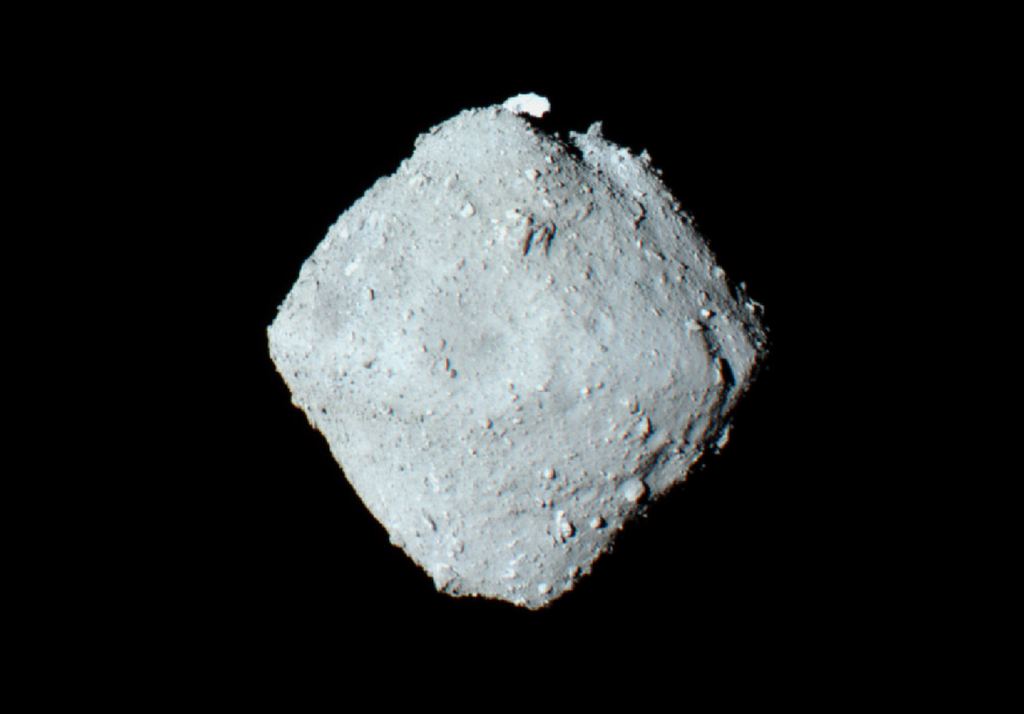
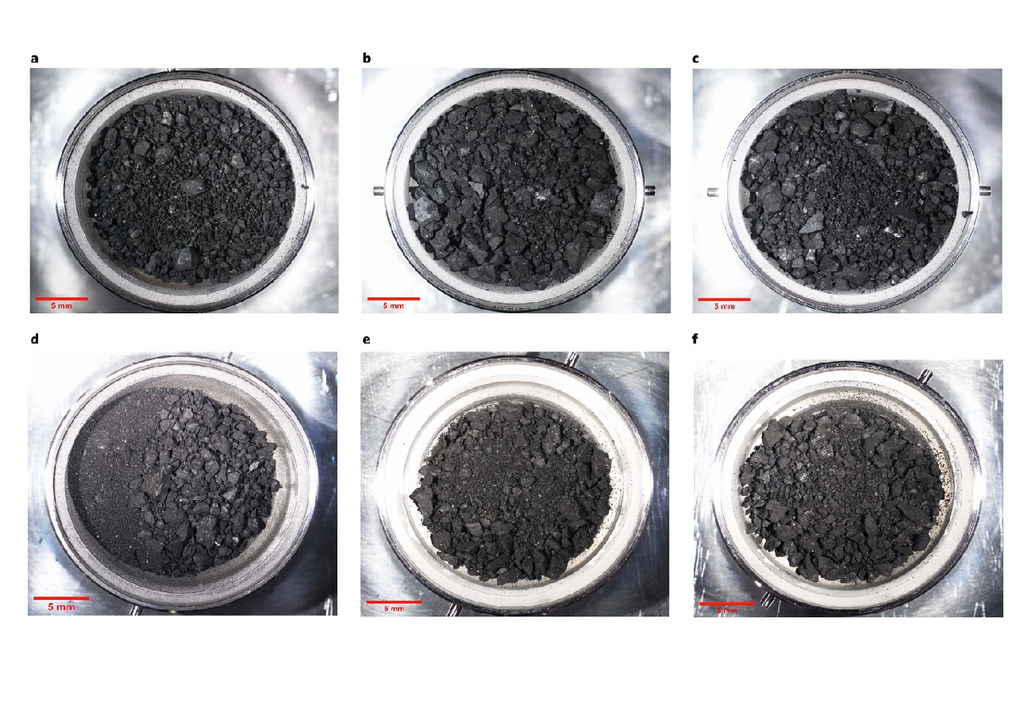
The analysis of samples from Ryugu was made possible by Japan’s Hayabusa2 mission, which successfully retrieved material from the asteroid and returned it to Earth. The asteroid, roughly 3,000 feet in diameter and named after an underwater palace in Japanese folklore, was first discovered in 1999. The mission’s success hinged on preserving the pristine condition of the collected material, preventing contamination from Earth’s atmosphere.
Hayabusa2: A Japanese Space Mission
Launched in 2014, the Hayabusa2 spacecraft arrived at Ryugu in 2018, collected samples in 2019, and delivered them back to Earth in 2021. The probe is now on an extended mission to the asteroid 1998KY26. The careful handling of the Ryugu samples was critical to studying the primordial chemistry of the early solar system.
Ryugu is a carbonaceous asteroid, known for being rich in organic compounds. Previous analyses had already identified biologically relevant molecules, but the latest findings are particularly significant. Researchers identified all five canonical nucleobases – adenine, guanine, cytosine, thymine, and uracil – which are fundamental to the structure of DNA and RNA.
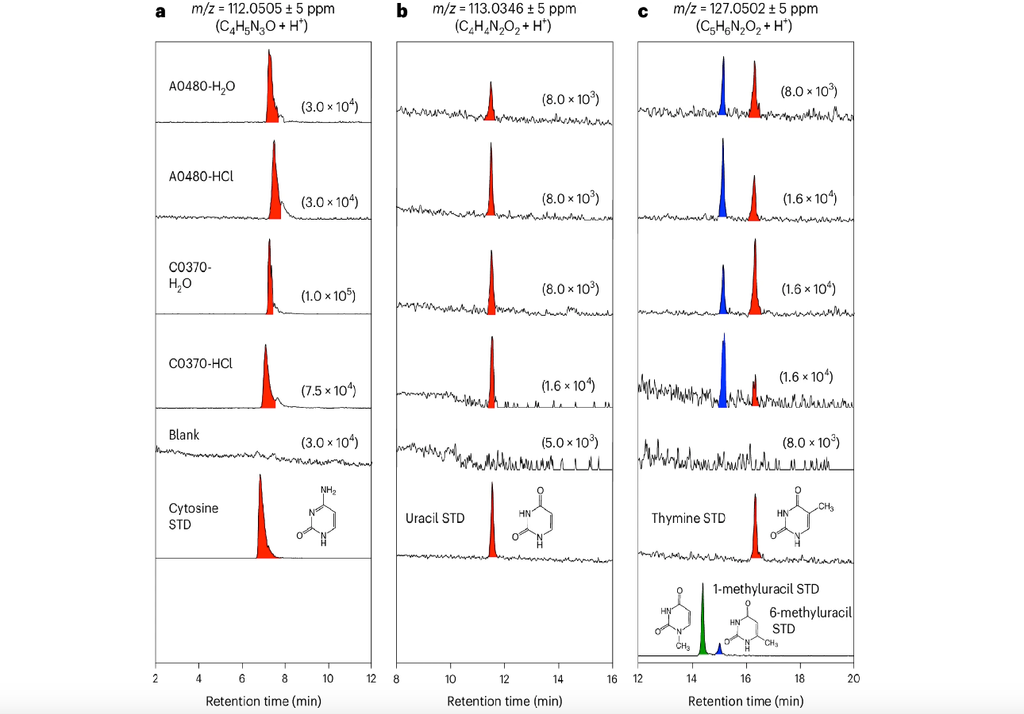
To identify these molecules, scientists employed advanced analytical techniques, including liquid chromatography coupled with high-resolution mass spectrometry. The presence of these nucleobases is essential for life as we know it, as they encode genetic information within DNA and RNA. Understanding their origins brings us closer to understanding how life emerged on Earth.
Further analysis revealed that the nucleobases found in the Ryugu samples are “autochthonous,” meaning they originated within the asteroid itself and weren’t the result of terrestrial contamination. This was confirmed by isotopic signatures of carbon and nitrogen, which differ from those typically found in Earth’s organic matter.
A Different Chemistry Than on Earth
Interestingly, the nucleobases discovered aren’t identical to those found in living organisms. their proportions differ. For example, the ratio of purines to pyrimidines is distinct from that found in biological DNA. This finding supports the idea that these molecules arose from abiotic chemical reactions in space or within the parent bodies of asteroids.
Comparisons with samples from other extraterrestrial sources, including the asteroid Bennu and meteorites like Murchison and Orgueil, revealed significant differences in the relative abundance of the nucleobases. These variations likely depend on the chemical and physical conditions present during the formation of the molecules.
Environments rich in ammonia favor the formation of pyrimidines, while ammonia-poor environments lead to greater production of purines. These differing abundance ratios suggest a distinct evolutionary history for these molecules, and for their respective environments – the asteroids themselves.
Implications for the Origin of Life
The discovery has profound implications, demonstrating that the building blocks of DNA and RNA aren’t exclusive to Earth, but can form spontaneously in space. This reinforces the hypothesis that asteroids and meteorites contributed to providing the early Earth with the molecules necessary for the origin of life. The findings support the concept of panspermia, the idea that life’s building blocks are distributed throughout the universe.
This research shifts the perspective: rather than viewing life as a unique and isolated event that occurred only on Earth, we can begin to consider it as a natural outcome of the chemical evolution of the universe. Earth may not be a special case, but simply a place where these molecules found the right conditions to organize into living systems. The fundamental components of life aren’t solely terrestrial, but are inherent in the very fabric of the cosmos.
Reference
“A complete set of canonical nucleobases in the carbonaceous asteroid (162173) Ryugu” Toshiki Koga et al. Nat Astron (2026). Https://doi.org/10.1038/s41550-026-02791-z
