
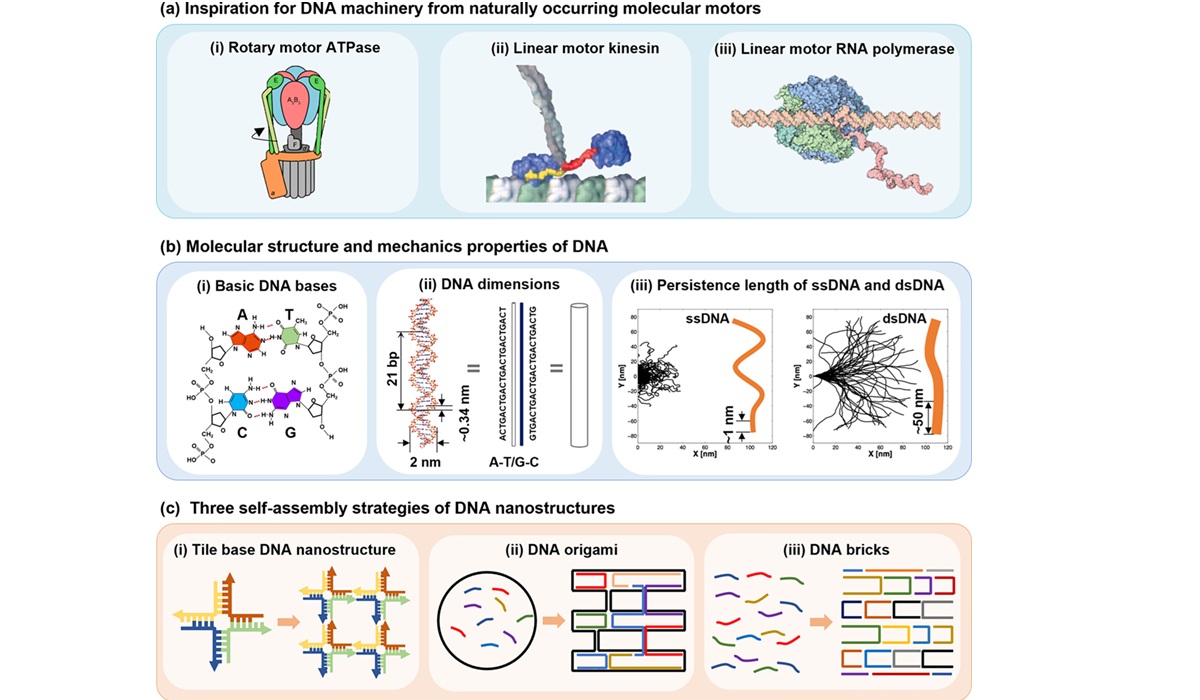
For decades, DNA has been recognized as the blueprint of life, the molecule carrying genetic information. Now, scientists are envisioning a radically different role for DNA: as a fundamental building block for robots. Researchers around the globe are successfully folding DNA into moving components capable of gripping, bending, and responding to external signals, opening up possibilities for nanoscale machines with unprecedented precision.
The core question facing the field has shifted from *if* DNA can form machines, to *how* these machines can be controlled and mass-produced for applications in medicine and manufacturing. This emerging field promises to revolutionize areas from drug delivery to materials science.
Building Hardware at the Molecular Scale
A team at Peking University (PKU), including engineer Lifeng Zhou, argues that DNA is already behaving like hardware at the molecular level. Utilizing a technique called “DNA Origami,” short strands of DNA are used to fold longer strands into specific structures.
Rigid double-stranded sections of DNA serve as the primary structure, while single strands provide the flexibility needed for hinges and joints. Since 2015, this design approach has enabled the creation of nano-scale joints that can swing like doors or extend like sliders.
Breakthroughs in Medicine and Industry
The healthcare sector is a primary driver of this technology, as the human body readily accepts DNA molecules – meaning they aren’t typically flagged as foreign substances by the immune system. Several significant achievements have already been demonstrated.
- Virus Detection: In 2024, a nanogripper successfully captured the SARS-CoV-2 virus in saliva within just 30 minutes.
- Cancer Treatment: Other DNA robots have been able to deliver a blood-clotting drug directly to tumor blood vessels in mice, releasing it only upon reaching the target.
Beyond medical applications, DNA structures are also serving as precision templates for positioning nanoparticles with sub-nanometer accuracy – a crucial step in the development of future molecular optics and electronics. This level of control could unlock entirely new possibilities in device miniaturization.
Challenges in Control and Mass Production
Despite the promise, significant challenges remain, particularly at the microscopic scale. The constant movement of molecules, known as Brownian motion, can easily destabilize these tiny components and cause them to lose their shape. The cost of production and the speed of molecular read-write processes are currently too high for everyday use.
To bring this technology into the real world, researchers are exploring bacterial fermentation using E. Coli to produce long strands of DNA on a large scale, efficiently and affordably.
“The robots of the future will not only be made of metal and plastic,” the research team wrote in a study published in the journal SmartBot.
The transition from laboratory experiments to a reliable engineering discipline now hinges on creating more robust designs and smarter control systems. If successful, DNA robots could soon move beyond the lab to perform complex tasks within the human body. (Earth/Z-2)
