

Earth, formed roughly 4.5 billion years ago, may remain habitable for another 5 billion years, according to scientific estimates. However, research cited by NASA indicates that the long-term habitability of our planet will be primarily determined by the evolution of the Sun. This research underscores the complex interplay between stellar dynamics and planetary conditions, a key area of study for astrobiologists seeking to understand the potential for life beyond Earth.
These studies reveal that the Sun is gradually increasing in luminosity – by a little over 1% every 100 million years – a process that, in approximately one billion years, could trigger a runaway greenhouse effect capable of evaporating the oceans and irreversibly altering conditions for life.
NASA and numerous astrophysical studies concur that as the Sun ages, it progressively becomes brighter. Although the increase is gradual, its cumulative effects will modify the planet’s thermal balance.
READ ALSO
The Earth will only be habitable for approximately another billion years. Photo:Istock
Researchers estimate that when the Sun’s luminosity increases sufficiently, the oceans will begin to evaporate. The resulting water vapor, a greenhouse gas, will trap more heat in the atmosphere, intensifying the planet’s natural global warming to a point incompatible with life as we know it.
Keming Zhang, a planetary scientist at the University of California, San Diego, explained in a 2024 study that “The Earth will only be habitable for approximately another billion years, at which point the oceans will vaporize due to the runaway greenhouse effect, long before the risk of being swallowed by the red giant.”
400,000 Simulations on the Future Atmosphere
The behavior of the Sun constitutes the factor in the final destination of terrestrial habitability. Photo:Istock
A team from Toho University in Japan published a study in the journal Nature Geoscience utilizing planetary models developed by NASA and a supercomputer that ran 400,000 simulations.
The results indicate that Earth’s atmosphere will become unbreathable before the planet is physically destroyed by the Sun’s expansion. The analysis suggests that the loss of atmospheric oxygen would be one of the first indicators of an irreversible change in habitability.
READ ALSO
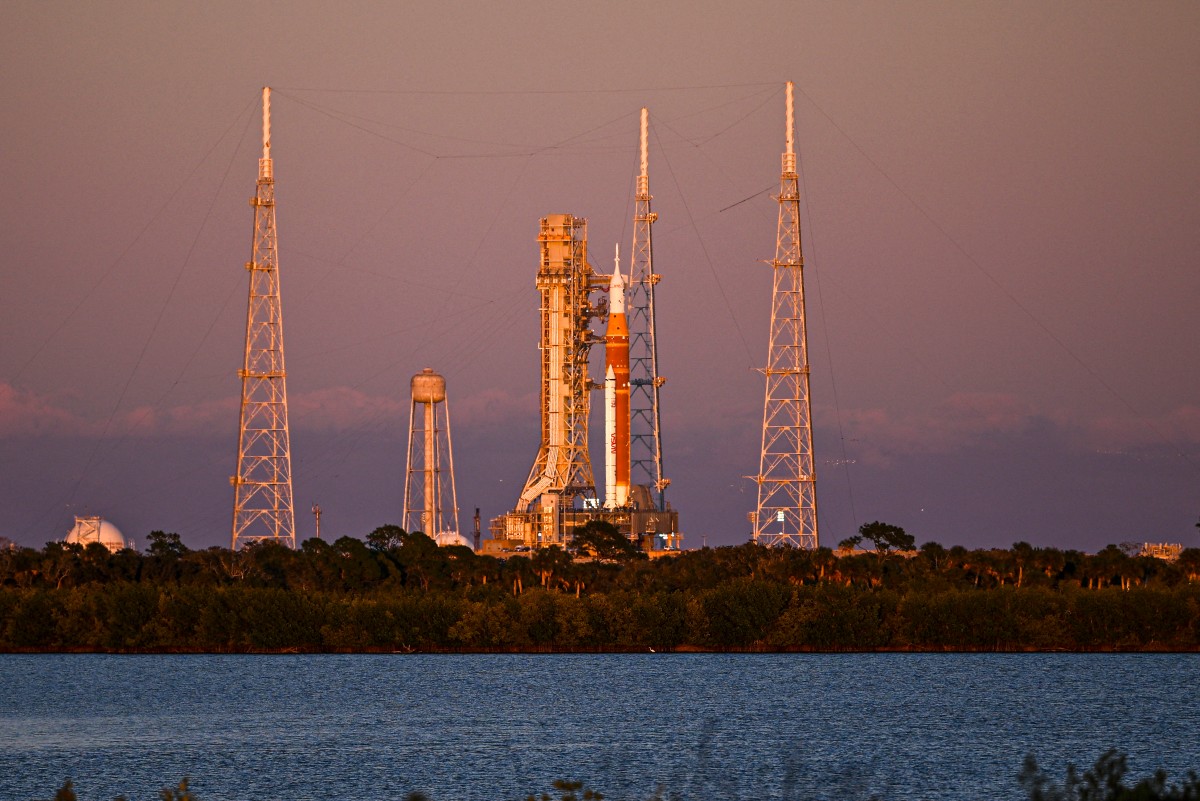
The star gradually increases its luminosity. Photo:Istock
According to NASA data, in approximately 5 billion years the Sun will exhaust the hydrogen in its core and expand into a red giant, an evolutionary phase in which it could engulf the closest planets or definitively alter their orbits, and conditions.
One researcher summarized the outlook as follows: “The Sun may eventually end life on Earth, but our own actions will decide how habitable it remains until then.”
Studies agree that, although the process will unfold on geological timescales, the behavior of the Sun constitutes the determining factor in the final destination of Earth’s habitability.
*This content was written with the assistance of artificial intelligence, based on publicly available knowledge disseminated to the media. It was also reviewed by a journalist and an editor.
READ ALSO
JAIDER FELIPE VARGAS MORALES
REDACCIÓN ALCANCE DIGITAL
