

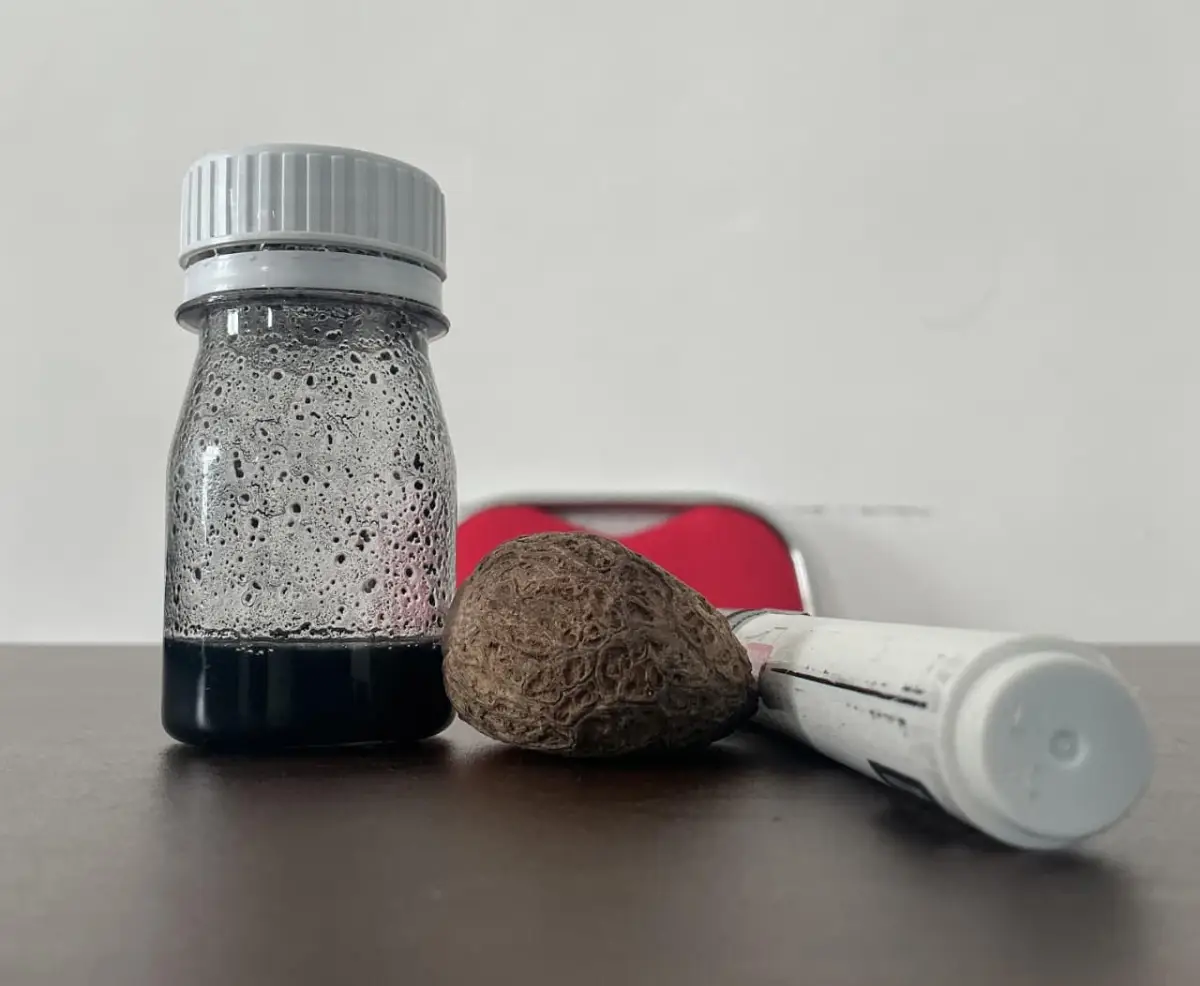
Students at the Pondok Pesantren Internasional Abdul Malik Fadjar (PPI AMF) have developed an eco-friendly marker ink made from the fruit of the keluak tree.
A unique innovation has emerged from students at the Pondok Pesantren Internasional Abdul Malik Fadjar (PPI AMF) with the successful development of an environmentally friendly marker ink based on the keluak fruit.
Through simple research conducted continuously, this innovation demonstrates that a traditional ingredient, commonly known as a cooking spice, can be processed into a high-value and eco-conscious product.
Keluak Processed into Eco-Friendly Marker Ink
PPI AMF student, Zulva Wahyu Pradana, explained that the idea for the marker ink originated from observing the natural black pigment contained within the keluak fruit.
From there, he began experimenting to harness that pigment as a base for a safe and sustainable ink.
“Initially, I saw keluak only used in cooking, like in rawon. That made me wonder if its black pigment could be used for something else, like ink,” he said.
Safer and Biodegradable
Unlike conventional marker inks that generally contain chemical ingredients, this keluak-based ink offers the advantage of being biodegradable and safer to use.
The product is considered non-toxic when inhaled and is more environmentally friendly for children and the wider environment.
the developed ink is designed to remain functional, whether used as a permanent or non-permanent ink.
A Process of Research and Repeated Testing
During development, Zulva faced several challenges, particularly in finding the right formulation to ensure the ink could be used optimally.
He had to conduct in-depth research and repeated trials to achieve a stable and safe ink quality.
“The process was quite lengthy due to the fact that I had to try many times to get a stable and safe ink quality. But from that, I learned a lot about research and product development,” he said.
Easily Sourced Materials and Affordable Costs
From a cost perspective, this innovation is economical because the main ingredient, keluak, is readily available in the market at a relatively affordable price.
Most costs were allocated to supporting testing processes in the laboratory to ensure consistent product quality.
Mentorship Focused on Sustainable Innovation
Mentor Yolanda Pradiva explained that the mentorship provided focused not only on technical aspects but also on fostering an innovative mindset among students.
According to her, students are encouraged to recognize the potential of local materials and develop them into real solutions that benefit society.
“We don’t just guide from the technical side of product creation, but also how this idea can develop and have a long-term impact,” she explained.
Potential for Scaling to Production
Yolanda added that collaboration between students and teachers from various fields is key to producing more mature innovations.
This approach allows for product development that is not only conceptually strong but also has broader functionality and benefits.
Looking ahead, this keluak-based ink innovation is expected to continue to be developed towards the production and further testing stages.
Proof of Student Creativity in Islamic Boarding Schools
This simple innovation based on local materials proves that student creativity can deliver sustainable solutions while opening opportunities for environmentally friendly products from Islamic boarding school environments.
This development also demonstrates that the education sector, including Universitas Muhammadiyah Malang (UMM), can play a role in driving research-based innovation with a real impact on society.
