
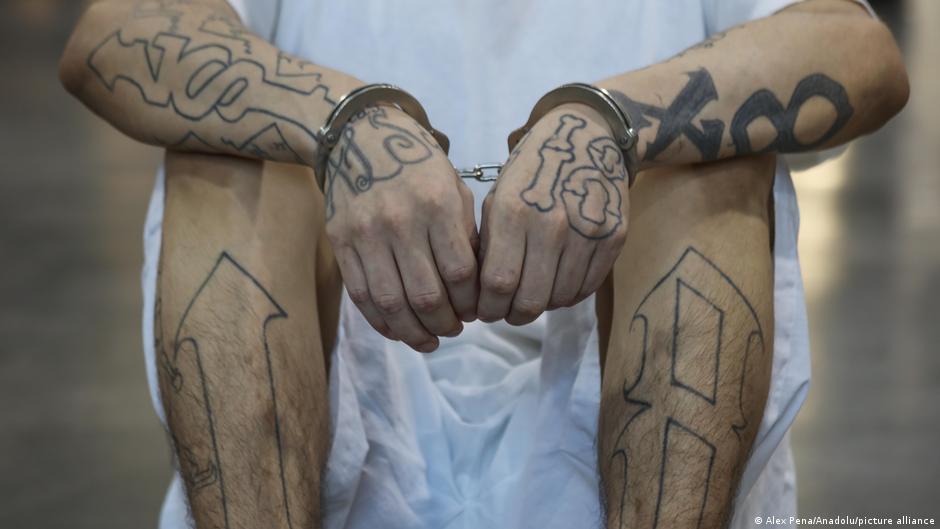
El Salvador’s government proposed Thursday, March 19, 2026, extending a controversial crackdown on gang violence to include the possibility of life sentences for minors convicted of murder or rape, even if they are not affiliated with gangs. The proposal, submitted to the country’s Congress, which is controlled by the ruling party, comes just days after lawmakers approved broader constitutional reforms aimed at increasing penalties for serious crimes. The move underscores President Nayib Bukele’s commitment to a hard-line approach to security, even as human rights groups raise concerns about due process and potential abuses.
The proposed amendment expands upon a constitutional reform approved Tuesday by the Legislative Assembly at Bukele’s request, which already establishes life imprisonment for “homicides, rapists and terrorists.”
“We are proposing to bring that judgment to life sentences even in the case of minors” who commit these crimes, said Security Minister Gustavo Villatoro, as he presented the initiative to a legislative committee.
A minor who voluntarily joins a criminal organization or “who rapes or kills” should “have a different treatment” than someone who commits less serious offenses, Villatoro emphasized.
The minister justified the need for the measure, arguing that the juvenile penal law has historically provided “cheap, unpunished and recyclable human resources to criminal organizations.”
Defense Minister Francis Merino told the same committee that many gang-related homicides were “a product of the permissiveness of the laws that need to be reformed.”
Previously, the maximum sentence was 60 years and life imprisonment was expressly prohibited by the Constitution.
The amendment must be ratified by Congress, while the rule including minors will be submitted for legislative approval in the coming days.
“There’s no turning back”
At Bukele’s request, the Legislative Assembly reformed a law a year ago to send minors detained for alleged gang ties to adult prisons, where they will be separated from adults until they turn 18.
A July 2024 report by Human Rights Watch documented the detention of more than 3,000 children and adolescents under the state of exception that underpins the war against gangs, which the international organization considered a violation of international standards.
Bukele enjoys popularity for reducing homicides to historic lows in his country and dismantling the Mara Salvatrucha and Barrio 18 gangs, which have been designated as terrorist organizations by the United States and El Salvador.
However, his security policy, which several countries in Latin America are seeking to replicate, is criticized by human rights groups because It’s based on a state of exception in effect for four years, under which 91,500 people accused of being members or accomplices of gangs have been detained without a judicial order.
“There’s no turning back, unfortunately with gang members that is the reality. There is no possibility of reintegration with gang members, there is no possibility of rehabilitation,” said ruling party lawmaker Suecy Callejas.
Security Minister Villatoro assured that life imprisonment is applied in Canada, Peru, Chile, Argentina and the United States, where that sentence is allowed for minors, but with the possibility of eventual release on parole.
National NGOs like Cristosal, in exile, and international organizations like HRW and Amnesty International denounce the arrests of thousands of innocent people, torture, deaths in prison and enforced disappearances.
The tightening of the anti-gang offensive comes a week after a group of prominent international jurists accused the government of committing “crimes against humanity” in its policy against crime.
The Salvadoran president rejects these accusations, dismisses NGOs as “law firms” defending criminals and assures that they seek the release of thousands of gang members.
mg (afp, La Prensa Gráfica)
