
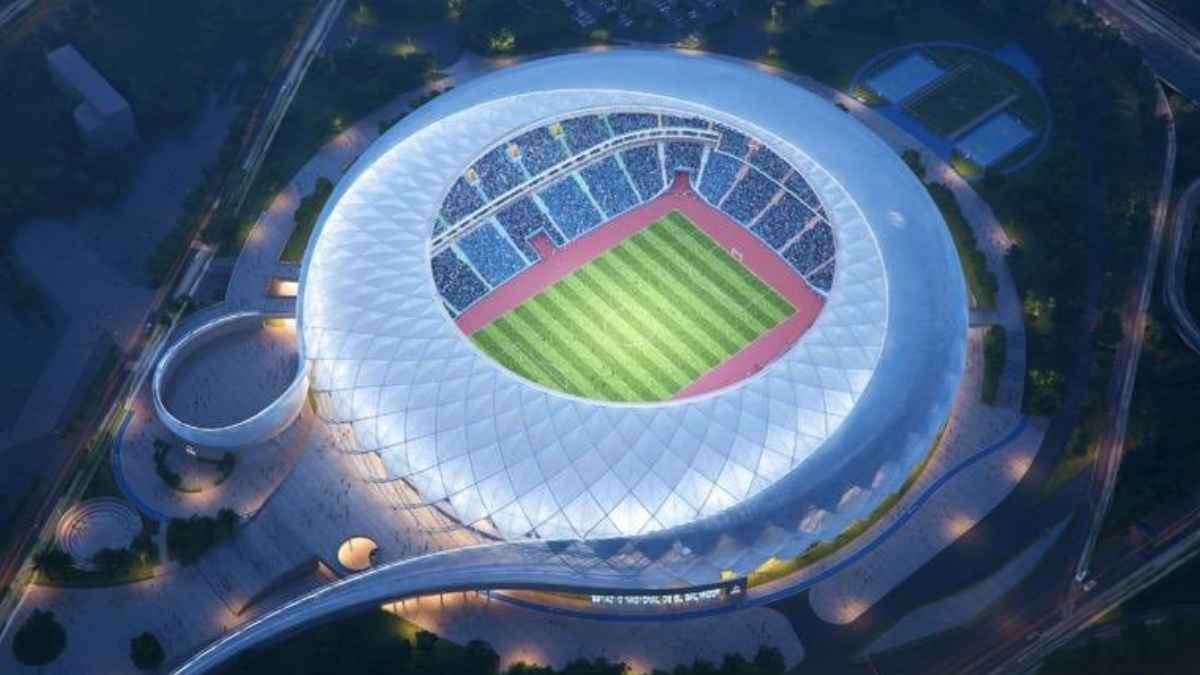
A new national stadium is taking shape in El Salvador, poised to become the largest and most advanced soccer venue in Central America. The project, located in Antiguo Cuscatlán, aims to be more than just a sports facility, envisioning a modern, sustainable complex that will serve as a social and lifestyle hub for the region.
With a planned capacity of 50,000 seated spectators, the stadium complex will span more than 170,000 square meters and include parking for over 2,000 vehicles. Officials anticipate the stadium will be a key driver of social activity beginning in 2027. The development underscores El Salvador’s ambitions to become a regional leader in sports and entertainment infrastructure.
Location and Significance of the New National Stadium
The new stadium is being built on the grounds of the former Military School in Antiguo Cuscatlán, a well-known location for local residents. The project represents a strategic collaboration between the Salvadoran government and China, combining cutting-edge technology with the aesthetics of the Central American landscape. The goal is to project the country toward the future, moving beyond a purely sporting venue to become a visual and social landmark.
| Key Data | Project Details |
|---|---|
| Location | Antiguo Cuscatlán, on the grounds of the former Military School |
| Capacity | 50,000 seated spectators |
| Complex Area | More than 170,000 square meters |
| Parking | Space for more than 2,000 vehicles |
| Timeline | Expected to be a new regional social hub starting in 2027 |
These figures demonstrate that the project is conceived as more than just another stadium, but as a key component of El Salvador’s future image.
Architectural Design of the Future Central American Leader
Unlike more traditional soccer stadiums, which often present a heavy and closed aesthetic, the new venue in El Salvador will feature a light and fluid design. The architects are moving away from rigidity, opting for curved and refined lines intended to stand the test of time.
Designed as a “habitable sculpture,” the 50,000-seat stadium will integrate each tier and pathway into an organic whole. The central concept revolves around “harmonious coexistence,” with the roof – a large covering that will enclose the venue – supported by a modular grid structure creating interplay of light and shadow. This approach aims to create an open and airy space, unusual for a structure of this magnitude.
The design of the new National Stadium can be summarized by several key features that distinguish it from traditional stadiums:
- Curved and light lines replace the rigid shapes common in other venues.
- A refined and timeless aesthetic designed to endure.
- A roof with a modular grid structure that allows for light and shadow play on the stands.
- A sense of openness and lightness despite the large scale of the project.
the stadium presents itself as a manifesto of steel and organic fluidity, designed so that the public not only watches the game but also feels part of a unique architectural piece.
Technology and Sustainability Features
Modern luxury is increasingly defined by efficiency, and the National Stadium project aims to set a new standard in this regard. The construction incorporates intelligent systems for energy and water management, with the intention of becoming a benchmark for ecological architecture in the region.
The design respects the environment, integrates renewable materials, and applies solutions to mitigate environmental impact. The goal is for the stadium to coexist with the Central American landscape rather than imposing itself upon it. The project also utilizes digital information technology to optimize virtually all internal processes, from lighting to security, promising a more immersive and comfortable experience for attendees without compromising future resources.
Beyond Soccer: Spaces and Services within the Complex
Contemporary leisure demands more than just a well-maintained pitch and a soccer match, and the new National Stadium has been designed with this in mind. The venue will be built on more than 170,000 square meters, including VIP areas, state-of-the-art press rooms, and spaces designed for shows and international-scale festivals, in addition to the main pitch meeting FIFA standards.
The complex will also include basketball and futsal courts, creating a small sports universe where the community can practice different activities in the same space. The stadium functions as the core of a true lifestyle hub, blending sport, leisure, and social life.
To accommodate this activity, the project plans for parking for more than 2,000 vehicles and spaces designed with full accessibility criteria, ensuring that anyone can move easily around the venue. The new National Stadium is preparing to be, starting in 2027, the great social epicenter of the region, where design and passion come together.
What to Expect as a Future Visitor
If you live in El Salvador or plan to visit the country when the stadium is operational, this project will affect you more than it appears. You will have access to what aspires to be the largest and most advanced soccer stadium in Central America, as well as a space designed to host shows and international-scale festivals in the same venue.
First, the capacity for 50,000 spectators and parking for more than 2,000 vehicles point to large-scale events, so it will be important to plan your trips and gatherings in advance. Second, the emphasis on full accessibility means that the design has taken into account different user profiles, which is key if you are attending with elderly people, children, or someone with reduced mobility.
Finally, keeping in mind that the stadium is preparing to become a new social epicenter starting in 2027, it is advisable to follow the evolution of the project and future event announcements. This venue is not only an eye-catching architectural perform but also an infrastructure called to set the pace of social and sporting life in the region in the coming years.
