
The recent death of Nemesio Oseguera Cervantes, known as “El Mencho,” leader of the Jalisco New Generation Cartel, has prompted a appear back at Mexico’s most prominent drug traffickers. Among those figures is Amado Carrillo Fuentes, nicknamed “The Lord of the Skies,” who once established a foothold in Argentina.
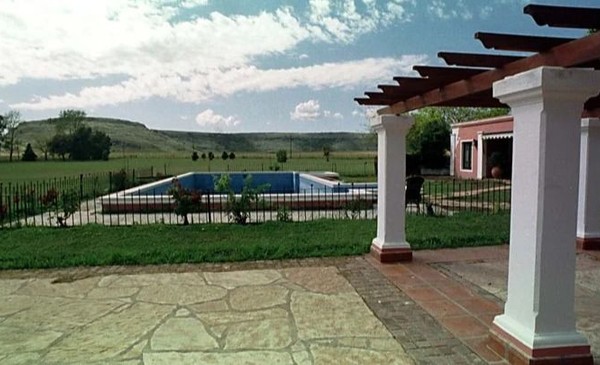
Carrillo arrived in Mar del Plata in 1997, choosing to live with one of his families at the “Rincón Grande” estate, located at the foot of the Sierra de los Difuntos mountains. This marked what would become the country’s first major case of drug money laundering.
Carrillo entered Argentina in December 1996 using a passport identifying him as Francisco Mora Guerrero, presenting himself as a businessman interested in expanding his network in Latin America. He was accompanied by Sonia Barragán, known locally as Laura, one of his wives – Carrillo Fuentes was bigamous and maintained a second family in Cuba – and their eight children.
At the time, Carrillo was 42 years old, with a fondness for whiskey and high-end clothing. Some in the Sierra de los Padres area remember him as a kind man, unaware that he was, in reality, “The Lord of the Skies,” the leader of the Juárez Cartel who had been declared the most powerful drug trafficker in Latin America after Pablo Escobar by the DEA and FBI.
The Pearls of Rincón Grande
Rincón Grande is one of six estates surrounding the Sierra de los Difuntos. The 100-hectare property belonged until early 1997 to Ricardo Bordeu, who sold it for five million pesos/dollar to Alberto Ángel Salvia, a frontman for Petrolera Mar del Plata S.A., a company with “Mexican investors.” The property was then transferred to the investors, a move that would later be identified as part of Argentina’s first money laundering case.
To adapt Rincón Grande to the family’s needs, Carrillo spent approximately 50,000 pesos/dollar, in addition to the 400,000 pesos/dollar allocated to the architectural firm Andell, responsible for the redesign.
According to case details, the frontmen for the company with Mexican shareholders who purchased the property aimed to retain ownership in case of difficulties. The costs of the renovation totaled $72,500 for furnishings, $45,000 for electrical function, and $29,000 for a carriage and animals. 800 head of cattle were purchased for $280,000, painting the property cost another $20,000, with “miscellaneous expenses” totaling $24,500. A Toyota truck was also purchased for $34,500, and $650,000 was transferred to personnel responsible for property maintenance in case of unforeseen events.
Carrillo and his wife closely supervised the renovation work, and according to testimonies from workers who later testified in the money laundering case, the family intended to settle permanently in Mar del Plata. Once completed, and meticulously decorated with a life-size crucifix in the estate’s chapel and a stuffed lion as a hunting trophy, the entire family moved in and enrolled the children in a local school whose name was not released.
Once settled at Rincón Grande, the “Mora Guerreros” authorized the former owner to hold a traditional cattle auction, an annual event in the area that had been disrupted by the property sale. “As a good neighbor,” witnesses said, Mora Guerrero offered the corrals and housing facilities for the event.
Everything seemed to be progressing according to plan. Mora Guerrero began visiting local farms, considering establishing a potato processing plant and a juice factory, but received a call from Mexico and the family returned home.
For a year, until Sonia returned to the estate, there was no news of the Mora Guerreros. Upon her return, the world learned that Mora Guerrero was, in fact, Amado Carrillo Fuentes, “The Lord of the Skies,” who had died in a Mexican clinic from “narcotization syndrome” following multiple surgeries including a rhinoplasty, facelift, chin augmentation, and liposuction, and a collapse due to a combination of antidepressants and post-operative medication.
With Carrillo Fuentes’ death and the arrival of Interpol, “Rincón Grande” gained public notoriety. A legal battle ensued among family members, frontmen, and shell companies to determine ownership of the property.
All of the Lord of the Skies’ Ventures in Mar del Plata
Carrillo invested a total of 10 million pesos/dollar in Mar del Plata. His interests extended beyond the “Rincón Grande” estate, which was his most valued investment. He also purchased a mansion at Almafuerte 1500 in the exclusive Los Troncos neighborhood to facilitate his family’s access to schools. The mansion is currently for sale.
“The Lord of the Skies” acquired the historic hotel Tourbillon, built in the 1930s by Leónidas Lesignoli, and designed by Isidoro Gurevitz.
Carrillo intended to convert it into a residential building, investing a substantial sum through Petrolera Mar del Plata. After the drug lord’s death, the property was abandoned until 2003, when it was auctioned off and the new owners decided to build a 13-story luxury tower. According to Diego González Casartelli, project manager for Tourbillon, the project required a $9 million investment to construct 34 units ranging from 146 to 300 square meters, with amenities including a heated pool, golf simulator, gym, and security.
“In March 2004, the partners purchased the hotel with the idea of building homes for personal use in a premium area of the city. Only later did the idea of real estate development emerge,” said González Casartelli. The building, constructed by Nicolás Caputo under the design of Lacroze, Miguens and Prati, was 55% sold by 2007 at an average of $1,720 per square meter.
Finally, under the supervision of Petrolera Mar del Plata S.A., Carrillo created the cereal companies Agrosudeste and Mirbet in May 1997. Neither company has reported assets since 1999.
A Sentence That Came 17 Years Later
In the 333-page sentence, the court determined that Raúl Oscar Marinone, Roberto Antonio Trolio, Jorge Díaz, Rosendo Miguel Lorente, Mirta Beatriz Llera, Alfredo Héctor Rodríguez, and Oscar Ernesto Moreno were “criminally responsible for the crimes of illicit association as members, in real competition with money laundering from drug trafficking” and sentenced to three years of suspended imprisonment and fines not exceeding 70,000 pesos.
The court found that the defendants acted as frontmen for the Juárez Cartel between May 1997 and December 1999, all of them part of an illicit association led by the late Nicolás Antonio Di Tullio and Ángel Salvia, who answered to the also deceased Amado Carrillo Fuentes.
“The money transferred to Argentina, more than twenty-one million dollars, came from the sale of cocaine in various cities in the United States, mainly the city of Chicago, by the so-called Juárez Cartel,” the sentence stated.
The assets acquired by the so-called “Lord of the Skies” through third parties were put up for sale through the Agency for the Administration of State Assets (Aabe) two years later, although not all assets could be seized as the drug lord’s family initially managed to avoid the seizure of the Rincón Grande estate, which was later mortgaged and changed ownership.
Carrillo Fuentes’ stay in Mar del Plata triggered the investigation into Argentina’s first money laundering case and resulted in the largest seizure of money in a money laundering case in the country. The case, initiated in December 1999, did not reach a sentence until August 2016, by which time three of the defendants and even the head of the Juárez Cartel had died.
Legend has it that Carrillo Fuentes did not actually die, but that a double was used and a life-size doll was placed in the coffin. All the doctors who participated in the surgical intervention died months after the drug lord’s death. Some still believe in the theory of a false death, claiming that Carrillo Fuentes actually lives in the mountains of Mar del Plata, near Nazi refugees hiding on abandoned estates with radioactive water.
