
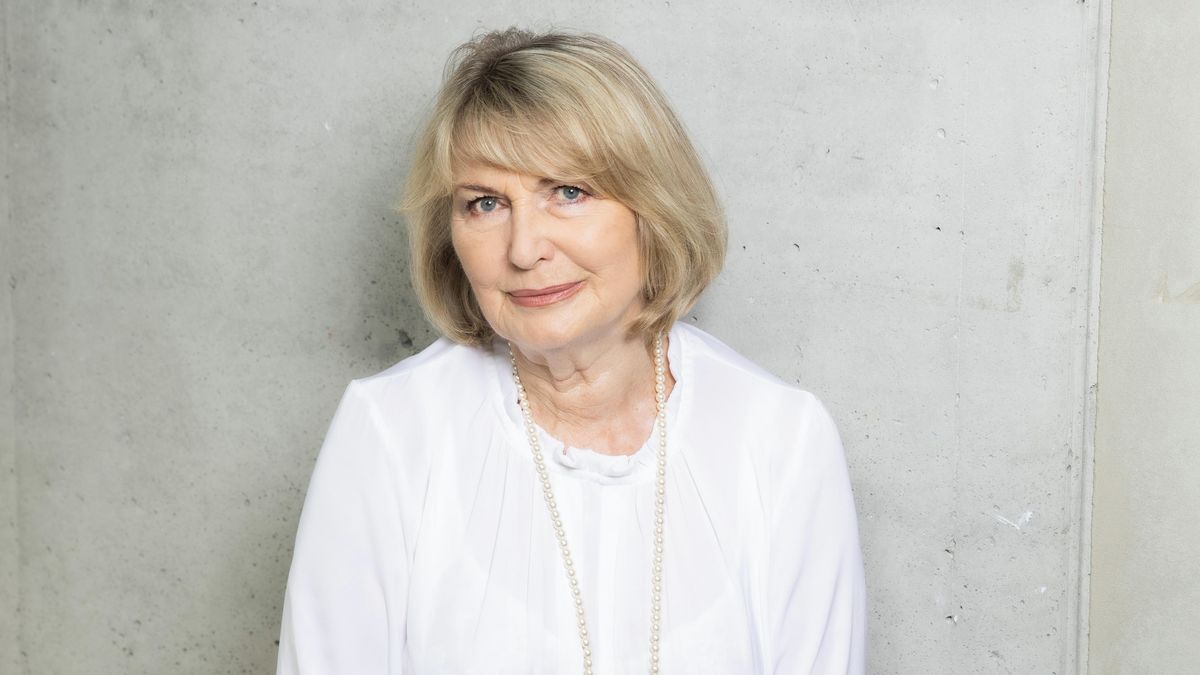
Eliška Balzerová, a veteran Czech actress, reflects on a career marked by bold transitions and a deep connection to the theater. From two decades at the Vinohrady Theatre to building the Divadlo Na Fidlovačce from the ground up, Balzerová’s journey is one of embracing change and finding joy in the energy of live performance.
Balzerová currently performs at Studio Dva, but often finds herself drawn to a particular café near Wenceslas Square, a place she describes as having a special Parisian vibe.
“Tři kamarádky café in Myslíkova Street is your favorite place. What do you enjoy about it?”
“It feels like a Parisian café,” she explains. “My husband and I always sit there on weekends, enjoying our favorite coffee with our favorite waiter, and watching the hustle and bustle of the street. It reminds me of those French cafés, and it’s just around the corner.”
What do you enjoy about the hustle and bustle on the street?
“Sometimes friends wave to us, sometimes they join us. Sometimes I witness grandchildren going to or from school. I enjoy watching people. When I mention Paris, it’s the types of characters you find there that I’ve often used in my plays.”
You recently left the radio after 20 years, but you’ve made several considerable departures throughout your life, haven’t you?
“The older you get, the harder it is to let go of comfort, and security. But you’re good at leaving. Is that part of your Valašian nature?”
“Let me tell you a story. Once, I was on a film set next to Helena Růžičková, who was known as a fortune teller. She read coffee grounds or palms. People were afraid to offer her their hand because she was often right. One day, she read my coffee grounds, then said, ‘Let me have your hand.’ So I gave it to her, and she said, ‘I see a division here, something fundamental that will split your life.’
“I thought she meant I would get divorced, and I even joked about it. But she said, ‘Be careful, it will happen later in life.’ I turned 50 while at Divadlo Na Fidlovačce – I left my 20-year engagement at the Vinohrady Theatre at age 50.”
It was a beautiful, wonderful theater, and the departure was voluntary. “I reckon I do things in 20-year increments,” she says. “Then almost 20 years at Fidlovačka, even though we spent five years preparing and building it. And now, well, here I am, almost ten years in another theater, starting over again.”
“This could serve as inspiration for someone struggling in a certain stage of life and trying to find the strength to change. Maybe they’re asking themselves, ‘What will happen if I take that step?’ ‘Will I be free?’ ‘Will I cry?’”
“That depends on each person’s character. I’m a bit of a Valašian tough cookie, so I swallowed my tears. But of course, it hurt, because Fidlovačka was my baby. I suddenly packed my makeup into one box and left. Even the new caretaker said, ‘Let me see what’s in that box.’
“And I said, ‘Madam caretaker, I brought more *to* that theater than I’m taking *with* me.’ And I left.”
If Eliška Balzerová could trade professions for a day with someone from the unseen corners of the theater world, who would it be?
“There are so many! One of them actually drew me to the theater, and that’s the makeup department. My mother did amateur theater, and when the actors laid out their colorful little boxes, all smelling of paint, it was something special. That’s when I fell in love with the theater. And then I learned it was dangerous. Once you smell the theater, you can’t tear yourself away. I took my son, who was about five years old, to the prop room at the Vinohrady Theatre. He was thrilled – it has everything: machetes, swords, canes, masks… He said, ‘I want to work here.’ I realized it right then and there and pulled him out.”
So he wouldn’t fall in love with it.
“Exactly. My daughter, who often sits with me in the dressing room, feels this way too. She’s a dramaturg. She doesn’t interfere with my work, but we do discuss things. Sometimes she’ll say, ‘This role would be interesting for you,’ or ‘This one is no longer for you, someone younger should do it.’ She’s certainly uncompromising. We have a sense of humor in our family. But she believes dramaturgy is a thankless profession. The dramaturg prepares the play, is there every day, gives the actors notes – ‘Speak louder, I can’t understand you, you don’t understand it.’ They consult with the director on everything. They often translate the play. And then the actors get the applause on stage, and the dramaturg sits in the audience and thinks, ‘Well, okay.’”

Maybe she didn’t want to be seen, knowing that Mom was a star – and that comes with a price.
“Yes, she’s been aware of that since the beginning. And when I took my son to school, sometimes people would stop me and compliment me or say something as an actress. And my son would say, ‘Mom, you know what? Wait for me around the corner.’ He didn’t like that.”
What’s it like to get used to being constantly in the public eye and not being able to hide? Not being able to have a bad day because people might say, ‘Balzerová is grumpy today, what’s wrong?’
“You know, I don’t take it to heart. If someone says that, well, I just had a bad day. When someone takes my hand and says, ‘I love you, you played beautifully,’ that makes me happy. And if they don’t want to say that and spit at me, I don’t even notice it. I’m an old lady now and I’m used to it. And when you read something on social media, you have to say that this nation has turn into so rude that you have to armor yourself.”
I was wondering, if Eliška Balzerová could trade professions for a day with someone from the unseen corners of the theater, who would it be?
“There are so many! One of them actually drew me to the theater, and that’s the makeup department. My mother did amateur theater, and when the actors laid out their colorful little boxes, all smelling of paint, it was something special. That’s when I fell in love with the theater. And then I learned it was dangerous. Once you smell the theater, you can’t tear yourself away. I took my son, who was about five years old, to the prop room at the Vinohrady Theatre. He was thrilled – it has everything: machetes, swords, canes, masks… He said, ‘I want to work here.’ I realized it right then and there and pulled him out.”
So he wouldn’t fall in love with it.
“Exactly. My daughter, who often sits with me in the dressing room, feels this way too. She’s a dramaturg. She doesn’t interfere with my work, but we do discuss things. Sometimes she’ll say, ‘This role would be interesting for you,’ or ‘This one is no longer for you, someone younger should do it.’ She’s certainly uncompromising. We have a sense of humor in our family. But she believes dramaturgy is a thankless profession. The dramaturg prepares the play, is there every day, gives the actors notes – ‘Speak louder, I can’t understand you, you don’t understand it.’ They consult with the director on everything. They often translate the play. And then the actors get the applause on stage, and the dramaturg sits in the audience and thinks, ‘Well, okay.’”
Balzerová’s reflections offer a glimpse into the dedication and resilience required to thrive in the performing arts, a career she clearly cherishes.
What do you imagine in the empty space? What kind of people will come?
“Yes, what will it be like today? A few years ago, I celebrated 20 years since the premiere of a great production. I’ve had a thousand performances, and many people have asked me if I still enjoy it. I answer that I enjoy it more and more, because every evening there’s a different audience. Every evening there’s someone who it touches, maybe they cry, another who laughs wildly. I look forward to who will come. From the first moment, from the first entrance on stage, I know what it will be like.”
Do you have to work harder, or does the audience just click right away?
“Sometimes I say, ‘I’ve hauled three tons of coal,’ but sometimes it’s a miracle. And just last week, I performed on Thursday, and it was miraculous.”
“I walked onto the stage, and something happened that I had secretly wished for. I often traveled abroad to theaters because, first, I enjoyed it, and second, my husband and I would import new plays that weren’t being performed here and introduce the audience to new authors. Once, I sat at a performance of two amazing actresses. I still love them today – Judi Dench and Maggie Smith. Well, in that play, Judi Dench walked onto the stage, and people started clapping. She didn’t do anything…
“She just stood there – she has a exceptionally firm posture – and looked sternly at the audience. People clapped, she started acting as if a puppet was being moved. And then she opened the door, and Maggie Smith was there. People started clapping again. I said, ‘That’s something.’ Imagine, both actresses walk onto the stage, and people start clapping without saying anything. And I, in *The Divorce*, walked onto the stage, and people started clapping. It’s beautiful! They show that they’re looking forward to it and that we’ll be friends.”
Is your daughter Adéla, a dramaturg, weighing in on your craft?
“She doesn’t. Of course, we discuss a lot of things together. Sometimes she’ll say, ‘This role would be interesting for you,’ or ‘This one isn’t for you anymore, someone younger should do it.’”
Is she that uncompromising?
“Oh, certainly. We have a sense of humor in our family. But that’s not the point. She believes dramaturgy is a very thankless profession. The dramaturg prepares the play, is there every day, gives the actors notes. They say, ‘Speak louder, I can’t understand you, you don’t understand it.’ They consult with the director on everything. They often translate the play. And then the actors get the applause on stage, and the dramaturg sits in the audience and says, ‘Well, okay.’”
Maybe she just didn’t want to see that Mom was a star – and that comes with a price.
“Yes, she’s been aware of that since the beginning. And when I took my son to school, sometimes people would stop me and compliment me or say something as an actress. And my son would say, ‘Mom, you know what? Wait for me around the corner.’ He didn’t like that.”
What’s it like to get used to being constantly in the public eye and not being able to hide? Not being able to have a bad day because people might say, ‘Balzerová is grumpy today, what’s wrong?’
“You know, I don’t take it to heart. If someone says that, well, I just had a bad day. When someone takes my hand and says, ‘I love you, you played beautifully,’ that makes me happy. And if they don’t want to say that and spit at me, I don’t even notice it. I’m an old lady now and I’m used to it. And when you read something on social media, you have to say that this nation has become so rude that you have to armor yourself.”
If you could trade places with anyone in the unseen world of the theater for a day, who would it be?
“There are so many! One of them actually drew me to the theater, and that’s the makeup department. My mother did amateur theater, and when the actors laid out their colorful little boxes, all smelling of paint, it was something special. That’s when I fell in love with the theater. And then I learned it was dangerous. Once you smell the theater, you can’t tear yourself away. I took my son, who was about five years old, to the prop room at the Vinohrady Theatre. He was thrilled – it has everything: machetes, swords, canes, masks… He said, ‘I want to work here.’ I realized it right then and there and pulled him out.”
So he wouldn’t fall in love with it.
“Exactly. My daughter, who often sits with me in the dressing room, feels this way too. She’s a dramaturg. She doesn’t interfere with my work, but we do discuss things. Sometimes she’ll say, ‘This role would be interesting for you,’ or ‘This one isn’t for you anymore, someone younger should do it.’ She’s certainly uncompromising. We have a sense of humor in our family. But that’s not the point. She believes dramaturgy is a thankless profession. The dramaturg prepares the play, is there every day, gives the actors notes – ‘Speak louder, I can’t understand you, you don’t understand it.’ They consult with the director on everything. They often translate the play. And then the actors get the applause on stage, and the dramaturg sits in the audience and says, ‘Well, okay.’”
Balzerová’s reflections offer a glimpse into the dedication and resilience required to thrive in the performing arts, a career she clearly cherishes.
What do you imagine in the empty space? What
