- For two years, Russia has been engaged in a continuous and successful offensive in Ukraine, but that momentum stalled in February.
- While not yet a turning point, this represents the most significant change in the war’s situation since the spring of 2024.
- The reason: Elon Musk disabled Starlink terminals used in Ukraine that had fallen into Russian hands.
- Previously, however, he prevented Ukrainians from using drones in territory occupied by Russia, leading to accusations of aiding President Putin, though the war would have unfolded very differently without Starlink.
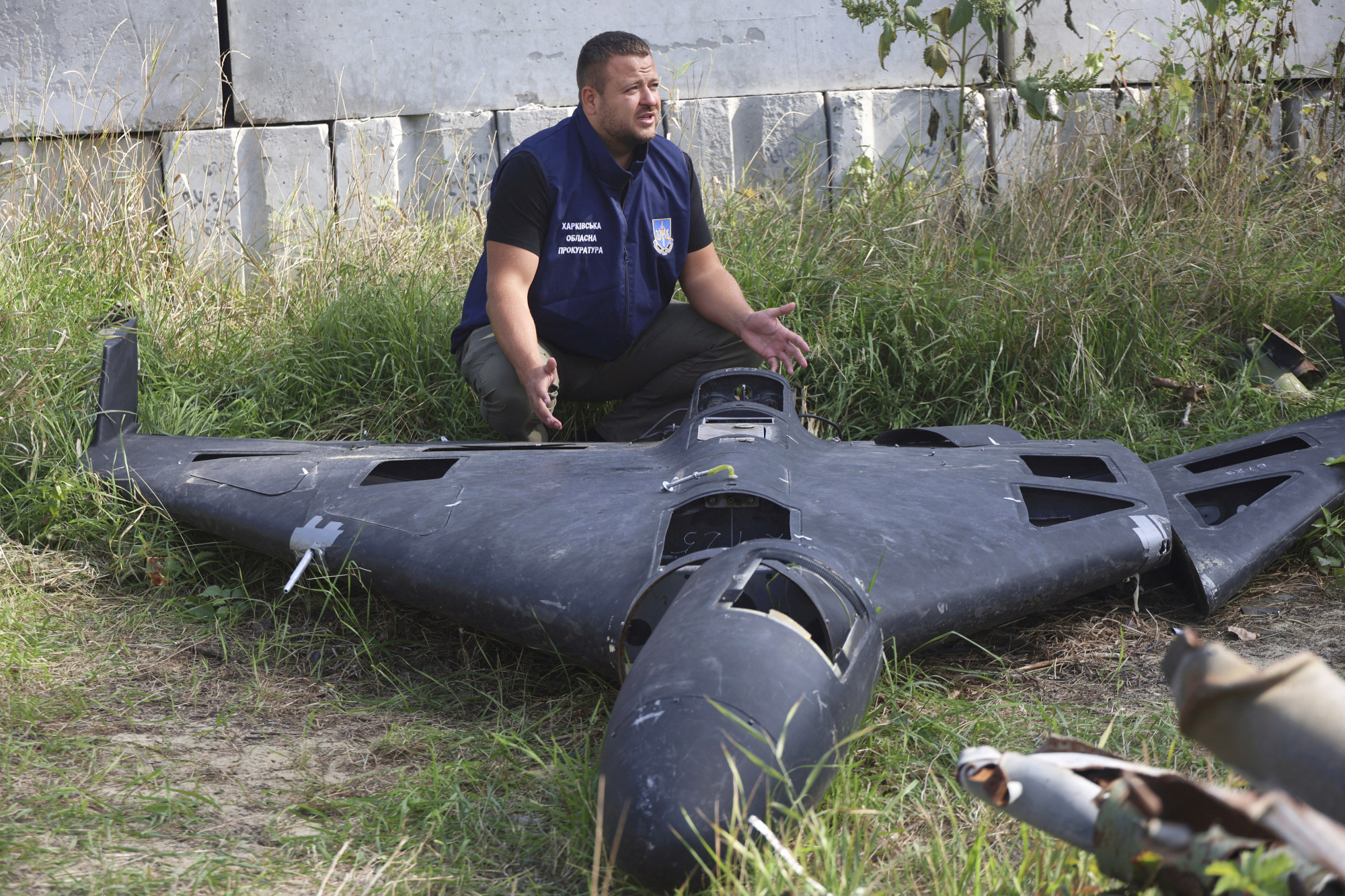
Russian forces are attacking Ukraine with Shahed drones.
Photo: VIACHESLAV MADIIEVSKYI/NurPhoto via AFP
After a prolonged period, the military situation in Ukraine has shifted: recent data shows that February marked the slowest month of Russian territorial gains in nearly two years, with the capture of just 123 square kilometers. This slowdown represents a significant change from the previous 23 months, during which Russian forces averaged nearly 400 square kilometers of territorial control per month. The development underscores the increasingly complex dynamics of the conflict and the potential for technological interventions to alter the battlefield.
The key factor behind this shift, according to numerous reports, is a decision by Elon Musk to render Starlink terminals operating in Ukrainian territory and subsequently seized by Russian forces unusable. Musk directed his company, Starlink, to centrally disable the terminals, compiling a list of legitimately used Ukrainian devices and blocking access for all others within the country.

Elon Musk at CPAC in Oxon Hill, Maryland, on February 20, 2025.
Photo: Andrew Harnik/Getty Images via AFP
This action proved effective in limiting Russian capabilities, as both sides rely on internet connectivity to operate combat drones. With their access to Starlink disrupted, the striking power of Russian forces diminished significantly. The Starlink shutdown too impacted communications between fighting units and artillery targeting, which heavily depend on reliable satellite internet.
How did Russian forces acquire Starlink terminals in the first place? According to U.S. Intelligence information, they obtained them through black market purchases and as captured military equipment. These terminals were then integrated into drones, including the Molnija-2, a type well-known to Ukrainian forces. While Ukraine had previously developed effective countermeasures against these drones, the upgraded Molnija-2s, enabled by Starlink, proved more demanding to intercept due to their ability to operate at low altitudes and resist electronic jamming. The Starlink connection facilitated precise targeting and maintained a live video feed. Following the Starlink shutdown, Ukrainian officials reported that no soldiers were killed by camera drones in the days that followed.
Musk’s Prior Interventions in the Conflict
Musk’s involvement in the war dates back to its earliest stages. When Russia launched its full-scale invasion of Ukraine on February 24, 2022, Russian forces immediately began targeting Ukraine’s communications infrastructure. Two days later, on February 26, Ukraine’s Minister of Digital Transformation, 31-year-old Mykhailo Fedorov, publicly appealed to Musk on X (formerly Twitter) for Starlink’s satellite internet service to be made available anywhere in Ukraine.
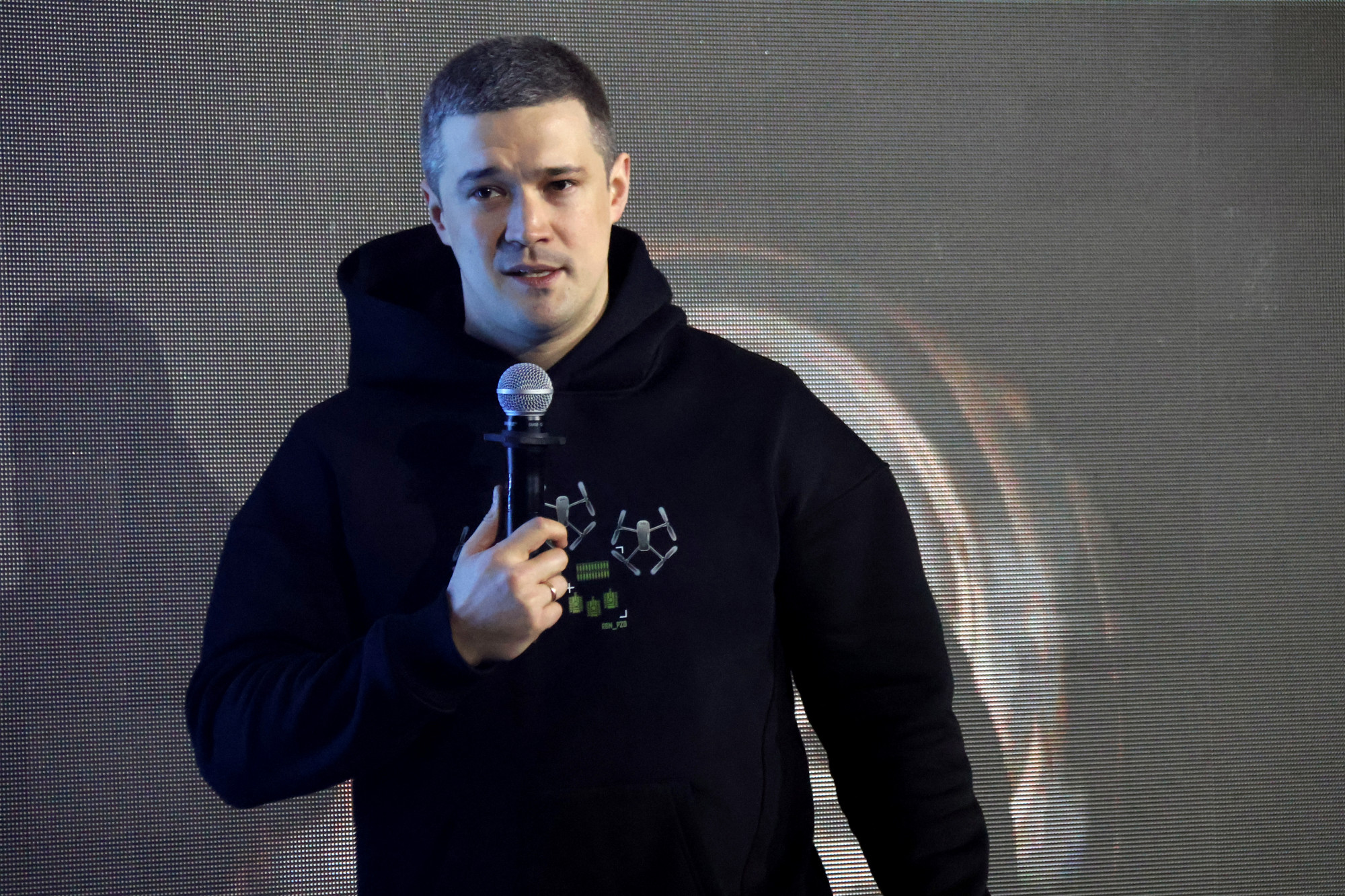
Mykhailo Fedorov on December 3, 2025.
Photo: OLEKSANDR KLYMENKO/NurPhoto via AFP
Musk responded immediately, activating the service and dispatching the first terminals to Ukraine. This shipment arrived on February 28, significantly enhancing Ukraine’s communication and defense capabilities. Initially, Musk’s company covered the service costs and provided the equipment free of charge, later subsidized by governments and the Pentagon.
Many experts and defense industry sources believe that without Musk’s swift assistance, Ukraine’s defense could have collapsed in the early weeks of the war. While the counterfactual remains unknown, his overall contribution is widely acknowledged. The thousands of Starlink terminals quickly became integral to Ukraine’s defense efforts.
However, there have also been instances where Musk refused Ukrainian requests, a decision some interpreted as support for Russia. In the autumn of 2022, Ukrainian military leaders developed a plan to destroy Russian warships stationed in Sevastopol, Crimea, using underwater drones. This operation required Musk to authorize the activation of the service over the illegally occupied peninsula, but he declined, citing concerns about escalating the conflict to a nuclear level.
A Tech Brokerage Between Leaders
Following the initial contact in 2022, a strong working relationship developed between Musk and Fedorov, who was also appointed Deputy Prime Minister. Fedorov was considered a successful government official, known for his ability to rapidly implement technological solutions. One of his key initiatives was the creation of Brave-1, a project designed to help tech startups – particularly drone developers – bring their ideas directly to the military. Experts credit Brave-1 as a major factor in the rapid development of Ukraine’s drone industry.
It was therefore no surprise when, in mid-January of this year, Fedorov was appointed as Ukraine’s Minister of Defense. Around this time, Ukrainian officials realized one of the reasons for recent Russian battlefield successes: Russian forces were regularly using drones equipped with Starlink connections against Ukraine. These drones were able to be targeted with precision, evading air defenses. One such drone struck and killed five people on a moving passenger train on January 27.
Immediately after his appointment, Fedorov contacted Musk, publicly praising him as a true champion of freedom and a genuine friend of the Ukrainian people. By early February, reports emerged that they had successfully identified the illegally used terminals and were preparing to disable them. The latest aggregated battlefield data shows that these measures had an immediate impact. While it is too early to speak of trends, Ukraine was able to regain control of 161 square kilometers of territory in February, in three locations along the southern front line – the largest monthly territorial gain for Ukraine and more than five times the two-year monthly average.
Despite the relief among Ukraine’s supporters, the fundamental situation remains unchanged: a completely unpredictable private individual possesses a technology that no other entity currently does, including the world’s major nuclear powers. And, accordingly, he can influence wars according to his own whims. Even so, most experts believe that Musk’s role, while important, is not entirely decisive in shaping the course of the war. It is no coincidence that, to some extent, the entire world is planning to build similar systems, from American and European private companies to the European Union, Russia, and China. But for the foreseeable future, Elon Musk will be the only one with a functioning system.