
European Energy Markets Shaken as US-Iran Ceasefire Fails to Stabilize Prices
The European Union is grappling with one of the most severe energy shocks in five decades, as geopolitical instability in the Middle East continues to drive costs to record highs. On April 10, 2026, U.S. President Donald Trump announced a two-week “bilateral ceasefire” with Iran, contingent upon the reopening of the Strait of Hormuz. Whereas financial markets initially saw a brief moment of relief, the stability has proven fleeting, and the broader energy crisis continues to intensify.
The conflict in Iran has resulted in a staggering loss of 12 million barrels of oil per day from the global market. This supply crunch has pushed the price of Forties North Sea crude beyond $146 per barrel, according to data from LSEG. Analysts suggest that the sustained high prices reflect a deep-seated market skepticism regarding the rapid restoration of shipping traffic through the Strait of Hormuz. Further complicating the landscape is the damaged infrastructure in Qatar, which adds another layer of risk to global energy supplies.
The volatility is not limited to oil. European gas prices have already surged past 50 EUR/MWh, prompting the European Central Bank to raise its inflation forecast to 2.6%. This economic pressure is leading to a rise in offered fixed gas prices, with the energy crisis impacting projections for next year. Some consumers are increasingly looking toward wood as a long-term, cheaper heating alternative, though experts warn that a mass migration from gas and electricity could quickly drive up wood prices.
A Strategic Divergence: The US Shift and the EU’s Green Deal
As Europe navigates these shocks, it finds itself increasingly isolated in its climate ambitions. On January 22, 2025, reports highlighted a growing divide as President Trump shifted U.S. Policy toward the intensive extraction of fossil fuels, which he views as the primary driver of economic growth. This pivot included the U.S. Withdrawal from the Paris Climate Agreement and the cessation of funding for the Green Deal.
This policy shift places the EU in a precarious position, forcing the bloc to pursue its ecological goals without the support of its long-term ally. Václav Bartuška, the special envoy for energy security, has urged Europe to critically reassess its strategies. While Bartuška noted that elements of the Green Deal—such as heat pumps—remain economically viable, he argued that solar parks in regions with low sunlight no longer make economic sense. He emphasized the need to distinguish between returnable investments and those that should be limited to avoid becoming an electricity importer.
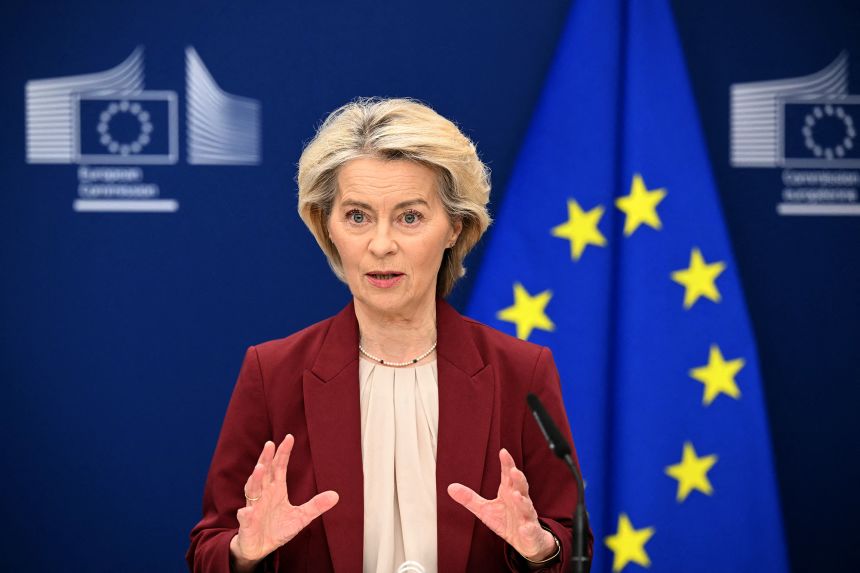
The divergence in energy policy may grant the U.S. A significant economic advantage due to lower energy costs, leaving European industry struggling to remain competitive. This tension comes despite specific trade concessions; in July 2025, President Trump and European Commission President Ursula von der Leyen agreed to eliminate tariffs on various EU goods exported to the U.S., including semiconductor equipment, aircraft parts, certain chemicals, medicines, and agricultural products.
The Road to Recovery and Diversification
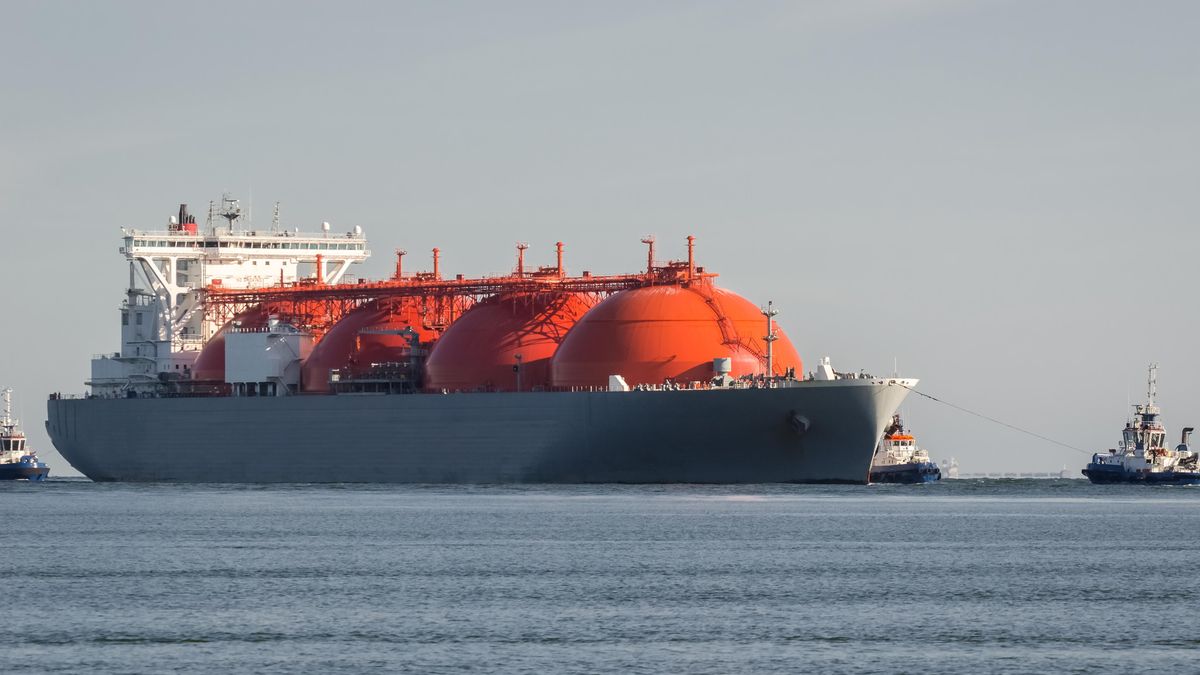
The EU’s current vulnerability is rooted in a long-term reliance on affordable Russian energy. Following the cessation of those supplies, the bloc has aggressively sought to diversify. By 2025, the EU consumed approximately 313 billion cubic meters (bcm) of natural gas, valued at 296 billion euros. This included 101 bcm of liquefied natural gas (LNG) worth 112 billion euros, marking a 15% decrease from 2024 levels.
Current primary suppliers include Norway—which provides over 33% of the EU’s gas—alongside the USA (via LNG), Algeria, Qatar, the UK, Azerbaijan, and Russia. While the EU has demonstrated an ability to react quickly to crises, Bartuška warns that over-reliance on renewables without adequate backup systems is problematic. He advocates for the construction of recent sources and diversified supply chains to ensure energy security.
With the region facing its third economic crisis in six years, the outcome of these energy pivots will likely determine Europe’s future economic standing and its role on the global stage. As the “dragon ride” of geopolitical volatility continues, the EU must balance its commitment to the environment with the stark reality of global energy competition.
The current instability highlights the critical need for innovation in energy storage and diversified infrastructure to insulate the digital and industrial economy from geopolitical shocks. As the U.S. Doubles down on fossil fuels, Europe’s ability to optimize its Green Deal will be the ultimate test of its economic resilience.
For more on the intersection of global politics and economics, observe current analysis on U.S. Influence and ECB inflation trends.
