
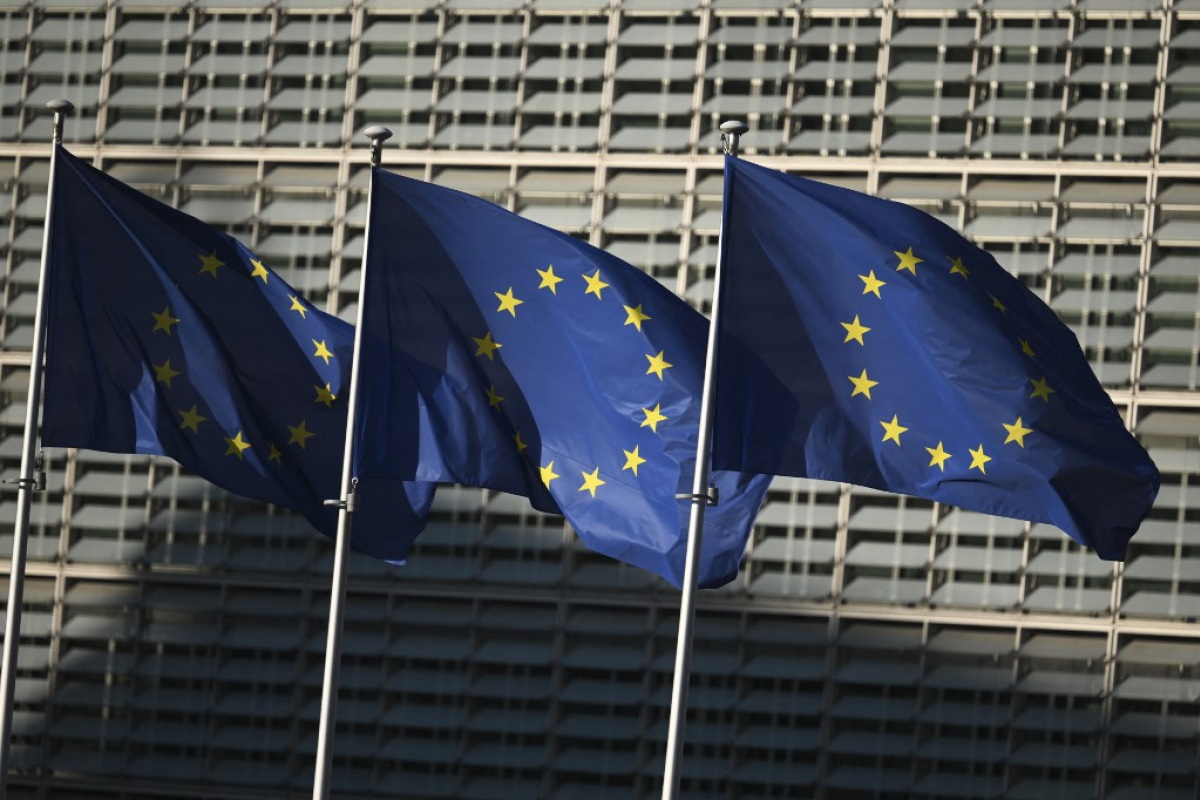
( AFP / NICOLAS TUCAT )
Growth in the Eurozone’s private sector slowed sharply in March, driven by the conflict in the Middle East which is pushing up energy costs and disrupting supply chains for businesses. The findings come from the Flash PMI released on Tuesday by S&P Global.
The headline figure for the composite index fell to 50.5 this month, down from 51.9 in February. This reading signals a near standstill in private sector activity.
A reading below 50 indicates a contraction in activity, while a score above 50 points to expansion. The latest result represents the lowest level in ten months, reflecting “a near-stall in the expansion of private sector activity, with incoming new orders declining.”
Growth in the service sector, the largest component of the index, stalled almost completely, dropping to 50.1. Meanwhile, the manufacturing sector saw a slight increase to 51.4, boosted by a recovery in Germany.
These developments are fueling concerns about stagflation in the Eurozone – a combination of economic stagnation and high inflation. Chris Williamson, Chief Business Economist at S&P Global, noted that “the Eurozone flash PMI sounds the alarm on stagflation, as the Middle East war sends prices soaring while simultaneously braking growth.”
Williamson highlighted that business costs increased at the fastest pace in over three years, due to surging energy prices and supply chain disruptions stemming from the conflict. He now anticipates only 0.1% growth for the first quarter, with inflation potentially nearing 3%. This situation complicates the task for the European Central Bank (ECB), which “will need to adopt a cautious approach to monetary policy, given the clear and increasing risk of stagflation in the coming months.”
The slowdown in Eurozone growth mirrors similar trends observed in Japan, where private sector expansion also decelerated in March due to Middle East tensions and rising costs, according to S&P Global. The report underscores investors’ focus on inflation data and the potential for central banks to navigate a challenging economic landscape.
