
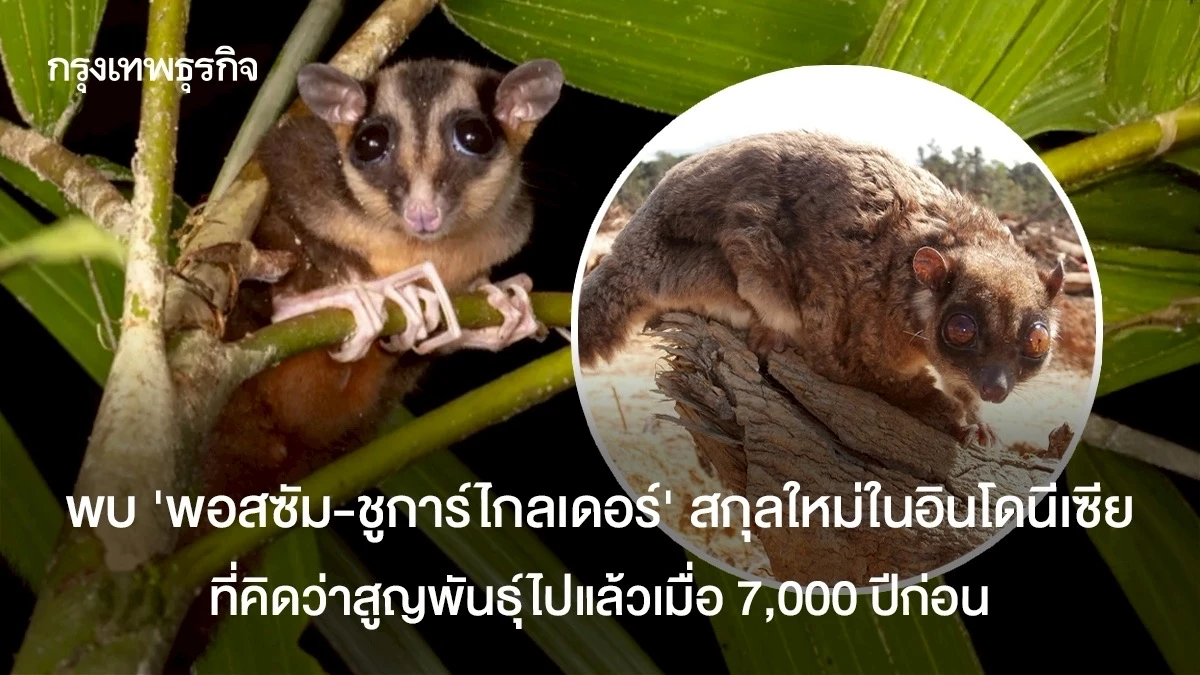
Two marsupial species previously known only from fossil records have been rediscovered in the remote rainforests of Novel Guinea, marking a significant find for biodiversity and conservation efforts. Scientists have confirmed the existence of the pygmy long-fingered possum (Dactylonax kambuayai) and the ring-tailed glider (Tous ayamaruensis), both believed to have gone extinct over 6,000 years ago. The rediscovery highlights the potential for uncovering hidden biodiversity in underexplored regions and underscores the importance of collaboration with local communities in conservation research.
Researchers spent two years surveying the Vogelkop Peninsula in West Papua, Indonesia, to verify the presence of the animals. The region is considered one of the least explored forests in the world, harboring a wealth of undiscovered species. This finding adds to the growing knowledge of the approximately 100 marsupial species inhabiting New Guinea and its surrounding islands, contributing to a better understanding of marsupial evolution in the Australasian region.
The animals are classified as “Lazarus taxa”—species that reappear after being known only from fossilized remains—a designation inspired by the biblical figure raised from the dead. Tim Flannery, a professor at the Melbourne Sustainable Society Institute and a distinguished visiting fellow at the Australian Museum, described the discovery as a career highlight, stating, “It’s almost unheard of to find mammals that we thought were extinct for thousands of years, let alone two of them.”
Pygmy Long-Fingered Possum
The pygmy long-fingered possum is characterized by distinctive dark and light bands on its head and a uniquely elongated middle digit on each hand. This extended finger, twice the length of its other digits, allows the possum to probe for insect larvae beneath tree bark. The species inhabits lowland rainforests and montane forests.
Scientists previously believed the pygmy long-fingered possum disappeared from Australia during the last ice age, with the most recent fossil evidence indicating its presence in New Guinea around 6,000 years ago. The rediscovery was aided by Carlos Bocos, a citizen scientist who captured images of the animal in the forest and shared them on the iNaturalist platform. These photos prompted further investigation and ultimately confirmed the species’ continued existence.
Researchers likewise discovered a preserved specimen of the possum in a jar at the University of Papua New Guinea, collected in 1992 but initially misidentified. This finding demonstrates how potentially extinct species may have been hidden in museum collections for decades.
เครดิตภาพ: Jonathon Dashper
Ring-Tailed Glider
The ring-tailed glider (Tous ayamaruensis) is distinguished by its large eyes, hairless ears, and soft, brown fur, giving it a resemblance to a cross between a squirrel and a gecko. Its most notable feature is a strong tail capable of tightly coiling around branches for secure grip, covered in fur except for the underside which provides enhanced traction. The glider also possesses a gliding membrane for traversing between trees.
Researchers have classified the ring-tailed glider into a newly identified genus, “Tous,” based on its local name. Here’s a significant event in biological taxonomy, as no new marsupial genus has been established in New Guinea since 1937. The Tous genus exhibits distinct genetic and evolutionary divergence, with the greater glider of Australia as its closest relative, though significantly smaller in size.
The discovery of the ring-tailed glider began in 2015 when a palm oil plantation worker photographed an unidentified animal in a tree. Scientists noted similarities to sugar gliders but observed behaviors reminiscent of ring-tailed possums. But, the species was well-known to the Tambrauw and Maybrat tribes, who refer to it as “Tous wansai” and possess a deep understanding of its unique lifestyle.
For the indigenous communities, the ring-tailed glider is considered sacred, believed to be the embodiment of ancestral spirits and playing a crucial role in initiation rituals. The animal’s habitat is located within deep forests surrounding massive Kauri trees, considered by locals to be the origin of both humans and animals. The people of the Vogelkop Peninsula have long protected its habitat.

เครดิตภาพ: Dewa
Dr. Christopher Helgen, a research fellow at the Smithsonian National Museum of Natural History and CEO of the Bishop Museum, stated that the discovery proves that extinction can be prevented, offering a signal of hope and a second chance to protect these animals through collaborative efforts between scientists and communities.
The presence of these species provides crucial insights into the geological history of the region. The Vogelkop Peninsula was once part of the Australian continent before becoming connected to New Guinea, serving as a refuge for ancient creatures that have disappeared elsewhere.
Despite the positive news, researchers express significant concern for the future of these species. Animals in the Tous genus have a exceptionally low reproductive rate, typically producing only one offspring per year. They also form lifelong monogamous pair bonds, making the population vulnerable.
The primary threats include habitat loss from logging and agricultural expansion. Some areas where the animals were found are surrounded by remnants of deforestation and palm oil plantations. Without urgent conservation measures, they may face actual extinction this time. Poaching is another significant concern, as the unique and rare appearance of both species makes them targets for illegal wildlife trade. Researchers are keeping the locations of the discoveries confidential to ensure their safety.
The Global Wildlife Fund and the Minderoo Foundation are currently working with local communities to protect the forest. This discovery serves as a reminder that nature still holds many secrets waiting to be explored, and protecting indigenous knowledge and ancient habitats is the only way to preserve this miracle.
ที่มา: Australian Museum, Discover Magazine, NBC News, The Conversation, The Guardian, Vice
