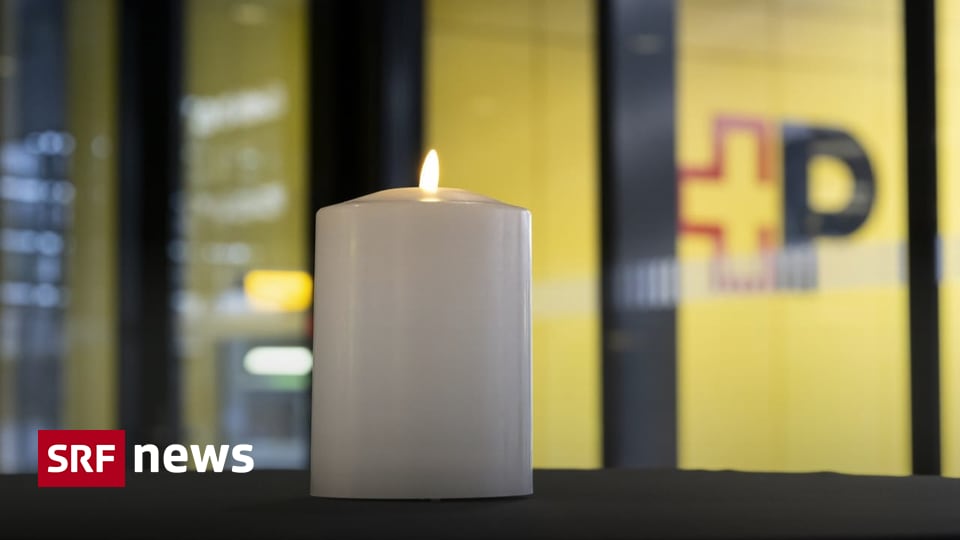
A man ignited himself on a public bus in Kerzers, Switzerland, on March 10, 2026, resulting in six deaths and sparking questions about why bystanders sometimes fail to intervene during emergencies. The tragedy underscores the complex psychological factors that can hinder people from offering assistance in critical situations.
A man set himself on fire on a PostAuto bus in Kerzers, Switzerland, on March 10, 2026. The fire spread rapidly, engulfing the vehicle within a minute; six people died, including the suspected arsonist, and five others were injured.
The incident has renewed questions about how people react in emergency situations and how to encourage intervention.
Legende: Six people died in the PostAuto bus fire in Kerzers. Five others were injured. KEYSTONE/Anthony Anex
<p class="article-paragraph">When a person encounters an emergency, our reactions are largely automatic, a response that is also biologically driven, according to Urs Braun, president of the Association for Emergency Psychology. Instead of consciously choosing how to react, automatic programs capture over: flight, fight, or freeze. This can result in fleeing the scene, deciding to help, or becoming momentarily paralyzed and unable to act.</p> <h2 class="article-heading" id="toc_1">What Prevents People From Helping</h2> <p class="article-paragraph">A phenomenon that prevents people from helping in emergency situations is known as the “bystander effect,” a concept identified by social psychologists John M. Darley and Bibb Latané.</p> <p class="article-paragraph">According to their research, an individual must go through five decision stages before actually helping a victim. With each stage, the willingness to help becomes less likely.</p> <div class="article-element article-element--inset-box">
The Five Decision Stages
Box aufklappenBox zuklappen
A prerequisite for providing assistance is noticing the event and interpreting it as an emergency.
Researchers have found that the presence of other people can lead to inaction. At this stage, there’s a risk of assuming everything is okay because no one else is intervening, a phenomenon known as “pluralistic ignorance.”
A further hurdle lies in responsibility. Only those who feel personally called upon will take action. When strangers are present at a bus stop, there is typically no clarity about responsibilities, and no one takes the initiative. Psychologists refer to this as “diffusion of responsibility.”
The question of *how* to help then arises. Witnesses who don’t have an answer may do nothing at all.
Finally, fear of personal consequences can also lead people to look the other way. Some don’t want to put themselves in danger or fear legal repercussions.
</div> <p class="article-paragraph">Another phenomenon observed in recent disasters is people filming the event instead of intervening. This was also reported in Kerzers.</p> <p class="article-paragraph">Petra Strickner, an emergency psychologist and head of the volunteer team at the Carelink Foundation, suggests that the use of mobile phones may provide a sense of security. “The mobile phone is almost like a reflex. It may give a feeling of distance from the event and is a familiar action – and that in turn gives us security,” she explained, adding, “However, these are merely explanations and not a call to act in this way.”</p> <div class="article-element article-element--inset-box">
Failure to Provide Assistance is a Crime in Switzerland
Box aufklappenBox zuklappen
In Switzerland, failing to assist a person in immediate danger, when It’s reasonable to do so, is a criminal offense. This is stipulated in Article 128 of the Swiss Criminal Code. Failure to render assistance can be punished with imprisonment of up to three years.
</div> <p class="article-paragraph">Braun also sees filming as an unconscious habit. “It has grow an ubiquitous action,” he said. There may be an added incentive today: someone who records a spectacular video could gain attention on social media. “That is very problematic,” Braun stated.</p> <h2 class="article-heading" id="toc_2">From Bystander to Helper</h2> <p class="article-paragraph">Sometimes, a little action can make all the difference. Often, it starts with finding the courage to initiate. This is where civil courage comes into play – and that is something that can be learned, Braun emphasized: “It is not an innate character trait.”</p> <div class="article-element article-element--inset-box">
How to Provide First Aid
Box aufklappenBox zuklappen
The Swiss Samaritan Association recommends following the so-called traffic light scheme in an emergency.
The light is Red: In this first phase, one simply observes and gets an overview of the situation.
The light turns Orange: Now it’s time to think about and identify potential dangers.
The light shows Green: Only in this final step does one begin to act – taking necessary measures, providing first aid, and calling emergency services.
It’s vital to remember not to put yourself in danger when helping. You should only help after you have identified and minimized potential risks. Then, you should assess the person’s condition. Are they responsive? Are they unconscious, and if so, are they still breathing?
To ensure that everything is understood during the emergency call, it’s best to follow this reporting scheme:
Where is the accident site?
Who is the caller?
What is the callback number?
What exactly happened?
When did the accident happen?
How many people are affected?
Other Are there any special dangers?
</div> <p class="article-paragraph">At the same time, Strickner says it’s difficult to react correctly in a chaotic situation. It could be helpful if someone takes the initiative and gives clear instructions: “You call emergency services. You block the road.” Such direct requests counter the “bystander effect.”</p> <h2 class="article-heading" id="toc_3">Practice Makes Perfect</h2> <p class="article-paragraph">“Everyday mechanisms for coping with stress can also help,” Strickner adds. These include calming breathing, maintaining an upright posture, or consciously structuring the situation: What is happening here? What is my task?</p> <p class="article-paragraph">To remain capable of acting in emergencies, practice is essential. People often don’t feel capable of helping. These doubts can be reduced through regular practice. “That’s why it’s also useful to repeat first aid courses,” Braun said.</p> </div><div data-news-landmark="sharing-bar-bottom"> <hr class="horizontal-separator horizontal-separator--sharing-bar" role="presentation" aria-hidden="true"/> <p>
ail: [email protected]
Bio:
Emily Johnson serves as News Editor at Headlinez.News, overseeing the publication’s coverage of national and breaking stories. She has worked in journalism for more than 12 years, building a reputation for precision, credibility, and rapid-response reporting. Emily’s editorial philosophy focuses on clear, fact-based writing that helps readers understand the full context behind the day’s most important events. Her expertise bridges traditional reporting and modern digital news strategies.
Expertise: Breaking news, political reporting, fact-checking, newsroom coordination, public affairs.
Location: Washington, D.C., USA