
The global automotive landscape experienced a significant shift in 2025. For the first time in history, BYD surpassed Ford in global sales volume, solidifying its position as the sixth-largest automaker worldwide. Faced with this challenge, Jim Farley, CEO of Ford, has opted not for retreat, but for a radical transformation inspired by the successful Chinese model: democratizing the electric vehicle through simplicity and obsessive cost control.
Rather than focusing on luxury electric SUVs and pick-ups with large batteries, Ford has pivoted toward pragmatism. The company’s recent objective is to compete with BYD’s manufacturing costs “head-to-head,” a strategy the company has dubbed the “physics of what’s possible” over brute force. Farley has stated that his company “is not walking away from electric vehicles.”
A Universal Electric Platform: Detroit’s Secret Weapon
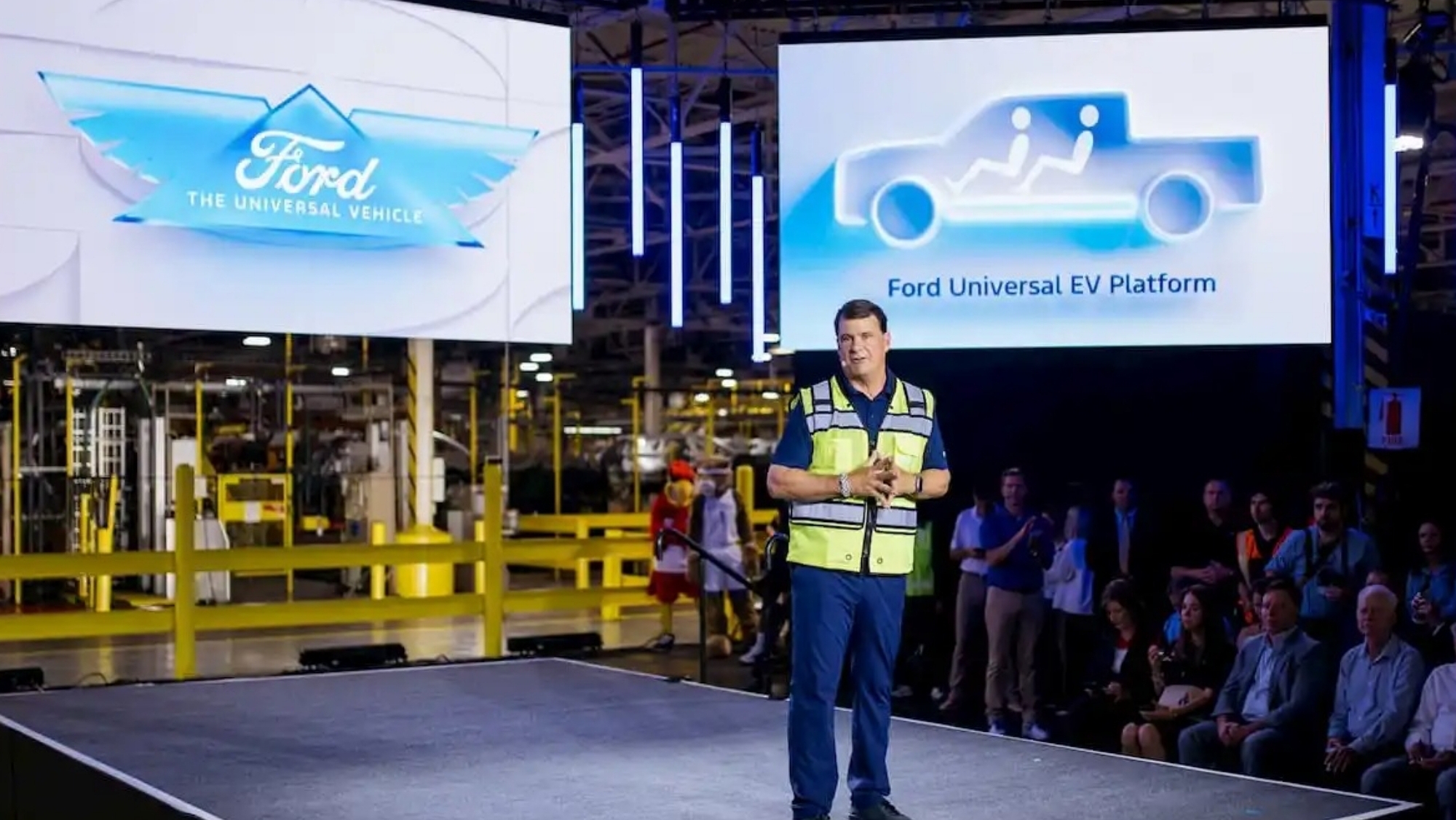
The cornerstone of this revival is the new universal electric platform. Developed by an elite team of engineers in a “skunkworks” project, the architecture was designed with a radical premise: eliminate everything unnecessary. According to Farley, this platform reduces the number of parts by 20% compared to a conventional vehicle. Ford is also adopting Tesla’s production system.
The optimization doesn’t stop at components. The platform introduces efficiency improvements reminiscent of BYD’s approach:
- 25% fewer fasteners (screws and clips) throughout the vehicle.
- 40% fewer workstations on the assembly line.
- An assembly process 15% faster than current standards.
- A drastic reduction in wiring and connectors to simplify electronics.
First Fruit: A $30,000 Pick-up Truck by 2027
The first vehicle to emerge from this new philosophy won’t be a small utility vehicle, but a mid-size pick-up truck slated for release in 2027. With a target starting price of $30,000 (approximately €27,900 at current exchange rates), Ford aims to offer a capable and spacious vehicle that costs less than many internal combustion engine cars.
This move is a direct response to the advances of Chinese brands in markets like Mexico, where BYD already dominates the electric sector with 70% market share, offering models ranging from $18,000 to $53,000. Ford intends to demonstrate its ability to manufacture competitively in America, leveraging its experience in operate vehicles while embracing the agility and innovation of a technology startup.
Strategic Alliances to Accelerate the Transition
Recognizing that speed is critical, Ford is also leaning on external partners to fill market gaps where BYD is strong. In Europe, the company has strengthened its collaboration with Renault to launch affordable electric vehicles more quickly, sharing development costs and platforms to lower public sale prices.
rumors suggest Ford may be negotiating battery cell supply with BYD itself for future hybrid models, in addition to Geely for a more global partnership. This potential alliance underscores Ford’s willingness to “join the enemy” in the supply chain if it allows the company to achieve the profit margins needed for its electric division – which has recorded charges of up to $19.5 billion in its recent restructuring – to finally grow profitable by 2029.
