
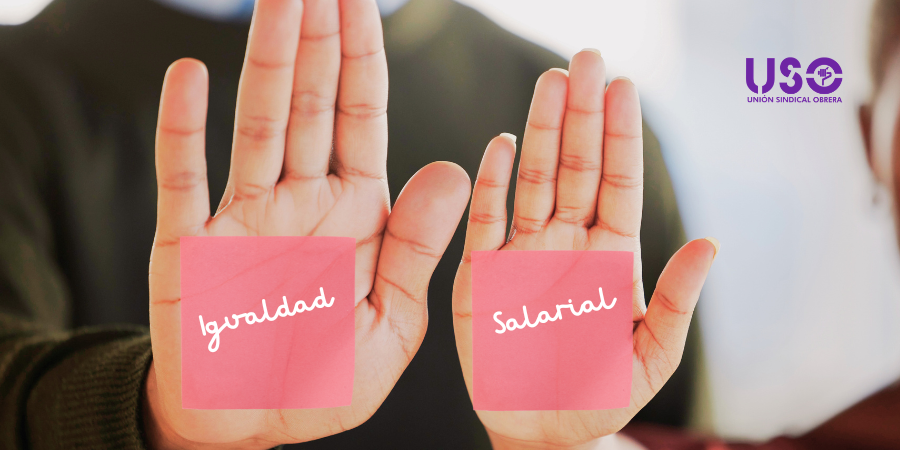
Gender Pay Gap Persists in Spain, Hindered by Precarious Work and Unpaid Labor
Despite progress, women in Spain continue to earn less than their male counterparts, a disparity highlighted annually on Equal Pay Day, observed February 22nd. The gap remains a significant issue, with women earning considerably less on average, and experts say systemic issues are preventing true equality. This ongoing inequality underscores the need for continued efforts to address economic disparities between genders.
According to the 2025 Salary Structure Survey, the average annual salary in Spain was €28,049.94. However, women earned an average of €25,591.31 per year, while men earned €30,372.49. This translates to women earning €4,781.18 less annually, representing a 15.74% income difference.
“Today, equal pay in Spain and many other countries is a principle that only exists on paper,” said Sara García, secretary of Union Action and Employment at USO. “The facts demonstrate that women’s work is undervalued and precarious employment continues to define their jobs. While progress has been made in closing this gap, the results are still insufficient. We need to end the pretense and establish salary guarantees for women.”
Wage Disparity and Part-Time Employment
The proportion of women earning at or below the minimum wage is more than double that of men. While 25.78% of women earned a salary equal to or less than the minimum wage, this was the case for only 11.64% of men.
In 2025, 72.27% of all part-time contracts were held by women. Of all employed women, 79.87% work full-time, while 20.13% are employed part-time. In contrast, 93.30% of men are employed full-time, with only 6.70% working part-time. Women hold 55.28% of temporary contracts, according to data from the Active Population Survey, third quarter of 2025.
Persistent Inequality
The inequalities between men and women remain a constant in the Spanish labor market. Experts argue that simply comparing Spain’s situation to other countries is insufficient without making substantial efforts to combat gender gaps. The current structure of the Spanish job market systematically discriminates against women, as feminized sectors tend to be more precarious and many women are forced into part-time work.
“It’s urgent to transform remuneration policies, and improving women’s income must be a priority, as current conditions lead to the chronic precarity of their employment,” García stated. “We must remember that a precarious salary impacts a pension of the same characteristics. Addressing wage gaps is not only a matter of equality, but too of social justice.”
Pay transparency, salary audits, and equality plans can assist improve women’s working conditions. However, authorities need to adequately supervise these measures. “A series of mandatory measures are useless if there isn’t a solid entity to oversee their compliance,” García said. “we ask for more resources so that the Labor Inspectorate can properly verify them.”
Social Changes Needed
Achieving real change requires social shifts that improve the quality of life for women, including promoting shared responsibility. Currently, women shoulder a disproportionate burden of household and care work. On average, women spend 4 hours and 21 minutes daily on unpaid care and domestic tasks, while men dedicate an average of 2 hours and 15 minutes to the same tasks, according to the 2023 Employment Survey.
USO believes that equality between women and men requires constant and in-depth work. Changes do not happen spontaneously, but require the involvement of everyone. “If our goal is to eliminate inequality and achieve equal pay and opportunities in Spain, we must work together and not grab a single step back in women’s rights,” USO stated. “Only with equal pay can we talk about dignity and rights.”
