
You can also listen to the commentary in audio format.
Long-term wealth management hinges on finding the right balance between risk, return, and security. For dollar millionaires, often focused on preserving wealth across generations, the priority isn’t maximizing short-term gains but building portfolio resilience against economic shocks – and those shocks have been increasing in recent years. This is where gold comes into play.
Not as a quick path to riches, but as a stabilizing component and a hedge. A recent J&T Banka Wealth Report indicates that some Czech dollar millionaires view gold as a strategic tool for protecting assets during a period of geopolitical upheaval and economic uncertainty. Younger generations, in particular, place greater importance on it than their parents.
Historically, gold has repeatedly proven its value during currency and political crises – from the collapse of monetary systems and the oil shocks of the 1970s to the 2008 financial crisis and the pandemic. Whenever uncertainty surrounding the stability of currencies and the financial system rises, gold strengthens its role as a store of value. According to the survey, successful Czech investors currently cite factors like massive purchases by central banks, the gradual weakening of the U.S. Dollar’s dominance as a reserve currency, concerns about the freezing of financial assets due to sanctions, rising government debt, and the risk of inflation as key drivers for investing in gold. These factors are boosting demand for assets not directly dependent on confidence in a specific government or monetary regime.
Gold’s appeal is also psychological. In turbulent times, it offers the security of holding an asset with universally recognized value – something that can be taken anywhere in the world and exchanged, perhaps not at an ideal price, but with a high probability of receiving an acceptable one. Unlike other investments, the solvency of the issuer isn’t a concern with gold. it’s about the authenticity of the metal and its market price.
A Hedge, Not a Source of Income
It’s important to note, however, that gold doesn’t generate income. It doesn’t pay dividends or interest. Holding gold means foregoing potential returns from other assets – a cost that comes with the insurance it provides. Just as with property insurance, a premium is paid even if a claim isn’t filed. As such, in practical long-term wealth management, gold typically accounts for around 10% of a portfolio, providing stability in extreme situations without hindering the growth of higher-yielding asset classes.
A specific factor is the role of central banks, which hold approximately 20% of the world’s gold reserves. Not for return, but as a strategic reserve. Their purchases and sales can significantly influence price. Gold isn’t immune to volatility. Investors who purchase gold at $5,000 per ounce must be prepared for a potential drop to $4,000. However, if held as a hedge, a correction shouldn’t trigger panic, with other portfolio components – stocks, private equity, or real estate – expected to offset any losses over the long term. A pragmatic approach is key. Headlines predicting $7,000 or $10,000 per ounce may be enticing, but a hedge isn’t a tool for short-term speculation.
Practical Considerations for Physical Gold
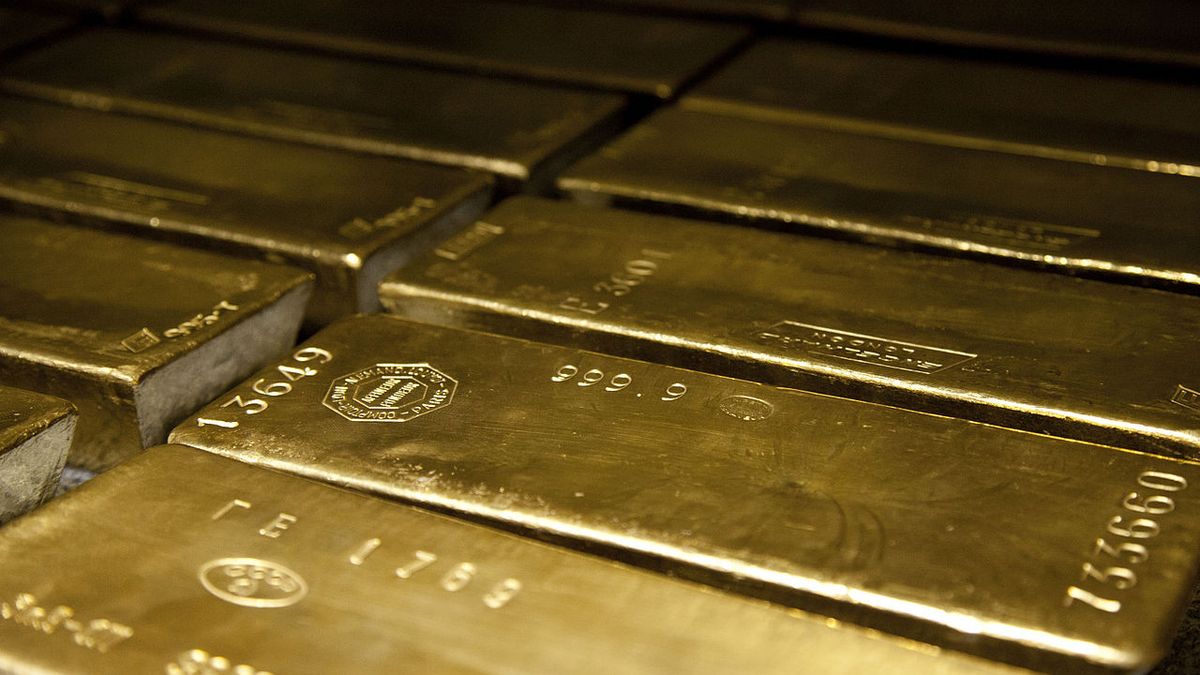
Beyond the investment rationale, practical considerations are essential. Physical gold makes sense in standardized investment forms, such as bars and coins without numismatic premiums. Large bars or ingots can only be sold as a whole, as the certification applies to a specific piece. This hedge, has its technical limitations, and liquidity needs to be considered.

The digitalization of investing has made trading through mobile apps convenient, and investing in gold is now easy “virtually” through linked ETFs. Everything works smoothly in calm times. However, it’s during turbulent periods that the solidity of the counterparty and the infrastructure through which an investor trades are revealed. Selecting the form and partner for custody is crucial for “gold insurance” in difficult times.
Unpredictability as the New Normal
We live in an era where geopolitical, monetary, and technological challenges are intensifying, and predictability is becoming the exception rather than the rule. It makes sense to hold a portion of assets in those not directly tied to corporate profits, interest rates, or government solvency. Why gold? Because gold represents a millennia of human experience in preserving value, and it can still function today as a universally recognized means of payment.
If seeking long-term portfolio resilience, holding approximately 10% in gold – always within the context of the overall asset structure and investment goals – makes sense, according to my assessment. This isn’t about ideology or speculation, but about prudent risk diversification and peace of mind.
