
Sudden floods are among the deadliest natural disasters, and accurately predicting them remains a significant challenge. Google is exploring a new approach leveraging artificial intelligence and analyzing millions of news articles to improve forecasting capabilities.
Major tech companies have been developing tools to anticipate natural disasters for several years. Google has already invested in this area with projects focused on risk prevention. In 2020, the company launched Android Earthquake Alerts, a system capable of detecting earthquakes using sensors in Android smartphones. Today, the technology functions in 98 countries and relies on approximately 2.5 billion devices.
The system has already issued over 1,200 alerts in the past few years. In some instances, users receive warnings seconds before shaking begins, providing crucial time to seek safety or evacuate. Google has also enhanced this system for Wear OS smartwatches, which can now receive certain alerts even without a connected smartphone. The company is now applying similar methods to other natural disasters, specifically sudden floods.
Google Leverages AI to Analyze 5 Million News Articles for Flood Risk Detection
To improve flood forecasting, Google has developed an innovative method based on artificial intelligence. Researchers utilized the Gemini language model to analyze roughly 5 million news articles published globally. The goal was to identify reports of floods and transform this information into usable data. the AI identified 2.6 million flood-related events.
This data has been compiled into a database called Groundsource, associating each event with a precise date and location. Researchers then trained a machine learning model to analyze this information alongside weather forecasts. This system can then estimate the probability of a flash flood in a given area. This approach highlights the potential of repurposing existing data sources for critical predictive modeling.
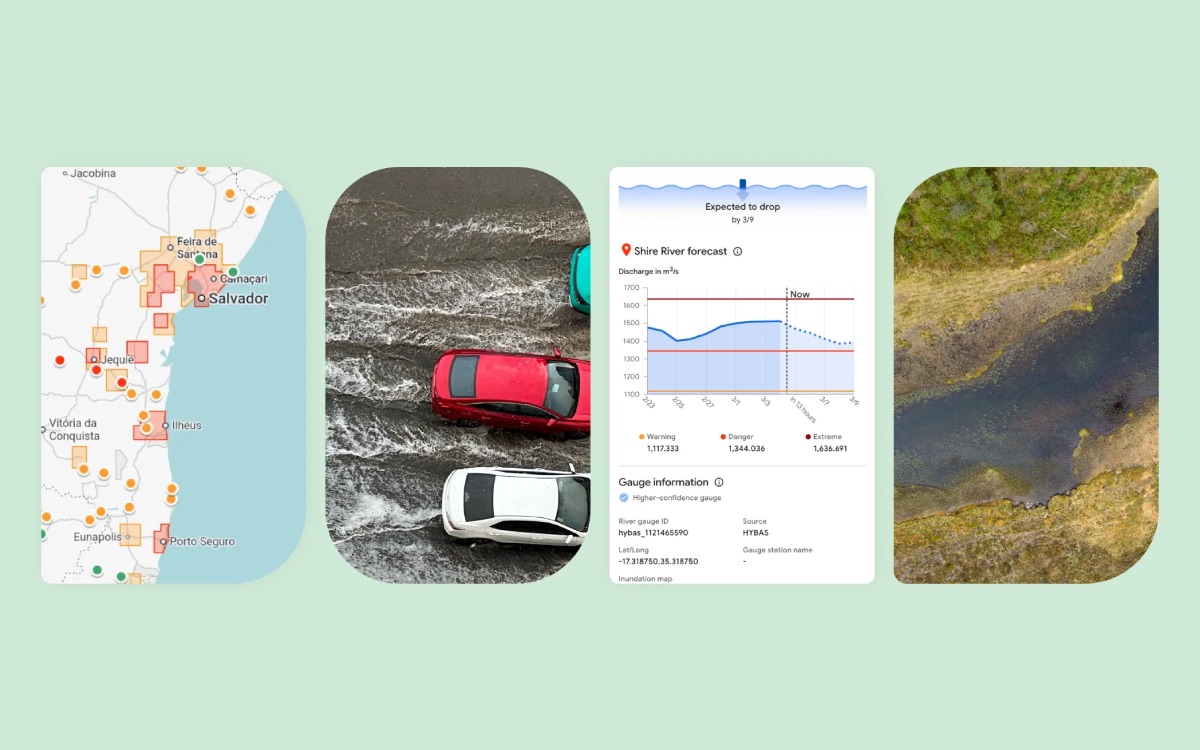
The model is currently in use on the Flood Hub platform, which displays at-risk areas in 150 countries. Authorities and emergency services can consult these maps to anticipate potential disasters. However, the approach has limitations. Accuracy remains relatively low, with analysis zones spanning approximately 20 square kilometers. Nevertheless, this method could prove valuable in regions with limited meteorological infrastructure.
