
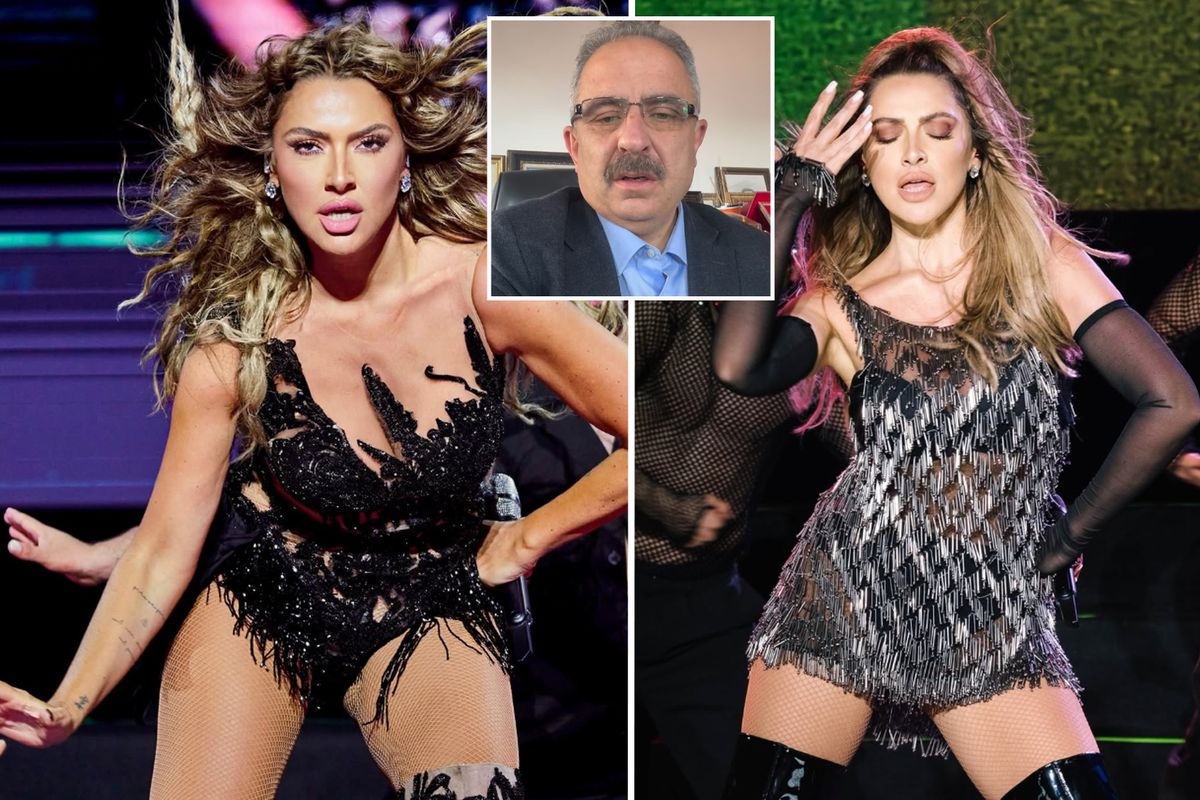
A heated public feud has erupted between Turkish pop star Hadise and Sinan Burhan, the President of the Turkish Press Federation, over the singer’s provocative stage wardrobe. The controversy reached a boiling point on April 4, 2026, when Burhan took to social media to launch a scathing attack on the artist’s style, sparking a wider debate on the intersection of art, modesty, and gender.
Burhan did not mince words in his critique, claiming that Sinan Burhan issued a latest statement regarding Hadise, asserting that she “came on stage in a costume like a p.r.no figure.” Questioning the nature of her performance, Burhan asked, “Is this called art?”
To further his point, Burhan compared Hadise to revered figures in Turkish culture and art, including Aşık Veysel, Neşet Ertaş, Yaşar Kemal, Ara Güler, Necip Fazıl Kısakürek, and Ahmet Özhan. He argued that these icons left lasting societal impacts through their operate, leading him to bluntly ask, “If Hadise is an artist, what are these names?”
The journalist as well addressed critics who questioned why he shared the footage of the singer, claiming that “young people are being poisoned” by such imagery. He insisted that the issue cannot be ignored or covered up, stating, “You need to stop talking already.”
Hadise was quick to respond to the accusations. In a statement released around April 5, 2026, the singer pushed back against the narrative, suggesting that the attack was less about her and more about a broader effort to intimidate women. She noted that the footage being circulated was actually from a clothing dispute between Hadise and Sinan Burhan, specifically citing images from a Harbiye concert held a year prior. Hadise described the posts as “hideous” and “intentional,” stating that the target was not her personally, but rather an attempt to “give a threat to all women.”
As the response from Hadise to Burhan intensified, the journalist sought to clarify his position. Burhan stated that his intentions were not to target any specific individual but were rooted in his belief that art carries a social responsibility. He expressed his opposition to the “commercialization of art and beauty” and the “exploitation of society through the female body,” calling such practices “the greatest insult.”
The clash highlights a recurring tension in the entertainment industry between artistic expression and traditional societal norms, particularly regarding the visibility and agency of the female body on stage. While some critics, including those echoing the sentiment that this is a striptease show rather than art, view the costumes as excessive, others, like Umut Akyürek, have entered the fray, arguing that the singer herself is the one commodifying the female body.
