
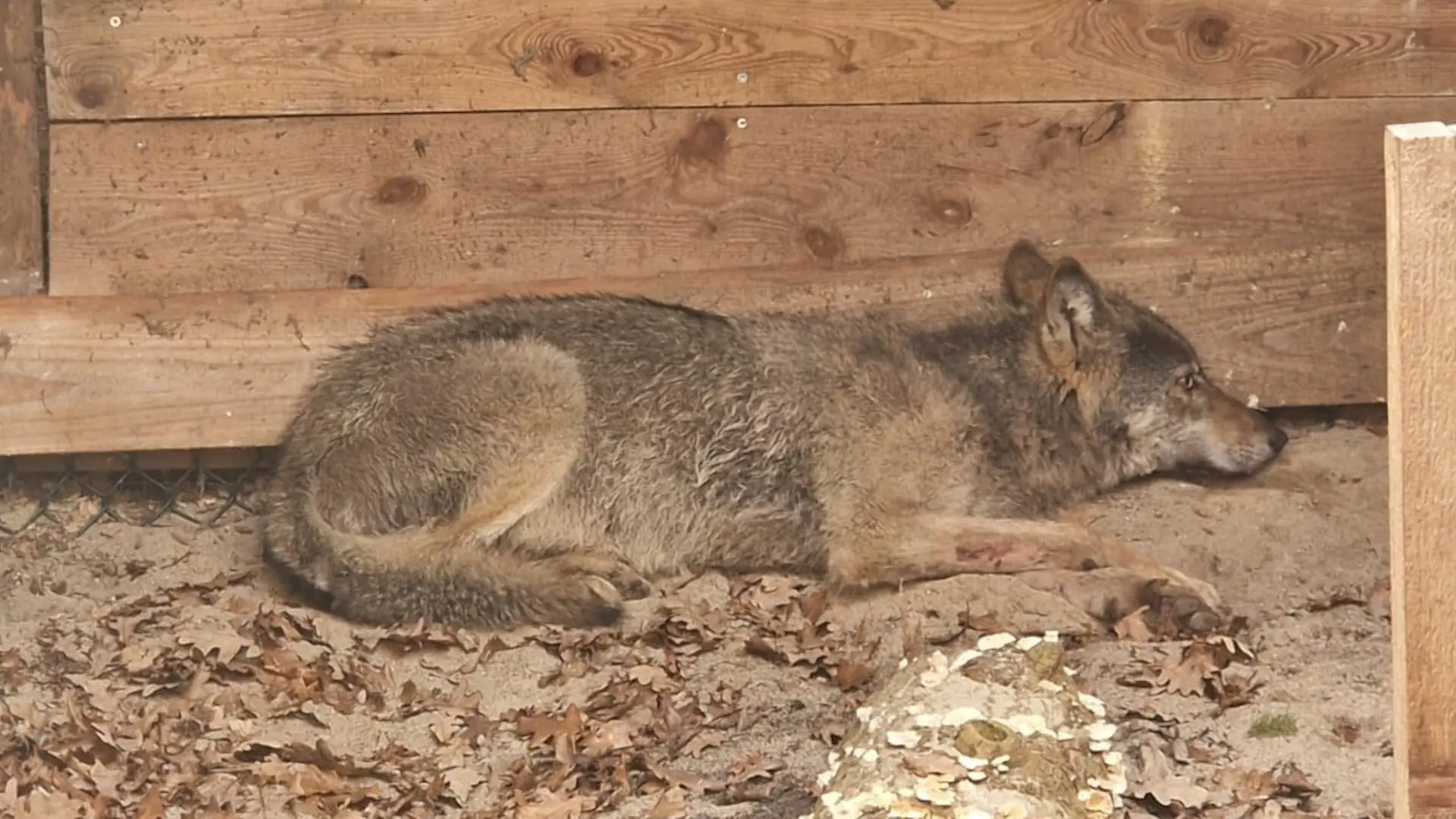
First Wolf Attack on Human Since 1998 Reported in Hamburg Shopping District
A woman was hospitalized after being bitten in the face by a wolf in a busy Hamburg shopping area on Monday evening, April 6, 2026. The incident, which occurred in the Altona district, is believed to be the first time a human has been attacked by a wolf in Germany since the species began reappearing in the country in 1998.
The encounter took place on the Große Bergstraße, a well-known shopping street. According to police, the woman attempted to help the animal, which appeared confused and was repeatedly running into a glass pane. While trying to lead the wolf out of the shopping area, she was bitten in the face. Paramedics treated the woman before transporting her to a local hospital, where she received stitches for the wound. She was released shortly after.
Lionel von Lawrence-Oehlen, a musical actor who was shopping with his two-year-old daughter, witnessed the aftermath. He reported hearing a woman fall and initially mistook the animal for a large dog.
“When I saw the blood and how large this animal was, I thought: That is a wolf,” von Lawrence-Oehlen said. He provided the victim with a tissue for her injury and noted that the animal seemed terrified and desperate to escape the urban environment.
Following the attack, police tracked the animal to the Binnenalster lake in downtown Hamburg, where officers successfully captured it. The wolf was initially moved to an enclosure on the outskirts of the city. However, the wolf has since been released back into the wild, a move described by some as a “probationary” rewilding. This decision followed public sentiment, including a vigil held by supporters who urged authorities to return the animal to its freedom.
Experts suggest the animal may be a young wolf searching for its own territory, which likely wandered into the city by accident. This theory is supported by reports that the same wolf may have been sighted over the weekend in Blankenese, an outer suburb of Hamburg. Officials noted that the urban environment would have been highly stressful for the animal, as wolves typically avoid humans, and dogs.
The rarity of the event was highlighted by a spokesperson for the Federal Agency for Nature Conservation, who confirmed there had been no such cases since the species’ return nearly 30 years ago. However, the incident occurs amid rising tensions regarding wolf populations in Europe. While the European Parliament recently downgraded the wolf’s status from “strictly protected” to “protected,” the German parliament recently approved legislation that simplifies the process of shooting wolves that wound or kill livestock.
The case underscores the growing challenges of managing wildlife as predator populations expand into increasingly human-populated regions. Further details on the release of the Hamburg wolf continue to be monitored by local authorities.
As the community processes the attack, the incident serves as a stark reminder of the unpredictable nature of wild animals in urban settings, even as efforts continue to integrate these predators back into the German landscape.
