
Entering a planet’s atmosphere is among the most challenging phases of any space mission. Spacecraft must withstand extreme heat generated by high-speed friction with atmospheric gas particles. This demand for robust thermal protection is driving new research into how atmospheric composition impacts heat shield performance.
Researchers at the Grainger College of Engineering at the University of Illinois Urbana-Champaign have uncovered new insights into how the composition of an atmosphere significantly affects the operation of heat shields. The findings have implications for future missions, particularly those targeting destinations with atmospheres drastically different from Earth’s.
Heat Shields “Breathe” During Atmospheric Entry
As a spacecraft enters an atmosphere, the surface of its heat shield undergoes burning and erosion, a process known as ablation. This ablation is critical for protecting the vehicle from intense heat. Engineers have long understood this process, but new research is revealing the nuances of how it unfolds under different atmospheric conditions.
A team led by Francesco Panerai conducted experiments using the Plasmatron X wind tunnel at the university’s hypersonic studies center to simulate high-speed atmospheric entry conditions. The experiments allowed researchers to observe ablation in a controlled environment.
The Results Were Surprising
“When the type of gas was changed, the ablation behavior also changed significantly,” Panerai said. This discovery highlights the importance of considering atmospheric composition when designing thermal protection systems for space missions.
In an oxygen-rich atmosphere like Earth’s, ablation occurs steadily. The heat shield’s surface erodes gradually, and particles are released consistently. This predictable behavior allows engineers to design heat shields with a high degree of confidence.
Without Oxygen, Ablation Becomes Unstable
However, when oxygen was removed from the test environment, the process became unstable. Ablation occurred in sudden bursts, and was even more turbulent. This unpredictable behavior poses a significant challenge for heat shield design.
Researchers also found that material sloughed off from the outer layer of the heat shield could accumulate on the surface, potentially clogging and disrupting the material’s “breathing” process. This directly impacts the shield’s protective performance.
Important for Missions to Titan
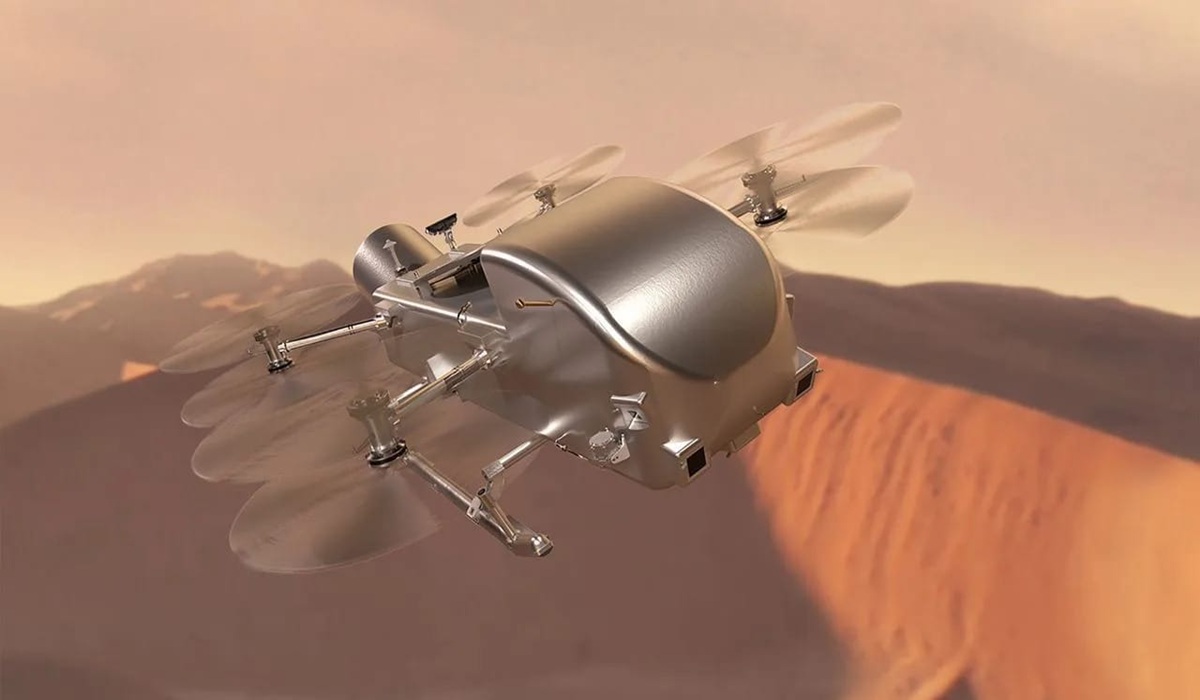
These findings are particularly relevant to NASA’s upcoming Dragonfly mission to Titan, Saturn’s largest moon, scheduled to launch in 2028. The mission aims to explore Titan’s unique environment and search for the building blocks of life.
Titan’s atmosphere is vastly different from Earth’s. Approximately 95% of it is nitrogen and 5% methane, although Earth’s atmosphere is composed of roughly 78% nitrogen and 21% oxygen. This difference could significantly affect how a heat shield performs during atmospheric entry.
Paving the Way for Better Heat Shield Designs
The Dragonfly spacecraft is designed to explore Titan’s surface, including its lakes and rivers of hydrocarbons, which are believed to hold clues about the potential for early life. Understanding how heat shields behave in non-Earth-like atmospheres is crucial for the mission’s success.
While this research doesn’t immediately change existing heat shield designs, the results provide new understanding of how materials behave under extreme temperatures. “Understanding under what conditions this phenomenon occurs will help us design better heat shields in the future,” Panerai said. (Space/Z-1)
