
Health officials in the Campania region of Italy are investigating an increase in Hepatitis A cases, with 133 cases reported so far this year. While authorities state there is no current emergency, they are urging vigilance and have implemented measures to curb further spread of the virus.
Regional authorities have intensified control measures along the entire supply chain of bivalve mollusks and are implementing preventative actions in response to the rising case numbers. A total of 133 cases have been identified, prompting concerns about food safety, epidemiological surveillance, and public awareness. The response involves the Departments of Prevention within local health authorities (ASL), the Southern Italy Experimental Zooprophylactic Institute, and a network of scientific experts activated by the General Directorate for Health Protection – Collective Prevention and Public and Veterinary Health.
Naples Hospital Reports Situation is Stable
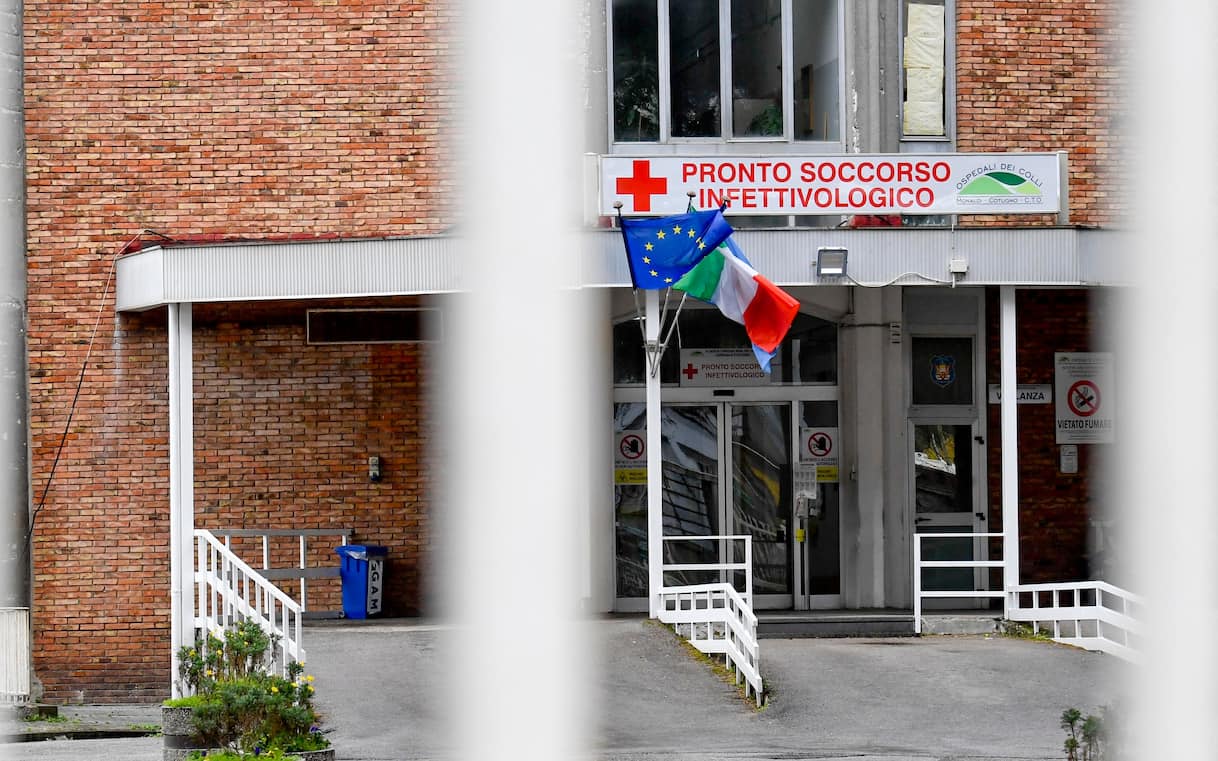
The Naples hospital network communicated on March 19, 2026, that despite a recent increase in Hepatitis A cases at the Cotugno Hospital, there is currently no emergency situation. The hospital reports the emergency room situation remains “overall stable,” with approximately 14 new cases recorded on March 19, 2026. This statement aims to provide accurate information to the public amid growing concern.
Approfondimento
Hepatitis A in Campania, the expert: symptoms, transmission and prevention
Naples Bans Raw Seafood in Public Establishments
On March 20, 2026, the Mayor of Naples, Gaetano Manfredi, signed an emergency ordinance to address the increasing number of Hepatitis A cases within the city. The measure was prompted by a report from the Prevention Department of ASL Napoli 1 Centro, which indicated a rate of viral spread more than 10 times higher than the average of the last ten years and 41 times higher than the last three years. The epidemiological data shows a sharp increase: from 3 cases in January to 19 in February, and 43 cases in the first nineteen days of March.

Approfondimento
Hepatitis A in Campania, the cases are 133: how it is transmitted
The Ordinance Details
To protect public health and prevent further transmission, the ordinance establishes the following: a complete ban on the serving and consumption of raw seafood in all public establishments, including local restaurants and businesses producing food for immediate consumption; a recommendation that citizens refrain from consuming raw seafood even at home; and the adoption of safe food practices. The ordinance also mandates increased monitoring by relevant authorities. Violations will be subject to administrative fines ranging from €2,000 to €20,000. Repeated offenses may result in suspension of activity for 1 to 30 days and subsequent revocation of the operating license. The measures will remain in effect until a reassessment of the epidemiological situation by ASL Napoli 1 Centro.
Campania Strengthens Control Activities
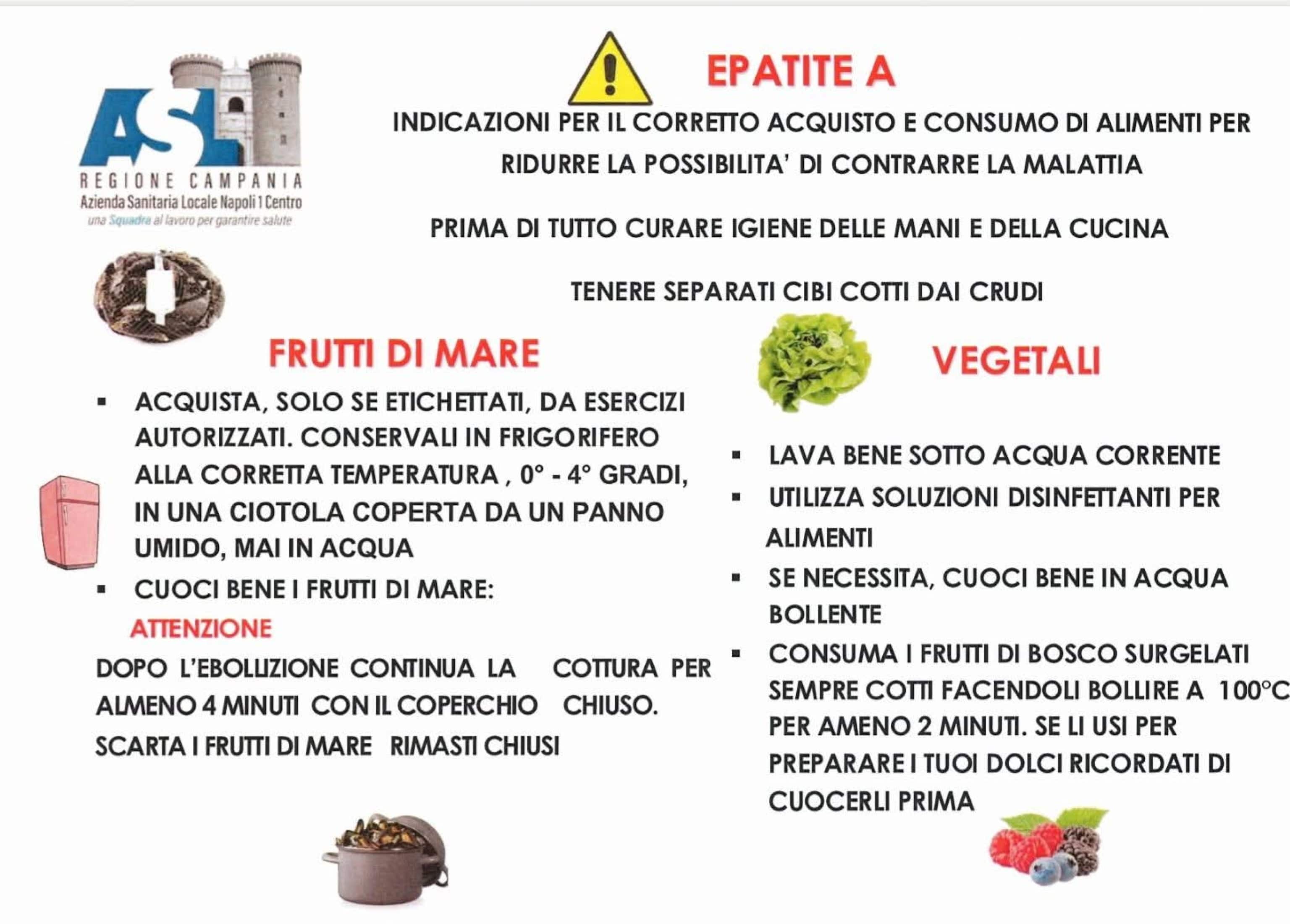
To protect themselves, the most important measure is simple: avoid consuming raw or lightly cooked shellfish. For mussels, clams, and other bivalve mollusks, simply opening the shells is not sufficient guarantee of safety; cooking must continue until the product is thoroughly cooked and uniform throughout. In other words, mollusks that are “just opened,” lukewarm, or only partially cooked should not be consumed. It is also essential to purchase only from authorized retailers, verifying labeling, origin, and proper storage methods, and to avoid products of dubious origin or sold outside official channels. For berries, it is important to distinguish between fresh and frozen: fresh berries should be washed thoroughly under running potable water immediately before consumption, while frozen berries should only be consumed after cooking (the recommendation from the Italian National Institute of Health is to boil them at 100°C for at least 2 minutes. They should not be used raw to garnish desserts, yogurt, semifreddos, or fruit salads).
About Hepatitis A
Hepatitis A is an acute liver infection caused by the HAV virus. According to regional health officials, it is transmitted via the fecal-oral route, meaning through ingestion of contaminated water or food or through close contact with an infected person. Transmission can also occur before symptoms appear, as the virus is present in the stool 7-10 days before the onset of clinical symptoms; the incubation period generally ranges from 15 to 50 days. The most common symptoms include fever, malaise, nausea, abdominal pain, dark urine, and jaundice; in children, the infection may also be asymptomatic. In foodborne transmission, certain foods consumed raw or insufficiently cooked, particularly bivalve mollusks, can play an important role. Contaminated water, fruits, vegetables, and berries can also contribute. Bivalve mollusks, such as mussels, clams, and oysters, can accumulate viral particles during the filtration of contaminated water; consuming them raw or undercooked poses a risk that should be avoided.

Approfondimento
Hepatitis A, what it is and how you secure it: what you necessitate to realize about symptoms and transmission
