
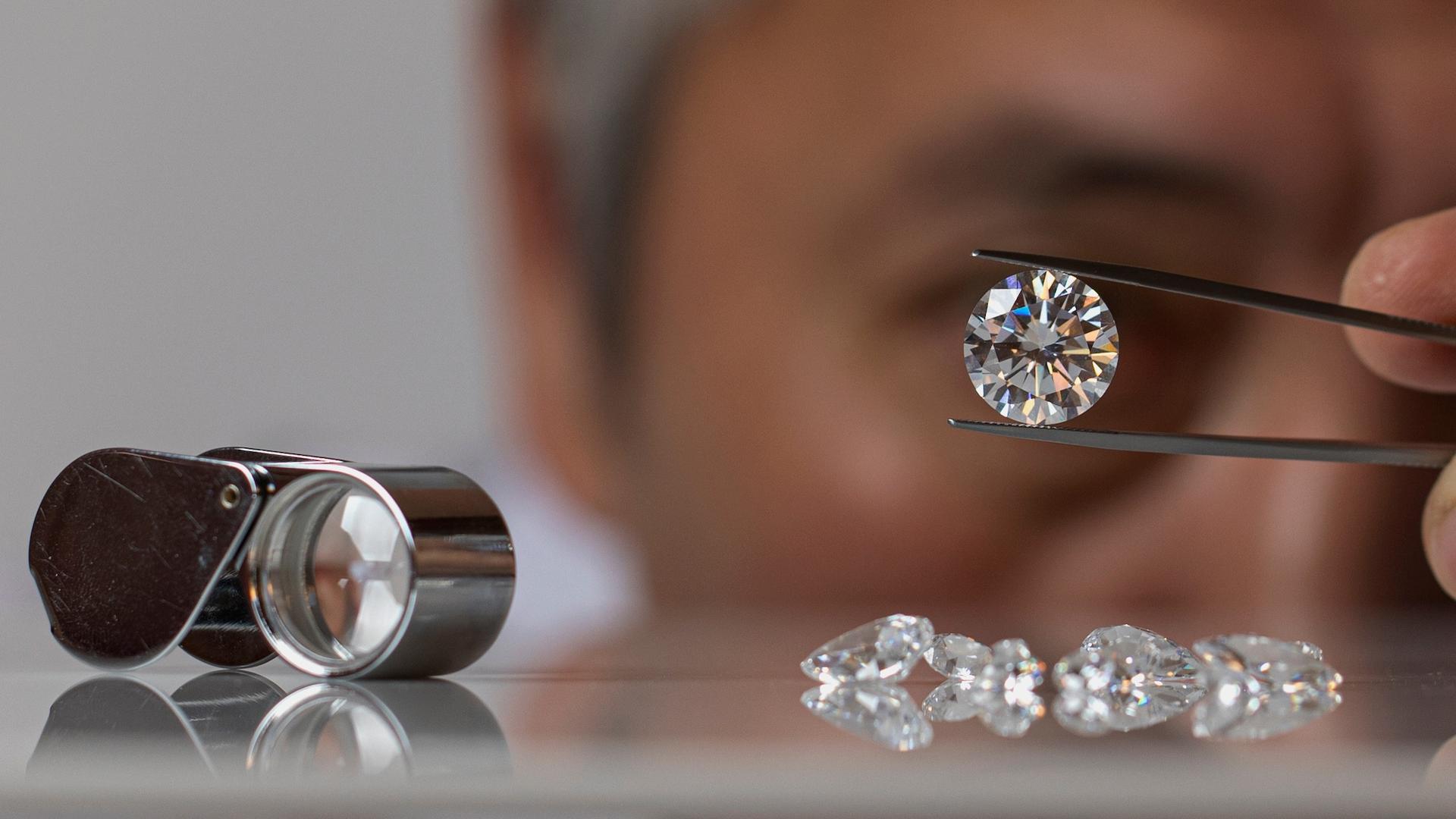
Scientists in China have successfully created a diamond with a hexagonal structure that is reportedly harder than traditional, cubic diamonds. The breakthrough, announced on March 15, 2026, could have significant implications for industries requiring ultra-durable materials, from mining and construction to advanced electronics.
Did You Grasp?
Some purists argue that a hexagonal arrangement of carbon atoms shouldn’t even be called a diamond. They maintain that a true diamond requires a cubic atomic structure, and that a hexagonal form is more accurately described as lonsdaléite.
The quest for a hexagonal diamond has spanned six decades, with initial claims of discovery in meteorites dating back to the 1960s repeatedly challenged by subsequent analysis. These earlier findings often revealed imperfections in the structure, suggesting the material was simply flawed cubic diamond. Attempts to synthesize the material in a lab had previously yielded only microscopic or extremely short-lived samples.
Researchers at Zhengzhou University and Nanjing University overcame these obstacles by utilizing highly oriented graphite and subjecting it to immense pressure – 200,000 times atmospheric pressure, or 20 gigapascals – and temperatures reaching 1,900 °C. The key to their success, as detailed in a study published in the journal Nature, was applying compression from above rather than the sides, forcing the carbon atoms into the unique hexagonal configuration.
The team’s approach builds on decades of research into carbon structures. As carbon is a fundamental building block of materials ranging from diamonds to coal, understanding its different arrangements is crucial for materials science.
Previous reports of hexagonal diamonds, also known as lonsdaléite, surfaced after analysis of meteorites that fell in Arizona and India around 50,000 years ago. However, these samples were often found mixed with cubic diamond and graphite, and in quantities too small to definitively confirm their existence. The question remained: were these hexagonal structures simply imperfect cubic diamonds?
Read the article
In 2025, researchers at the Centre for High Pressure Science and Technology Advanced Research (HPSTAR) in China announced the synthesis of a nearly pure, millimeter-sized hexagonal diamond. This achievement involved applying extreme pressure and heat to graphite, and was a significant step forward in the field.
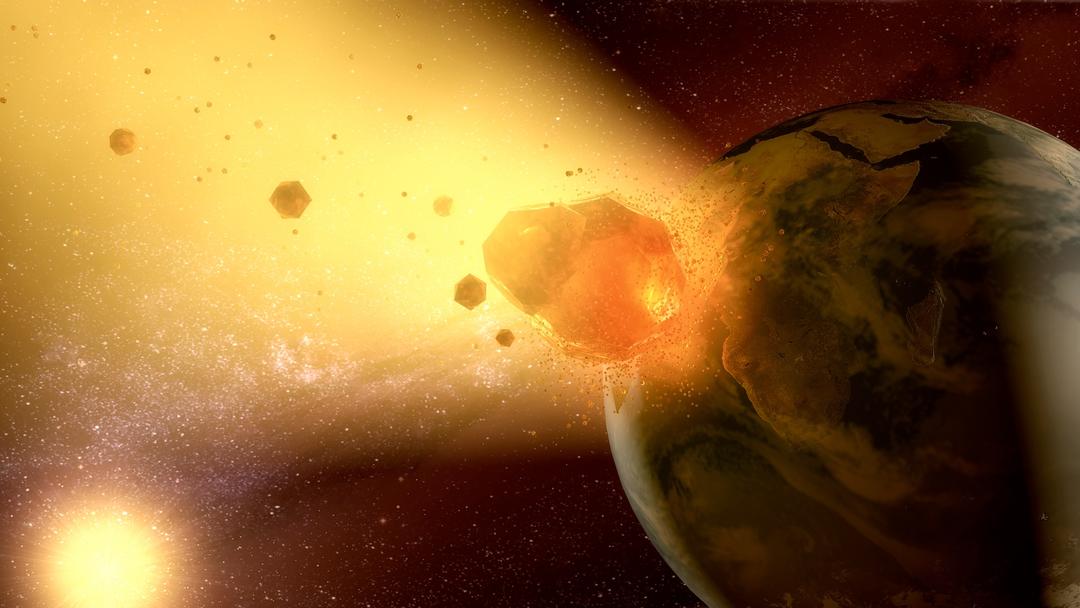 In 2022, researchers at Monash University (Australia) discovered lonsdaléite, the hexagonal diamond, within a meteorite fragment found in South Africa. While the largest crystals measured only a micron – one thousandth of a millimeter – scientists believe this type of material can form during catastrophic collisions, such as between a dwarf planet and a large asteroid. © Miguel Aguirre, Adobe Stock
From Hypothesis to Lab Reality
The team publishing in Nature detailed how they further refined the process, synthesizing multiple samples of pure hexagonal diamond approximately 1.5 millimeters in diameter. This larger size allowed for accurate measurement of the material’s properties, a crucial step in validating the findings.

Read the article
The researchers confirmed that structural and spectroscopic analyses, supported by large-scale molecular dynamics simulations, “unequivocally confirm the existence of hexagonal diamond.” They also found that this diamond is both more rigid and more resistant to oxidation than cubic diamond, meaning it can withstand higher temperatures without surface corrosion. This could prove valuable in applications like advanced drilling tools.
