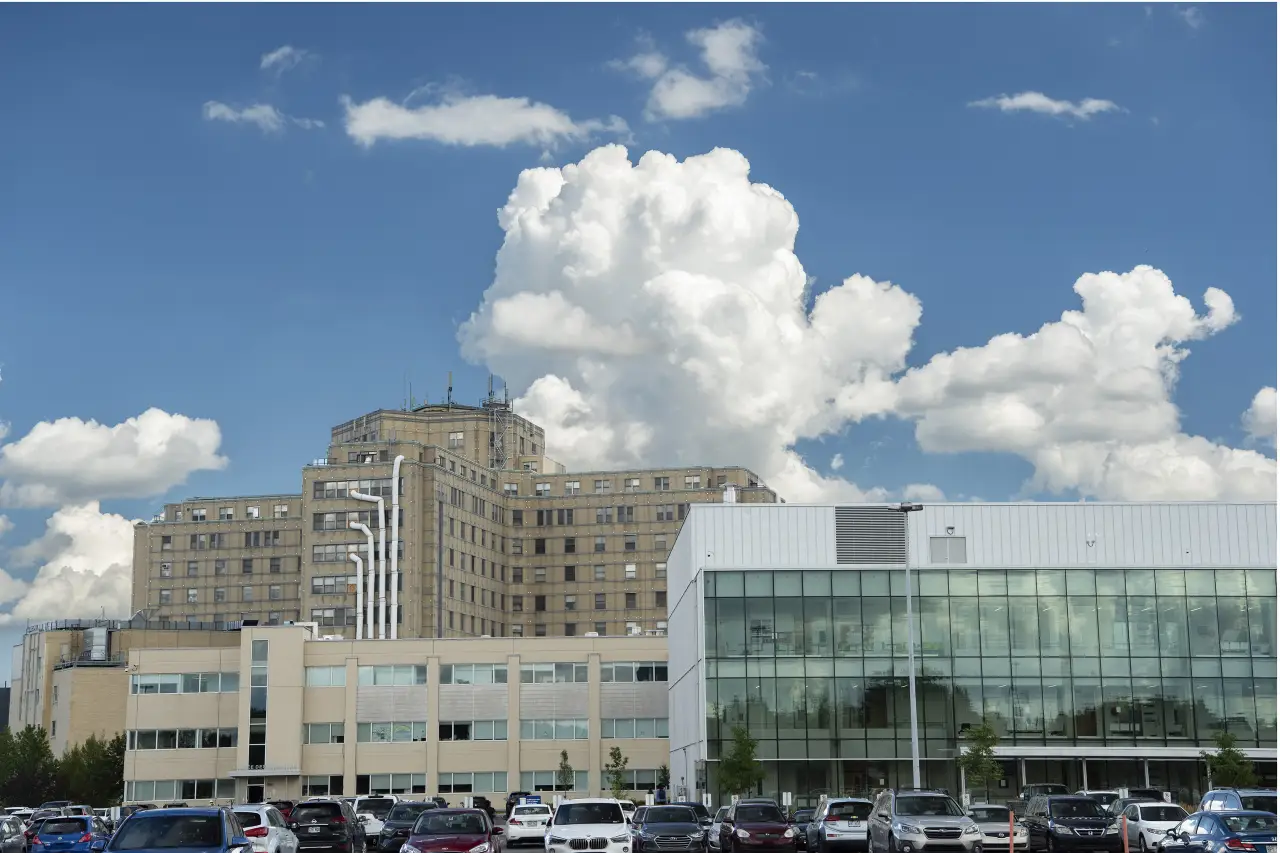
Le pavillon vitré est le Centre intégré de dialyse Raymond-Barcelo de l’HMR (Courtoisie)
Nephrology, the medical specialty focused on kidney disease, remains relatively unknown to the general public. However, it plays a vital role in healthcare, particularly for individuals experiencing kidney failure or requiring dialysis treatment. Understanding kidney health is crucial, as chronic kidney disease often goes undetected in its early stages.
At Hôpital Maisonneuve-Rosemont (HMR), nephrology is a significant focus. The hospital boasts one of the largest dialysis services in Quebec, and numerous researchers contribute to the field there.
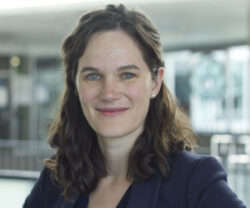
Dre Annie-Claire Nadeau-Fredette, nephrologist at HMR, clinician-researcher and head of dialysis (Courtesy)
“Nephrology encompasses everything related to kidney health. We care for patients with kidney diseases, kidney failure, or those needing dialysis. We also follow patients who have received kidney transplants,” explains Dr. Annie-Claire Nadeau-Fredette, a nephrologist at HMR, clinician-researcher, and head of dialysis.
The program provides a broad range of care, including monitoring glomerular diseases and certain cases of severe hypertension.
A Single Continuum of Care in One Location
At HMR, medical teams support patients at various stages of kidney disease. This includes clinical follow-up, dialysis, evaluation for transplantation, and, when possible, the transplant itself.
“People can follow patients who are being evaluated for kidney transplants and offer the kidney transplant. This entire continuum is unique,” the specialist affirms.
This organization fosters close collaboration between clinical teams and researchers at the hospital’s research center. Nephrology is, in fact, one of the center’s areas of excellence. Many team members also participate in scientific conferences in Canada and internationally, contributing to the sharing of expertise worldwide.
The Role of the FHMR in Clinical and Research Projects
the Fondation de l’Hôpital Maisonneuve-Rosemont (FHMR) primarily intervenes through financial support for certain projects, whether for patient care or research. Its operate enables the implementation of initiatives that might not be immediately funded by public programs.
One example the specialist cites is the creation of a dedicated space for hemodialysis training at home. This treatment involves performing dialysis at home using specialized equipment, requiring several weeks of training for patients and nurses.
Before this project, training took place in the main hemodialysis unit, where only one station was available for teaching. “Thanks to the Foundation, they were able to create a dedicated teaching space for home hemodialysis, with two machines and a specific training room,” the nephrologist explains.
This initiative increased both training capacity and accessibility. “We were able to double our home hemodialysis training and craft this treatment accessible to more patients,” she specifies.
Pilot Projects That Can Expand Elsewhere
Philanthropic funding can also serve as a starting point for research projects. In some cases, these pilot initiatives can then obtain larger grants and be deployed in other centers.
Dr. Nadeau-Fredette highlights a research project she led at the hospital with initial funding from the Foundation. The study evaluated changes in quality of life and physical fitness after starting dialysis at home versus in the hospital.
“Often, before the MSSS funds this type of program as a standard of care, it is first necessary to show that it is possible and makes a difference,” she explains. After an initial study conducted at HMR, the project received funding from the Canadian Institutes of Health Research and is now being deployed in about ten centers across the country.
“This is a concrete example of a project funded initially by the Foundation that can then be scaled up,” says Dr. Nadeau-Fredette.
Initiatives to Facilitate Home Treatments
Some initiatives supported by the FHMR also aim to facilitate access to other home treatments. This includes programs related to assisted peritoneal dialysis, which allows patients to receive help at home to perform their treatments.
The Foundation’s support can also translate into more concrete measures for patients. For example, basic equipment needed for home dialysis is not always covered for all patients. “So sometimes, the support is reimbursement of equipment for patients who want to do home dialysis and cannot afford the basic equipment, such as a scale,” explains Dr. Nadeau-Fredette.
Raising Awareness of a Often Silent Disease
Beyond funding projects, the Foundation also contributes to raising public awareness of kidney diseases. These diseases can be hard to detect, as they often do not cause symptoms in the early stages, the nephrologist explains.
In many cases, they are discovered during routine blood tests. “Unfortunately, there is often no way to detect a kidney disease other than through a blood test.
It sometimes happens that people who believe they are healthy suddenly learn that their kidney function is very reduced. It should be known that one in ten people may develop a kidney disease during their lifetime, hence the importance of screening and medical follow-up.”

A room in the HMR nephrology unit (Courtesy)
Kidney Disease, a Long-Term Journey
The nephrologist emphasizes that kidney disease is often perceived as a one-time event, such as when a patient begins dialysis. In reality, it is generally a journey that unfolds over several years. “We often see kidney disease as an event, as if starting dialysis is the end. But in fact, it is rather a trajectory,” she says.
patients often move through different stages of treatment, which may include changes in therapy or even a possible transplant. Kidney transplantation is generally considered the best treatment when patients are eligible. However, access to organs remains limited, and many patients must wait several years.
“We have patients who are solid candidates for a transplant, but who must wait to get one. So, we want them to stay healthy during that time, to be in shape when their turn comes,” illustrates Dr. Nadeau-Fredette.
Challenges Related to an Aging Population
With increasing life expectancy and advances in the treatment of other diseases, more people today live long enough to develop advanced kidney disease.
So that several patients reach these stages at an older age, sometimes with other health problems. In these situations, decisions regarding treatments must take into account the fragility and quality of life of patients.
“Our challenge is to try to treat people as best as possible while taking into account their vulnerability and ensuring that what we do improves their lives,” emphasizes the specialist.
Treatments, such as dialysis, can also have an impact on loved ones, especially when care is provided at home. Support and assistance programs can therefore play an significant role.
Research Projects for the Coming Years
At the HMR nephrology research center, several projects are currently underway. Some focus on improving the quality of life of patients, particularly by seeking to prevent hospitalizations and complications. Others aim to develop modern interventions to support the physical health of patients.
At the same time, other researchers are working on more fundamental approaches, notably to improve immunosuppressive treatments used after a transplant.
The team is also interested in the links between kidney diseases and cardiovascular diseases, which are a major cause of mortality in dialysis patients.
Finally, training new researchers is also part of the program’s objectives. “We have students and future researchers arriving. So the idea is also and always to ensure the continuity of research,” concludes Dr. Nadeau-Fredette.
The L’Est en santé 2026 special issue is produced in part thanks to the financial contribution of the following partners: