
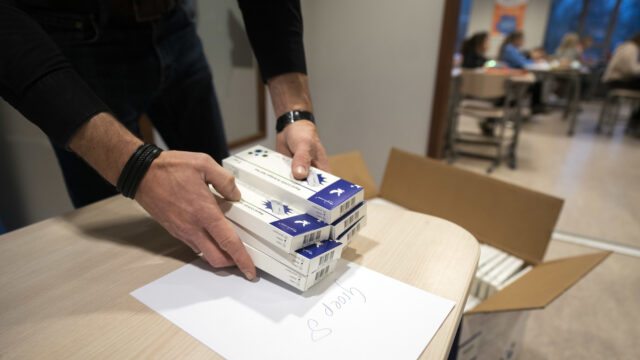
More people are turning to at-home medical tests, but experts caution that the reliability of these tests can vary significantly. This growing trend raises questions about the accuracy of results and whether individuals are getting the information they need to make informed decisions about their health.
Researchers like Mariska Leeflang, at Amsterdam UMC, distinguish between self-tests and at-home tests. “Self-tests are done completely by yourself at home, and you also read the results yourself, such as with a coronavirus test or a pregnancy test. With an at-home test, you collect material at home, such as blood or urine, but you send it to a laboratory. The analysis is done there,” she explained. While lab analysis generally offers more assurance, it doesn’t guarantee quality.
Family physician Jojanneke Kant, known as the Vragendokter on Instagram, has observed a rise in patients seeking tests before appointments. “Hormone tests are particularly popular: testosterone, cortisol, or questions about whether someone is going through menopause.” While she supports people taking an active role in their health, she also notes that these tests often don’t provide valuable information. “Often, we conclude together that it was a waste of money.”
Menopause tests are a prime example. “The only way to determine that you are really in menopause is if you have not menstruated for a year,” Kant stated. “You don’t need to measure that in your blood. You’ll notice it yourself.” Despite this, hormone tests promising clarity are widely available.
Reliability Concerns
Leeflang has spent years researching the reliability of diagnostic tests. Her conclusion is cautious but clear: “You can say little about the reliability of many self-tests.” Manufacturers often cite impressive percentages, such as 95 or 98 percent reliable, but the basis for these figures is often unclear. “If you go looking for supporting evidence, We see often not found.”
Research into self-administered chlamydia tests demonstrates the variability. “The reliability ranged from 20 to over 90 percent,” Leeflang said. Without insight into how and with whom a test was studied, a percentage means little.
Proper test administration is also crucial. Blood tests often require self-pricking and collecting sufficient blood, which can be difficult in practice, Kant noted. “Someone came to my office the other day to fill the tube together since they couldn’t manage it at home. Then we filled the tube together.”
The findings highlight the importance of discussing test results with a healthcare professional and understanding the limitations of at-home testing. Accurate diagnosis and treatment plans rely on reliable data, and consumers should be aware of the potential for inaccurate results when using self-administered tests.
